
Flowers
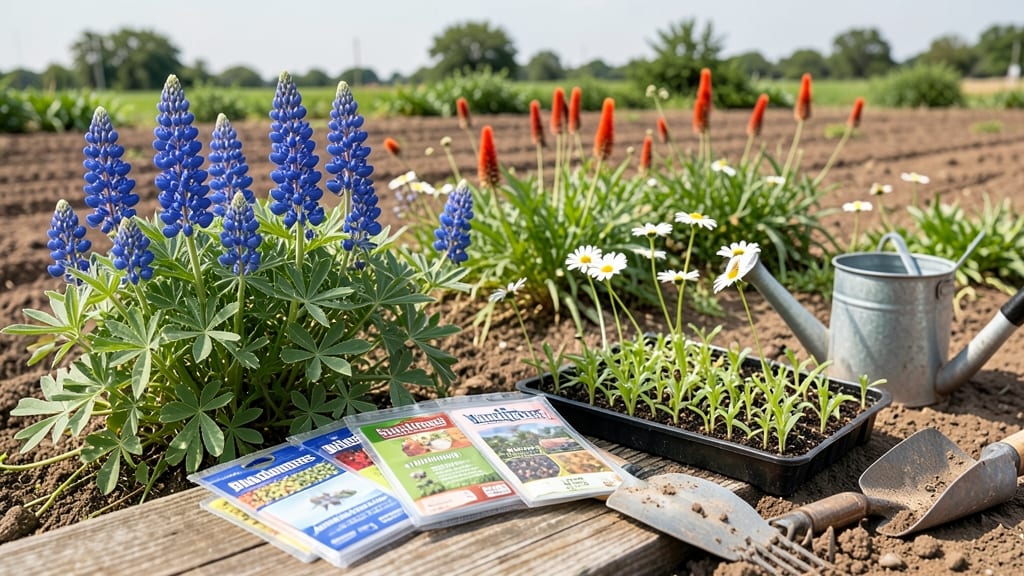
Figuring out when to plant flower seeds in Texas can feel like navigating a maze—one wrong move, and your delicate 🌸 blooms could meet their match with a late frost or scorching heat.
The good news? With Texas' year-round growing potential, there's actually never a bad time to start, as long as you know the secrets to each region's unique climate.
North Texas gardeners face different challenges than those in the Rio Grande Valley, where frost dates shift dramatically. What works for cool-season flowers like pansies in the Panhandle might fry in South Texas' summer.
I'll break down the exact windows you need to know, so you can plant with confidence and avoid costly mistakes.
We'll cover everything from heat-tolerant varieties that thrive in 100°F+ to frost-sensitive blooms that need careful timing. Whether you're dreaming of vibrant bluebonnets or drought-resistant lantana, I've got the zone-specific strategies to make your garden flourish—no guesswork required.
Ready to transform your Texas landscape into a year-round paradise? Let's dive into the planting calendar that actually works for your corner of the Lone Star State, so you can enjoy blooms from January to December—without the stress.
Texas flower seed planting zones: the exact months by heat zone
Texas spans 11 distinct planting zones (A through J), each with unique frost dates and heat patterns. Understanding your zone is critical—planting pansies in Zone A too early risks frost damage, while marigolds in Zone J may bolt if sown too late.
Below, I break down the optimal planting windows for cool-season and warm-season flowers by zone, so you can avoid common pitfalls like seedling scorch or wasted effort.
For example, North Texas (Zones 7b-8a) has last frost dates around March 15, while South Texas (Zones 9a-10b) rarely sees frost. This means cool-season flowers like snapdragons can go in the ground as early as September in Zone A but wait until January in Zone J.
Warm-season favorites like zinnias thrive when soil temps hit 60°F+, typically April-May in North Texas and February-March in South Texas.
| Zone | Cool-Season Flowers (Sept-Feb) | Warm-Season Flowers (March-Aug) | Soil Temp Threshold |
|---|---|---|---|
| A (High Plains) | Sept 15-Oct 15 | April 15-May 15 | 50°F+ for warm-season |
| B (Panhandle) | Sept 1-Oct 1 | April 1-May 1 | 55°F+ for warm-season |
| C (North Central) | Oct 1-Nov 1 | March 15-April 15 | 60°F+ for warm-season |
| D (East Texas) | Oct 15-Nov 15 | March 1-April 1 | 60°F+ for warm-season |
| E (Central Texas) | Nov 1-Dec 1 | Feb 15-March 15 | 65°F+ for warm-season |
| F (West Texas) | Sept 15-Oct 1 | April 1-May 1 | 60°F+ for warm-season |
| G (South Texas) | Nov 1-Jan 15 | Feb 1-March 1 | 70°F+ for warm-season |
| H-J (Deep South) | Year-round (shade) | Jan 1-April 1 | 75°F+ for warm-season |
🌱 Pro Tip: Use a soil thermometer to confirm temps before planting warm-season seeds!
Native Texas flowers like Bluebonnets (Lupinus texensis) and Mexican Feather Grass (Nassella tenuissima) have built-in resilience to Texas’ extremes. Bluebonnets, for instance, thrive when sown in late September to October across most zones, germinating in cool soil
How to adjust planting dates for Texas’ unpredictable weather patterns
Texas weather is famously unpredictable, with frost dates that shift yearly and heat waves that can arrive early. Even experienced gardeners in Zone A (High Plains) or Zone J (Deep South) have lost seedlings to sudden freezes or drought.
The key to success? Flexible planting strategies that account for Texas’ erratic conditions.
Start by checking your local frost-free dates—these can vary by 1-2 weeks from the averages. For example, a North Texas gardener might see frost in mid-December one year and late January the next.
Use tools like the National Weather Service’s frost prediction maps or apps like Old Farmer’s Almanac to stay ahead.
🌱 Pro Tip: Plant cool-season flowers (like pansies or snapdragons) 4-6 weeks before your average last frost date. This gives seedlings time to establish roots before winter chill sets in.
Texas Weather Warning
Never plant warm-season seeds (like marigolds or zinnias) until soil temps hit 60°F+. Cold soil slows germination, leaving seedlings vulnerable to damping off—a fungal disease that kills young plants overnight.
For warm-season blooms, wait until soil temps are consistently above 60°F—use a soil thermometer to confirm. In South Texas (Zones H-J), this might mean planting in late February, while North Texas (Zones A-C) may need to wait until mid-April.
Succession planting—sowing seeds every 2-3 weeks—extends your blooming season and compensates for Texas’ unreliable weather.
Drought is another Texas wildcard. Deep water your seedlings at planting and mulch heavily to retain moisture. In West Texas (Zone F), where rainfall is scarce, consider drought-tolerant varieties like blackfoot daisies or Mexican sunflowers, which thrive with minimal irrigation once established.
Finally, monitor heat advisories during peak growing months. If a 100°F+ heatwave is forecasted, provide shade cloth for delicate seedlings or delay planting until temps drop. With these adjustments, you’ll beat Texas’ weather—not the other way around.