
Companion Plants
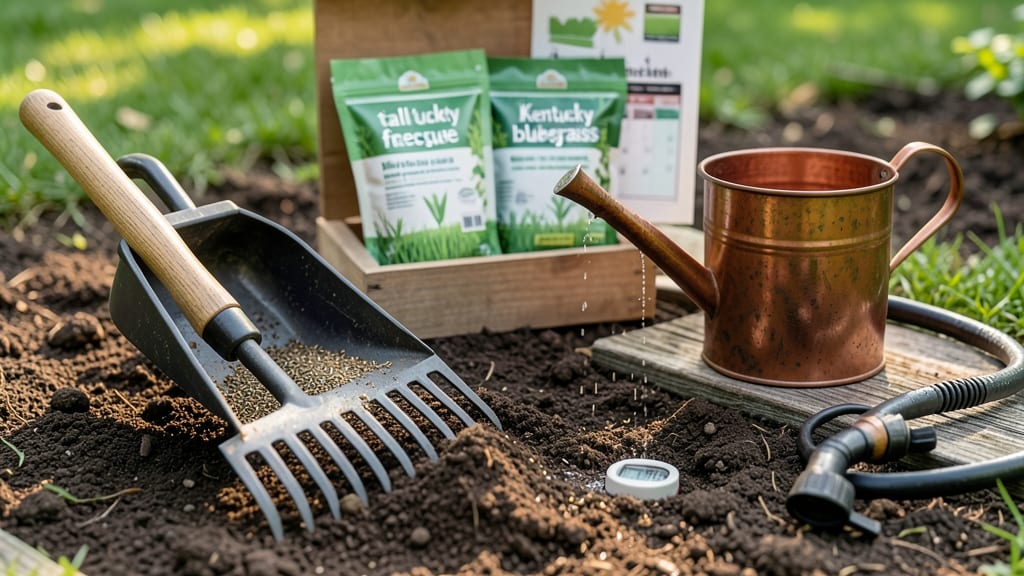
Planting grass seed in Michigan at the wrong time can turn your green dreams into a brown disappointment—especially when late frosts or summer heat derail your lawn.
With USDA zones 5b-6b bringing unpredictable weather, knowing the perfect window between March and September is the key to thick, resilient grass that survives Michigan’s winters.
I’ve spent years watching lawns thrive (and fail) in this region, and the difference always comes down to timing. Too early, and frost zaps your seedlings.
Too late, and summer drought stresses them out. The secret? Planting when soil temps hit 55°F+—but not before dandelions bloom or after mid-October.
Whether you’re seeding in early spring or fall, this guide breaks down the exact frost-free timeline for your zone, soil prep tips, and the best grass varieties for Michigan’s climate. Skip the guesswork and get your lawn off to the right start.
Ready to turn your yard into the envy of the neighborhood? Let’s dive into the data-driven schedule that’ll have your grass growing strong—no matter where in Michigan you live.
Michigan grass planting timeline by USDA hardiness zone (2024 frost dates)
Michigan’s USDA hardiness zones (4a-6b) dictate the best times to plant grass seed, with cool-season grasses like Kentucky bluegrass thriving in spring and fall. The Upper Peninsula (zones 4a-5a) has shorter growing seasons, while the Lower Peninsula (zones 5b-6b) offers more flexibility.
Always aim for soil temperatures above 50°F (10°C) and 4-6 weeks before the first frost in fall.
Timing matters because planting too early risks frost damage, while late planting may lead to uneven growth before winter. Michigan’s average last frost dates range from mid-April in the north to early May in the south.
For fall planting, start 4-6 weeks before the first frost, typically by mid-September in the north and early October in the south.
Here’s a breakdown of your ideal planting windows by zone, including soil temperature thresholds and frost-free days to maximize germination success.
| USDA Zone | Last Frost Date | First Frost Date | Ideal Spring Planting | Ideal Fall Planting | Soil Temp Threshold |
|---|---|---|---|---|---|
| 4a (Upper Peninsula) | May 15 | September 30 | Late May - June 15 | August 1 - September 1 | 50°F (10°C) |
| 5a (Northern Lower Peninsula) | May 1 | October 10 | April 15 - May 30 | August 15 - September 15 | 50°F (10°C) |
| 5b (Central Michigan) | April 15 | October 15 | March 30 - May 15 | August 30 - October 1 | 50°F (10°C) |
| 6a (Southern Michigan) | April 1 | October 20 | March 15 - May 15 | September 1 - October 10 | 50°F (10°C) |
| 6b (Southwest Michigan) | March 25 | October 25 | March 1 - May 15 | September 10 - October 15 | 50°F (10°C) |
🌱 Note: Adjust dates based on your local microclimate (e.g., urban areas may warm faster).
For spring planting, wait until the soil warms to 50°F (10°C)—a soil thermometer is your best tool. In zone 5b-6b, this usually aligns with late March to early April
How to check soil temperature & local conditions before planting grass seed
Before rushing to plant your grass seed in Michigan, check two critical factors: soil temperature and local frost dates. Cool-season grasses like Kentucky bluegrass and tall fescue need soil temps of 50°F+ (10°C+) to germinate properly.
Planting too early when soil is still cold can leave seeds vulnerable to late frosts or slow growth.
Use a soil thermometer (available for $10–$20) to test 2–4 inches deep—this mimics the depth where seeds will sprout. In Michigan, soil typically warms to 50°F by mid-April in the Lower Peninsula and late April to early May in the Upper Peninsula.
For fall planting, aim for 6–8 weeks before the first frost (usually mid-October).
| Condition | Michigan Requirement | Action |
|---|---|---|
| Soil Temperature | 50°F+ (10°C+) | Use thermometer 2–4" deep |
| Last Frost Date | Mid-April (Lower MI) / Early May (Upper MI) | Plant 2 weeks after |
| First Frost Date | Mid-October | Plant 6–8 weeks before |
| Dandelion Blooms | Sign of warming soil | Good indicator for spring planting |
Don’t rely solely on calendar dates—Michigan’s microclimates can vary by 1–2 weeks even within the same county. Check the NOAA Frost/Freeze Product (weather.gov) for your zip code.
Look for "90% confidence" frost dates to plan safely. Pro tip: If your area has late-spring frosts (common in northern Michigan), wait until after May 1 for spring planting.
Watch for natural indicators too. When dandelions bloom and robin nests appear, it’s a sign the soil is warming. In fall, maple leaves turn color about 6–8 weeks before frost, signaling it’s time to plant.
Avoid planting when soil is waterlogged—wait for it to dry slightly after rain to prevent seed rot.
If you’re unsure, test a small patch first. Spread 1–2 pounds of seed per 100 sqft in a 2’x2’ area and monitor germination. If sprouts appear within 7–14 days, your soil is ready.
If not, wait 1–2 weeks and test again. Patience now saves time and money later by avoiding thin, patchy lawns.
For extra precision, use a lawn thermometer or borrow one from your local Michigan State University Extension office. They often have free soil-testing kits too—call ahead to check availability.
Remember, cool-season grasses like fine fescue germinate best at 60–70°F soil temps, while perennial ryegrass tolerates slightly cooler conditions (50–60°F).