
Trees
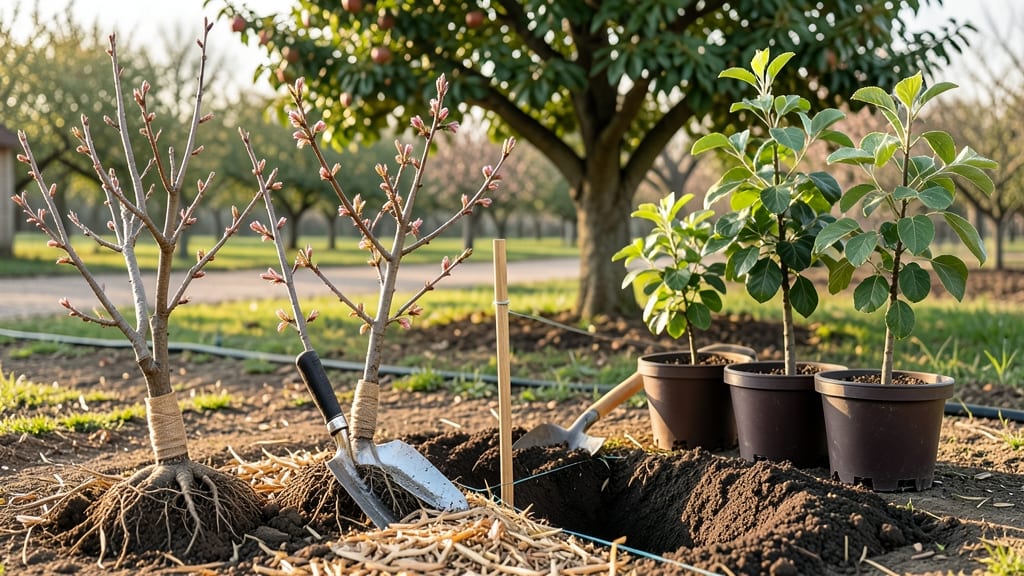
Timing your fruit tree planting in Washington State isn’t just about seasons—it’s about matching varieties to their chill-hour needs, a detail that separates thriving orchards from disappointing failures.
Whether you’re dreaming of juicy 🍎 Honeycrisp apples or sweet Rainier cherries, getting the window wrong can mean the difference between a bountiful harvest and years of frustration.
Washington’s diverse climate—from the mild Puget Sound to the colder inland areas—means USDA zones 5b-8b each have their own ideal planting times. Most gardeners know spring is key, but fall planting offers advantages too, especially for bare-root trees that need time to establish roots before winter.
The trick? Knowing exactly when to plant based on your specific variety and microclimate.
In this guide, I’ll break down the perfect planting windows for Washington’s most popular fruit trees, including apples, cherries, and peaches.
You’ll learn how to align your planting schedule with chill-hour requirements, avoid common mistakes, and set your trees up for success—whether you’re in the rainy west or the drier east.
Ready to turn your backyard into a productive orchard? Let’s get started with the timing secrets that will make all the difference for your 🍎 fruit trees this season.
Washington State fruit tree planting calendar by chill-hour zones
Washington State spans three chill-hour zones—400–600 hours (Zone 1), 600–800 hours (Zone 2), and 800–900 hours (Zone 3)—each dictating which fruit trees thrive. For example, ‘Honeycrisp’ apples need 800+ chill hours, while ‘Lapins’ cherries require 500–600 hours.
Planting at the wrong time risks poor fruit set or tree stress.
In Western Washington (e.g., Puget Sound), where winters are milder, focus on late winter planting (February–March) before buds swell. Meanwhile, Eastern Washington (e.g., Yakima Valley) benefits from fall planting (September–October) to establish roots before winter dormancy.
Here’s how to match your microclimate to the right planting window:
For bare-root trees, plant immediately after purchase—roots dry out quickly. Container-grown trees, however, offer more flexibility and can be planted year-round, though early spring or fall yields the best results.
In Zone 7+ areas (e.g., Spokane), extend the growing season with row covers or windbreaks. Late frosts in April can damage blossoms, so monitor forecasts and have frost cloth ready.
Soil prep is non-negotiable: Till 12–18 inches deep to improve drainage, especially in clay-heavy areas like Western Washington’s lowlands. Mix in organic matter (e.g., compost or aged manure) to boost fertility.
Pro tip: Use a planting gauge to ensure the tree’s graft union sits 2–3 inches above soil level. This prevents rot and encourages strong growth. Water deeply after planting to settle the soil.
Timing also depends on tree size: Dwarf varieties (e.g., ‘Columnar’ apples) establish faster than standard trees, so they can handle slightly later planting in Zone 1.
For localized advice, consult the Washington State University Extension chill-hour calculator or contact your county extension office. Their data accounts for microclimates like urban heat islands or sheltered valleys.
Best fruit tree varieties for Washington’s climate and when to plant them
Washington State’s diverse chill-hour zones (400–900 hours) mean not all fruit trees thrive here—some need more winter chill to produce fruit, while others struggle with late spring frosts. Choosing the right variety and planting at the correct time ensures your tree survives and bears fruit.
Let’s break down the top 5 chill-hardy varieties and their ideal planting windows.
For Western Washington (Zones 7b–8a), focus on varieties like ‘Honeycrisp’ apples and ‘Rainier’ cherries, which require 500–800 chill hours. In Eastern Washington (Zones 5b–7a), ‘Lapins’ cherries and ‘Bartlett’ pears (300–600 chill hours) are better bets.
Planting timing varies slightly: bare-root trees go in late winter (February–March), while container-grown trees can be planted early spring or fall.
| Variety | Chill Hours | Best Planting Window | Notes |
|---|---|---|---|
| ‘Honeycrisp’ Apple | 600–800 | Feb–March (bare-root) or Sep–Oct (container) | Needs well-draining soil; prone to fire blight. |
| ‘Rainier’ Cherry | 500–700 | Feb–March (bare-root) or Sep–Oct (container) | Sensitive to late frosts; plant in sheltered spots. |
| ‘Bartlett’ Pear | 300–500 | Feb–March (bare-root) or Sep–Oct (container) | Early bloomer; protect from spring frosts. |
| ‘Lapins’ Cherry | 300–400 | Feb–March (bare-root) or Sep–Oct (container) | Dwarf variety; ideal for small gardens. |
| ‘Sugar Pie’ Pear | 400–600 | Feb–March (bare-root) or Sep–Oct (container) | Cold-hardy; great for Zone 5b. |
If you’re in Zone 7b+ (e.g., Yakima Valley), consider low-chill varieties like ‘Starking Delicious’ apples (400–500 chill hours) or ‘Black Gold’ plums (300–400 chill hours). These thrive in warmer microclimates but may need winter protection in colder years.
Always check the last frost date for your area—Western WA averages March 15, while Eastern WA can see frost until April 15.
For container-grown trees, planting in early fall (September–October) gives roots time to establish before winter. Avoid planting in summer heat—roots can dry out, and young trees struggle to recover. Amend your soil with compost and a balanced fertilizer (10-10-10) before planting to give your tree a nutrient boost.
Mulch around the base with wood chips to retain moisture and regulate soil temperature.
One critical tip: Don’t prune heavily at planting time—focus on root care first. Prune only to remove broken branches or shape the tree lightly. Save major pruning for late winter (February) when the tree is still dormant but before buds swell.
This helps prevent disease entry points and reduces stress on the newly planted tree.
With the right variety and timing, your Washington fruit tree will reward you with bountiful harvests for decades. Start with ‘Honeycrisp’ apples or ‘Rainier’ cherries for a foolproof choice, and always plant before bud break to maximize survival rates. Happy planting! 🌱