
Trees
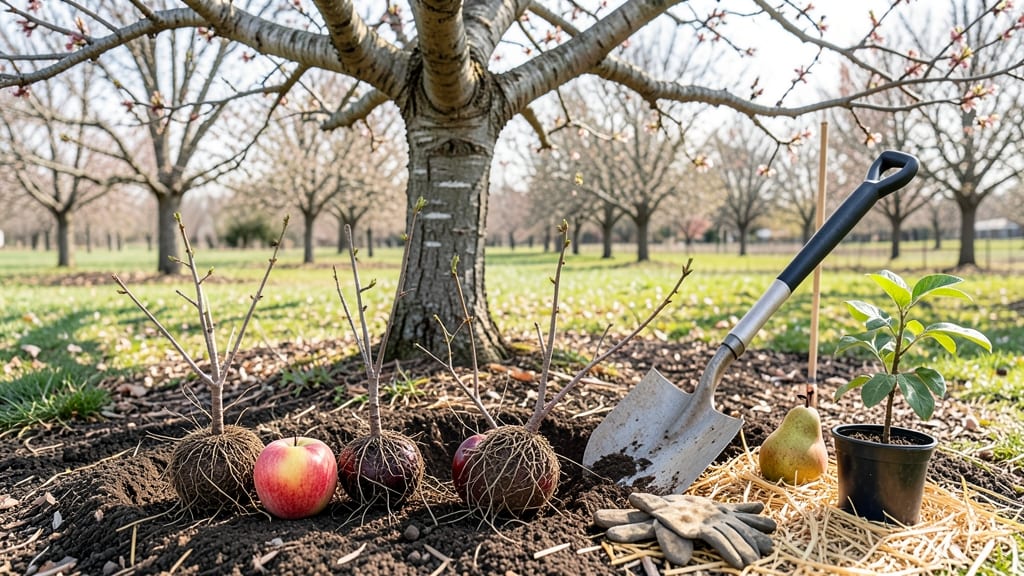
Timing your fruit tree planting in Wisconsin isn't just about grabbing a shovel in spring—it's about catching the perfect window between frost risks and soil warmth to give your 🍎 saplings the best shot at thriving.
Plant too early, and late frosts will zap your young roots before they even get started. Too late, and your tree might struggle to establish before winter sets in.
Wisconsin's 4a to 6b zones mean you've got flexibility, but also critical deadlines—think early April for bare-root trees or early September for fall planting. The key is reading your local frost dates and soil temperatures, not just following a calendar.
I'll show you exactly how to align your planting with these natural cues for maximum success.
Whether you're dreaming of a backyard apple orchard or just want a few peach trees for fresh summer fruit, getting the timing right is half the battle.
We'll break down the science behind Wisconsin's planting windows and how to adjust for your specific microclimate. Let's get those roots growing strong from day one.
Ready to transform your yard into a fruitful haven? I'll walk you through the exact steps to prepare your soil, choose the right varieties for your zone, and care for your new trees so they'll reward you with harvests for decades.
Your future orchard starts with planting at the right time—and that's what we're fixing today.
Wisconsin hardiness zones & best planting months for fruit trees
Wisconsin spans USDA hardiness zones 3-5, creating distinct planting windows for fruit trees. In northern Wisconsin (zones 3-4a), like the Chippewa Valley, you’ll want to plant bare-root trees in early spring (April) when soil temperatures rise above 40°F (4°C).
Southern Wisconsin (zones 5a-6b), including Madison and Milwaukee, offers a slightly longer window—early fall (September) or late March—for better root establishment before winter.
Understanding your last frost date is critical. Most of Wisconsin experiences its final frost around April 15, but northern areas can wait until May 1.
Planting too early risks frost damage to tender roots, while waiting too late may stunt early growth. Soil temperature probes (available at garden centers) help confirm readiness—aim for 50°F (10°C) at 4 inches deep.
For apple and pear trees, Wisconsin’s cool climate favors varieties like Honeycrisp apples or Bartlett pears. These thrive when planted in early spring to avoid winter desiccation. Stone fruits (cherries, peaches, plums), however, prefer fall planting in zones 5-6, allowing roots to establish before dormancy.
Here’s how Wisconsin’s zones break down for optimal planting:
| Zone | Best Planting Month | Soil Temp Requirement | Top Tree Varieties |
|---|---|---|---|
| 3-4a (North) | Early April (bare-root only) | ≥40°F (4°C) | Honeycrisp, McIntosh, Montmorency |
| 4b-5a (Central) | March 30–April 15 or September 15–30 | ≥45°F (7°C) | Bartlett Pear, Stanley Plum, Tart Cherry |
| 5b-6b (South) | Late March–April 30 or September 1–15 | ≥50°F (10°C) | Peach, Pluot, European Plum |
🌱 Note: Container-grown trees can be planted year-round in Wisconsin, but avoid extreme heat (July-August).
If you’re planting blueberries or currants, Wisconsin’s acidic soils (pH 4.5–5.5) demand extra prep. Test your soil 3 months before planting—amend with sulfur or peat moss if needed. These evergreen shrubs prefer fall planting in zones 4-5, allowing roots to establish before winter.
For dwarf fruit trees, popular in urban gardens, timing is flexible but still tied to soil conditions. Plant container-grown dwarfs in spring or early fall, ensuring the graft union stays 2–3 inches above soil. This prevents root suckers and ensures consistent fruit quality.
Wisconsin’s short growing season (165 frost-free days) means early spring planting gives trees a 6–8 week head start before summer heat. Use mulch (straw or wood chips) to retain moisture and regulate soil temperature—critical in zone 3’s fluctuating climate.
Pro tip: Bare-root trees (available in early spring) establish faster than container-grown, but they must be planted within 24 hours of purchase. Keep roots moist with a damp cloth until planting. For container-grown trees, water deeply 1–2 weeks before transplanting to reduce shock.
Finally, consider microclimates. A south-facing slope in northern Wisconsin may warm up 2–3 weeks earlier than a low-lying area. Use these pockets for early spring planting of heat-loving varieties like peaches or nectarines.
By aligning your planting with Wisconsin’s zones, soil temps, and frost dates, you’ll give your fruit trees the best shot at thriving—yielding juicy apples, sweet cherries, or tart plums for years to come. 🍎
Signs your Wisconsin fruit tree planting timing is wrong (and how to fix it)
Planting your fruit tree at the wrong time in Wisconsin can lead to stunted growth or even death. One of the most common mistakes is planting bare-root trees too early—before the ground thaws completely.
This exposes delicate roots to frost damage and soil erosion. If you notice yellowing leaves or wilted branches shortly after planting, it’s a red flag that your timing was off.
Another warning sign is poor root establishment when planted too late in the season. If your tree struggles to anchor itself before the first frost (typically around mid-October), it may not survive winter.
Look for slow leaf growth or weak stems—these are clear indicators that your tree is struggling to adapt.
🌱
⚠️ Warning: Late Planting Risks
- Weak root systems before winter dormancy
- Increased frost sensitivity in young trees
- Higher mortality rates in extreme cold
Fix it: Plant in early fall (September) or early spring (April) for best survival rates.
If you planted a container-grown tree outside its ideal window, watch for root circling or compromised soil structure around the roots. Container trees can be planted year-round, but they still need time to acclimate to outdoor conditions.
If your tree shows signs of transplant shock, like drooping leaves or stunted growth, it may need extra water and mulch to recover.
For stone fruits like peaches or cherries, planting too late can delay flowering. These trees need chill hours (typically 500–1,000 hours below 45°F) to bloom properly. If your tree fails to flower the following spring, it’s a sign it didn’t get enough winter dormancy time.
To adjust for microclimates in Wisconsin, consider sheltered locations like near buildings or fences. These areas can provide 2–3 weeks of extended growing season, giving your tree more time to establish roots.
If you’re unsure about your local frost dates, check with your county extension office or use a soil thermometer to monitor ground temperatures.
Finally, if your tree shows unusual leaf discoloration or premature leaf drop, it may be struggling with environmental stress from poor timing. In this case, focus on improving soil drainage and mulching heavily to protect roots during extreme weather.
With the right adjustments, even a late-planted tree can thrive with proper care! 🌿