
Trees
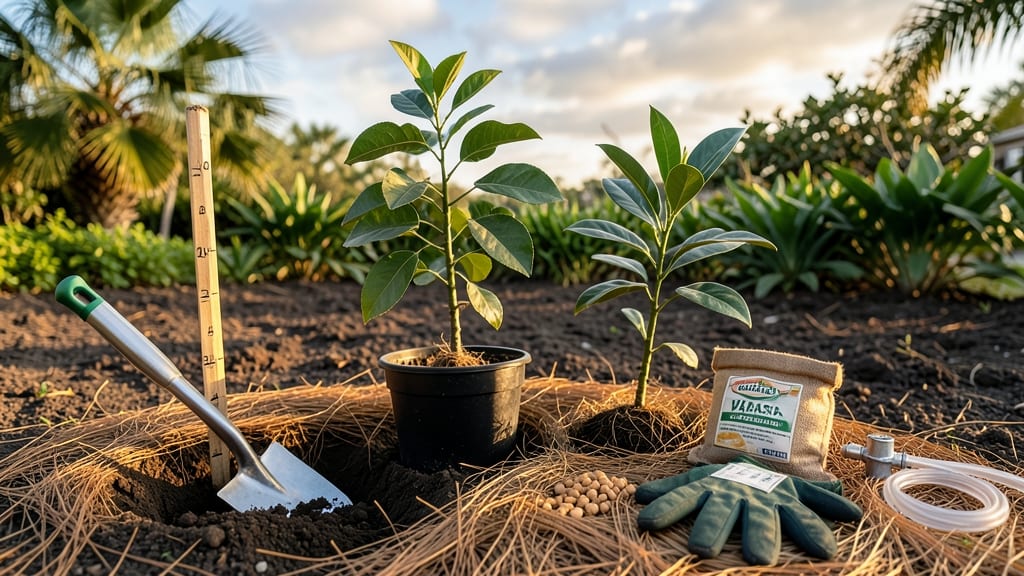
Planting fruit trees in Florida’s warm climate feels like walking a tightrope—too early, and you risk scorching young roots; too late, and your tree might struggle to establish before summer’s brutal heat.
The key isn’t just picking a season but matching your fruit variety to Florida’s unique chill-hour zones, where citrus thrives year-round while peaches need a carefully timed winter window.
I’ve watched countless Florida gardeners make the same mistakes: planting tropical fruit trees in the dead of summer or assuming all trees follow the same schedule. But here’s what works—whether you’re in North Florida’s cooler pockets or South Florida’s frost-free paradise.
You’ll learn the exact months to dig in, how to prep soil for Florida’s sandy loam, and which varieties play by their own rules.
Let’s cut through the guesswork. From chill-hour matching for temperate fruits to avoiding hurricane season’s planting pitfalls, this guide gives you the confidence to plant once and harvest for years. No more second-guessing—just a thriving orchard tailored to Florida’s quirks.
Ready to turn your yard into a fruit-bearing oasis? The first step is knowing when to start. Grab your shovel and let’s get growing.
Best planting months for Florida fruit trees by chill-hour requirements
Florida’s frost-free climate makes it perfect for growing fruit trees, but timing matters more than you might think. The key is matching your tree’s chill-hour requirements to Florida’s temperature zones. Citrus trees need almost no chill hours, while peaches or plums require 300–800+ hours to fruit properly.
Planting at the wrong time can lead to poor growth or even tree death.
In Florida, the best planting window is typically late winter to early spring (February–March) for most varieties. This gives roots time to establish before summer’s intense heat. However, tropical fruit trees like mangoes or avocados can be planted year-round, while temperate varieties need cooler months to thrive.
Here’s how to align your planting with Florida’s unique climate zones and chill-hour needs:
For North Florida (zones 7b–8a), cooler winters allow higher-chill varieties like peaches or plums. Plant these in late fall or early winter to avoid heat stress.
In Central and South Florida (zones 9a–11), stick to low-chill or tropical varieties like citrus, mangoes, or avocados, which thrive when planted in spring or early summer.
Pro tip: If you’re in a transition zone (e.g., Orlando or Tampa), opt for intermediate-chill varieties like figs or loquats. These adapt better to Florida’s unpredictable microclimates. Always check the USDA Plant Hardiness Zone Map for your exact location.
Another critical factor is soil temperature. Wait until the ground warms to at least 60°F (15°C) before planting. Use a soil thermometer to monitor—cool soil slows root growth.
In South Florida, this usually means waiting until March or April, while North Florida can start as early as January.
Once you’ve matched your tree to the right chill hours and planting window, focus on well-draining soil and full-sun exposure. Florida’s sandy soils often need amendments like compost or peat moss to retain moisture.
Mulch heavily around the base to protect roots from extreme heat or cold snaps, even in frost-free zones.
Remember: Florida’s hurricane season (June–November) can stress young trees. If planting in late summer, choose container-grown trees with established root systems—they recover faster from storms. Always stake young trees to prevent wind damage.
By aligning your planting timeline with chill-hour needs and Florida’s microclimates, you’ll set your fruit trees up for lifelong productivity—no frost worries included! 🌳
How to match Florida’s microclimates to fruit tree success
Florida’s diverse microclimates—from North Florida’s cooler hills to South Florida’s tropical heat—mean planting times vary dramatically. North Florida’s Zone 8a (like Jacksonville) can handle 200-300 chill hours, while South Florida’s Zone 10b (like Miami) thrives with zero chill hours.
Match your tree to your zone to avoid stunted growth or fruit failure.
Start by identifying your local microclimate. Coastal areas stay warmer year-round, while inland zones near lakes or forests may experience cooler nights. Use the UF/IFAS Chill Hour Calculator to pinpoint your exact chill-hour range—this determines which fruit trees will thrive in your yard.
For North Florida gardeners, focus on peaches, plums, and figs (300-500 chill hours).
In Central Florida (Zone 9a), opt for loquats, persimmons, and cold-hardy citrus varieties like ‘Satsuma’ mandarins (200-300 chill hours). South Florida’s tropical climate is perfect for avocados, mangoes, and citrus like ‘Valencia’ oranges, which need zero chill hours.
- Best Trees: Peaches, Plums, Figs
- Chill Hours: 300-500
- Planting Window: Late Feb–March
- Soil Prep: Well-draining, slightly acidic
- Best Trees: Loquats, Persimmons, Satsuma Mandarins
- Chill Hours: 200-300
- Planting Window: March–April
- Soil Prep: Sandy loam with compost
- Best Trees: Avocados, Mangoes, Valencia Oranges
- Chill Hours: 0-100
- Planting Window: May–June (avoid summer heat)
- Soil Prep: Fast-draining, slightly alkaline
Soil type plays a critical role in Florida. Sandy soils (common in Central/South Florida) drain too quickly—amend with compost and organic matter to retain moisture. Clay-heavy soils (North Florida) need gypsum or pine bark to improve drainage.
Test your soil’s pH and texture before planting; most fruit trees prefer slightly acidic to neutral soil (pH 6.0-7.0).
Rainfall patterns also dictate planting success. Summer planting (May-June) in South Florida risks hurricane season stress, while spring planting (March-April) in North Florida aligns with natural rainfall. Drip irrigation is a game-changer—it delivers consistent moisture without overwatering, which is crucial in Florida’s humid climate.
Finally, wind exposure matters. Coastal areas face salty winds that stress young trees—plant near windbreaks like fences or hedges. Inland zones may experience dry winds; mulch heavily to lock in moisture.
By aligning your tree variety, soil prep, and planting window with your microclimate, you’ll set your fruit trees up for decades of productive growth. 🌳