
Trees
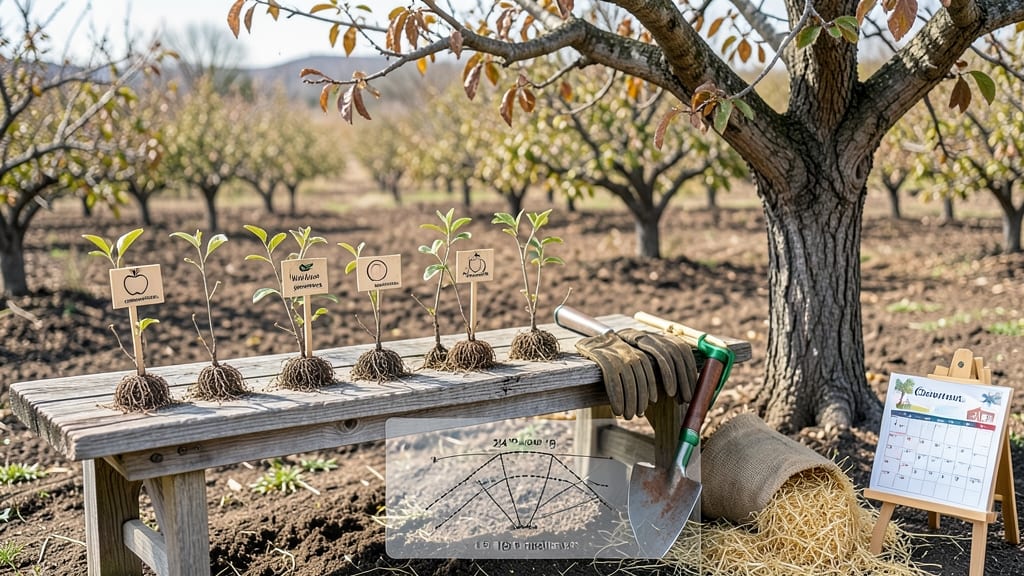
Timing your fruit tree planting in Colorado isn’t just about the calendar—it’s about surviving the state’s unpredictable frost dates and matching varieties to their chill-hour needs.
Whether you’re dreaming of juicy peaches or crisp apples, planting too early or late can mean the difference between a thriving orchard and a sad, frost-nipped sapling.
Most Colorado gardeners know the general rule: late winter to early spring is the sweet spot. But here’s the catch—your elevation matters. Denver’s last frost might come in mid-April, while Colorado Springs could still see frost in early May.
That’s why I’ll break down the exact planting windows for your specific chill zone, plus which fruit trees thrive where.
You’ll also discover how to prep your soil for Colorado’s rocky terrain, choose the right rootstock for high-altitude stress, and avoid the three mistakes that kill fruit trees here. Let’s get those 🍎 roots growing strong so you can enjoy homegrown harvests for years.
Ready to plant with confidence? By the end, you’ll know not just when to dig in your fruit trees, but how to set them up for success—no more guessing games about frost or chill hours.
Colorado fruit tree planting calendar: best months by chill-hour zones
Colorado’s diverse climate—from high-altitude valleys to desert-like plains—means chill-hour zones dictate the best planting window for fruit trees. Most varieties thrive when planted during late winter dormancy, but timing varies by USDA Zone 5-8 and elevation.
For example, Denver’s Zone 5b (20-25°F winters) has a later frost date than Colorado Springs’ Zone 6a (10-15°F winters).
Your goal is to plant 4-6 weeks before your last frost date—typically March-April for most of Colorado. This ensures roots establish before buds break.
For high-chill varieties like apples (600+ chill hours), aim for Zone 5-6 areas, while low-chill peaches (300-500 hours) suit Zone 7-8 regions like the San Luis Valley.
Here’s how to match your microclimate to the right planting window. Use your local CoCoRaHS station or Colorado State University Extension frost maps to pinpoint your zone. For instance, Fort Collins (Zone 5a) plants in early April, while Albuquerque (Zone 7b) can start as early as February.
Pro tip: Bare-root trees (sold dormant) can handle late winter planting (February), but container-grown trees wait until soil temps reach 40°F (mid-March in most areas). This prevents root shock from thawing cycles.
| Chill-Hour Zone | Best Planting Window | Key Varieties | Last Frost Date (Avg.) | Soil Prep Tip |
|---|---|---|---|---|
| Zone 5 (20-25°F) | Late March–Early April | Honeycrisp apples, Montmorency cherries | April 1–15 | Amend clay soil with compost |
| Zone 6 (10-15°F) | Mid-February–March | Elberta peaches, Stanley plums | March 15–April 5 | Test pH (6.0–7.0); add lime if needed |
| Zone 7 (5-10°F) | January–Early February | Flame Seedless grapes, Redhaven peaches | February 15–March 1 | Improve drainage with sand |
| Zone 8 (10-15°F, rare) | December–January | Fig trees, Meyer lemons | January 15–February 1 | Use raised beds for warmth |
For high-altitude gardens (e.g., Telluride, Zone 6), plant 2-3 weeks later than valley areas due to later frost risks. Always check microclimates: South-facing slopes warm faster than north-facing yards. If you’re unsure, err on the side of planting later—even a single frost can kill new shoots.
After planting, mulch heavily (4–6 inches) with straw or wood chips to protect roots from temperature swings. Water deeply once a week for the first month, then taper to every 10–14 days once established. Avoid overhead watering to prevent fungal diseases like apple scab.
Colorado’s dry climate means irrigation is critical in the first year. Use drip systems or soaker hoses to deliver water slowly at the root zone. In Zone 5-6, young trees may need winter watering during dry spells to prevent desiccation.
Remember: Chill hours ≠ frost dates. A tree might need 600 chill hours but still bloom too early if planted in a warmer microclimate. Use local nurseries’ recommendations—they’ve tested varieties for your area.
For example, ‘Freedom’ apples thrive in Zone 5, while ‘Sierra Gold’ nectarines are Zone 6+ specialists.
🌱
Top 5 fruit trees for Colorado gardens: chill-hours, hardiness, and planting tips
Colorado’s high-altitude climate favors fruit trees that thrive on chill hours (40°F or below) and well-draining soil. The ‘Honeycrisp’ apple and ‘Stanley’ plum are top picks for their cold hardiness, while ‘Elberta’ peaches need slightly warmer microclimates.
Always match your tree’s chill-hour needs to your USDA Zone (5-8 in Colorado) to avoid poor blooming.
For example, apples (600-800 chill hours) excel in Zone 5-6, while peaches (300-500 chill hours) prefer Zone 6-7. Planting in late winter or early spring (February-April) gives roots time to establish before summer heat.
Dwarf varieties like ‘Bartlett’ pear are ideal for small spaces, saving space without sacrificing yield.
Soil prep is non-negotiable: Amend clay-heavy soils with compost to improve drainage, and avoid planting in low-lying areas where frost lingers. Mulch with wood chips to retain moisture and suppress weeds. Young trees benefit from staking in windy Colorado gardens to prevent uprooting.
Here’s how to choose the best fruit trees for your Colorado garden:
| Variety | Chill Hours | USDA Zone | Planting Tip |
|---|---|---|---|
| ‘Honeycrisp’ Apple | 600-800 | 5-6 | Full sun, well-drained soil; prune in late winter. |
| ‘Elberta’ Peach | 300-500 | 6-7 | Avoid wet soil; plant on south-facing slope. |
| ‘Stanley’ Plum | 400-600 | 5-7 | Dwarf variety; ideal for containers or small yards. |
| ‘Bartlett’ Pear | 500-700 | 5-6 | Thin fruit in summer to improve size/quality. |
| ‘Montmorency’ Cherry | 400-600 | 5-6 | Prune suckers annually; harvest early for best flavor. |
After planting, water deeply once a week for the first month to encourage root growth. Avoid overhead watering to prevent fungal diseases like apple scab. In Zone 7+, consider late-summer pruning to remove suckers and shape the tree for better airflow.
For container growing, choose dwarf rootstocks and use a 5-gallon pot with drainage holes. Move containers to a sheltered spot in winter to protect roots from freezing. With the right variety and care, your Colorado fruit trees can produce harvests for decades!