
Plants
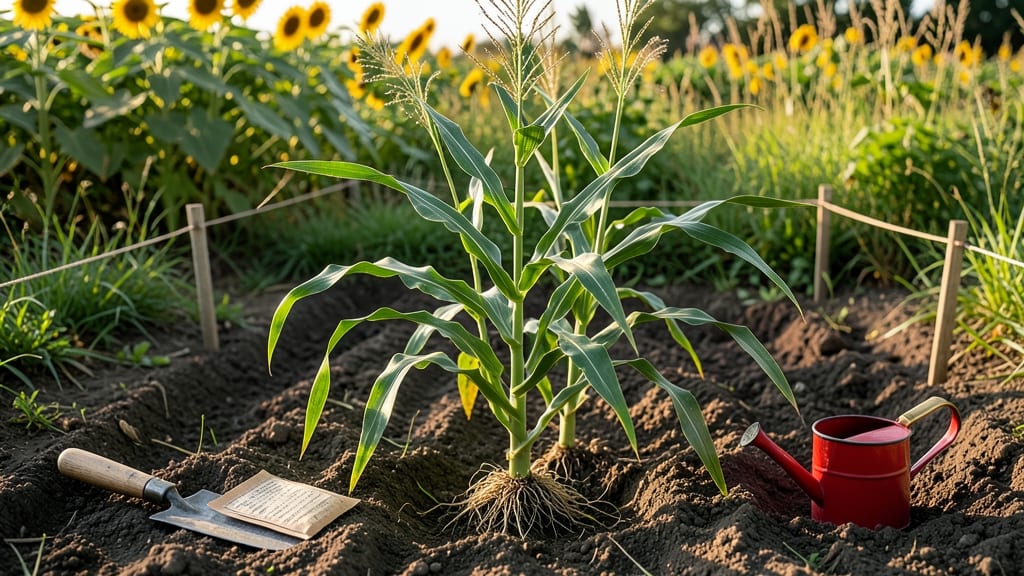
Knowing when to plant corn in Zone 5b isn't just about following a calendar—it's about timing your 🌽 seeds with the soil's readiness and your region's frost patterns.
One week too early, and a late frost could wipe out your tender sprouts; too late, and your harvest might shrink before summer's end.
Zone 5b's unpredictable swings between 50°F and 80°F demand precision. The ideal window—mid-April to mid-May—balances soil warmth (at least 50°F) and the last frost date (usually mid-May).
But whether you're in the Midwest's flat fields or the Northeast's rolling hills, local microclimates can shift that timeline by 1-2 weeks.
Here's the game-changer: most corn varieties need 75-100 days to mature, so planting too late risks harvests clashing with fall's first frost (mid-October in 5b). I'll break down how to calculate your exact window, adjust for early vs. late varieties, and even extend your season with smart tactics.
Skip the guesswork—let's turn your corn patch into a reliable harvest, not a gamble. Ready to plant with confidence?
Optimal soil temperature & frost-free deadline for planting corn in Zone 5b
Getting your corn planting timing right in Zone 5b starts with two critical factors: soil temperature and your last frost date. Corn seeds need soil temps of 50°F or warmer to germinate properly, while your frost-free window determines how long you have for a full harvest.
In Zone 5b, these windows vary slightly depending on whether you're in the Northeast (like New York) or the Midwest (like Michigan).
For most of Zone 5b, your last frost date typically falls between mid-April and mid-May, but this can shift 1-2 weeks earlier in southern regions or 1-2 weeks later in northern areas. Corn needs 90-120 frost-free days to mature, so planting too late risks immature ears before fall frost.
Meanwhile, planting too early when soil is still cold can lead to poor germination or rot.
Here’s the golden rule: Wait until soil temps hit 50°F consistently—this usually aligns with 2-3 weeks after your last frost date. For example, if your last frost is May 10, aim to plant by May 20-25.
Use a soil thermometer to check—corn seeds won’t sprout reliably below 50°F, even if air temps feel warm.
| Factor | Zone 5b Specification | Actionable Tip |
|---|---|---|
| Soil Temperature | 50°F+ (consistently) | Use a soil thermometer 2-3 inches deep in the morning. |
| Last Frost Date | Mid-April to mid-May | Plant 2-3 weeks after your average last frost. |
| Frost-Free Days Needed | 90-120 days | Choose early varieties (60-70 days) for shorter seasons. |
| Ideal Planting Window | Mid-April to mid-May | For southern Zone 5b, plant by May 1; for northern, wait until May 15. |
| Corn Variety Maturity | Sweet: 60-100 days | Field: 90-120 days | Pick early sweet corn (e.g., 'Silver Queen') for Zone 5b. |
Zone 5b’s variable microclimates mean your exact planting date depends on location. For example, Chicago (Zone 5b) has a later frost date (May 15) compared to Boston (Zone 5b), which averages May 5.
Check your local USDA Plant Hardiness Zone Map or use a frost calendar from your state extension office for precise timing.
If you’re unsure about soil temps, opt for early-maturing corn varieties like 'Early Sunglow' (65 days) or 'Peaches and Cream' (70 days). These give you a buffer of 2-3 weeks before fall frost, reducing the risk of immature harvests.
Avoid late varieties (like 'Golden Bantam', 90+ days) unless you’re in the southern edge of Zone 5b.
Pro tip: Warm your soil faster by covering beds with black plastic mulch 1-2 weeks before planting. This raises soil temps by 5-10°F, helping seeds germinate 2-3 days earlier. Just remove the mulch after planting to avoid overheating young seedlings.
Finally, remember that corn pollination is temperature-sensitive. If nights dip below 55°F during tasseling (6-8 weeks after planting), pollen won’t transfer efficiently, leading to blind ears. Monitor weather forecasts and adjust planting dates if unseasonably cool temps are predicted.
By aligning your planting with soil warmth and frost-free windows, you’ll set your corn up for strong germination, healthy growth, and a reliable harvest—no matter where in Zone 5b you garden. 🌽
Optimal soil temperature & frost-free deadline for planting corn in Zone 5b
Corn thrives when planted in warm soil and after the last frost date, but Zone 5b’s cool springs demand precision. For most varieties, soil must reach 50°F (10°C)—use a soil thermometer to confirm. In my experience, waiting for consistent 60°F (15°C) soil speeds germination and reduces rot risks.
Zone 5b’s average last frost date falls between mid-April and mid-May, but this varies by location. For example, Chicago’s last frost is typically April 20th, while Syracuse’s can linger until May 10th. Check your local USDA frost maps or ask nearby gardeners for their observed dates.
Corn needs 90-120 frost-free days to mature, so calculate backward from your first frost date (usually mid-October in Zone 5b). For a 75-day variety, plant by June 25th to avoid frost damage. Late varieties (like 100-day) push harvests into September but risk early frosts.
| Factor | Zone 5b Specification | Pro Tip |
|---|---|---|
| Soil Temperature | 50°F+ (ideal: 60°F+) | Use a soil thermometer at 2-inch depth. |
| Last Frost Date | Mid-April to mid-May | Plant 2 weeks after your average date. |
| Frost-Free Days | 90–120 days | Choose early varieties for shorter seasons. |
| Harvest Window | July–September | Aim for silks turning brown by August. |
For sweet corn, prioritize early-maturing varieties like ‘Silver Queen’ (70 days) or ‘Peaches and Cream’ (78 days). These handle Zone 5b’s unpredictable springs better than longer-season types. If your area has late frosts, opt for baby corn varieties (e.g., ‘Ambrosia’) that mature in 60 days.
Protect young plants with row covers if frost threatens after planting. I’ve used floating row covers to extend the season by 2–3 weeks in my Zone 5b garden. Remove covers once plants reach 12 inches tall to avoid overheating.
Remember: Corn pollinates via wind, so plant in blocks (not rows) to ensure cross-pollination. A 4x4-foot block of 30 plants guarantees better yields than scattered rows. 🌽