
Plants
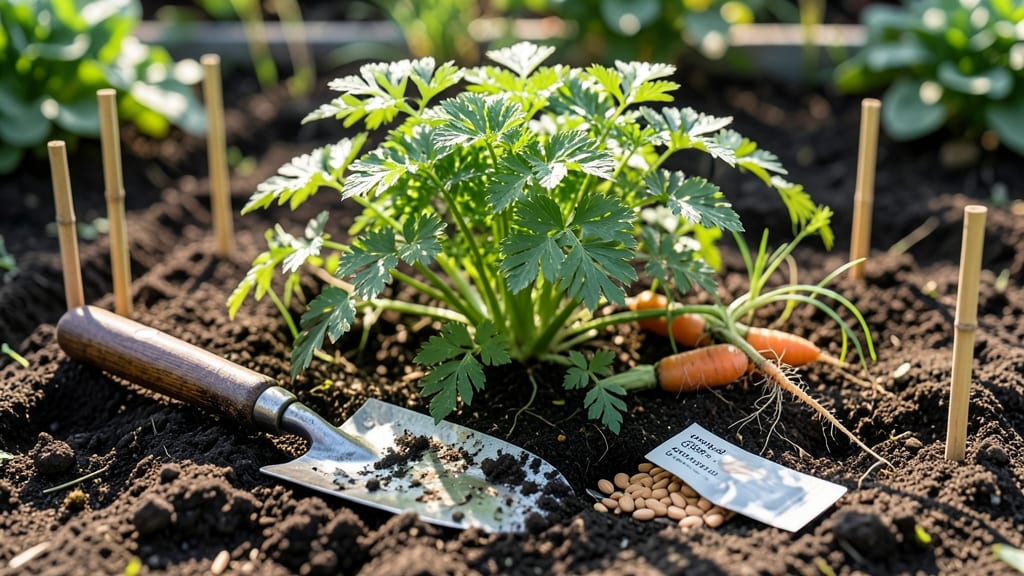
Timing your fall carrot planting just right could mean the difference between sweet, crisp 🥕 roots and a bitter disappointment when frost hits. The key isn't guessing—it's working backward from your first frost date to give these crunchy veggies the 12-week growing window they need to mature properly.
Let's say you're in USDA Zone 6a (like me!) where that first frost typically arrives around October 15th. Counting back gives you a clear window: August is your prime month to start sowing, but don't worry if you missed it—September can still work with the right variety.
The secret lies in understanding how soil temperatures and daylight changes affect carrot growth.
What I've learned from years of trial and error is that fall carrots actually develop more natural sweetness when they grow in cooler weather. But you can't just plant anytime and expect perfection—soil prep matters just as much as timing.
We'll cover everything from loose, stone-free beds to companion plants that protect your crop from pests while you wait for that perfect harvest window.
Ready to transform your garden into a carrot patch that keeps giving until frost? I'll walk you through the exact steps to calculate your planting window, choose the best varieties for your climate, and even extend your harvest with simple frost-proofing tricks.
Let's get those seeds in the ground at the perfect moment!
Optimal fall carrot planting dates by USDA Zone (with frost deadline calculator)
Fall carrots thrive when planted 4-6 weeks before your first frost date, giving roots time to mature before winter chill sets in. The exact timing varies by USDA zone, with cooler climates needing earlier sowing than warmer regions.
For example, gardeners in Zone 3 should plant by early August, while those in Zone 10 can wait until late September. This window ensures carrots reach harvest-ready size (¾–1½ inches) before hard frost—typically 28°F or below—which turns roots woody and inedible.
To pinpoint your ideal planting date, start with your average first frost date (check the USDA Plant Hardiness Zone Map). Subtract 70–80 days (carrots' average maturity) to calculate your last possible sowing window.
For instance, if your frost date is October 15, plant between August 2 and September 5. Pro tip: Use short-day varieties like 'Nantes' or 'Paris Market' for faster fall harvests—they mature in 50–60 days, leaving room for error if frost comes early.
Regional adjustments matter! In northern zones (3–5), aim for late July to early August planting to avoid bolted or stunted roots from early frost. In southern zones (7–10), extend sowing to mid-September, but use row covers to protect tender seedlings if nights dip below 50°F.
Always test soil temps: carrots germinate best in soil 55–85°F—wait until soil warms post-summer heatwaves to avoid slow sprouting.
🌱
🌡️ Fall Carrot Planting by USDA Zone
| USDA Zone | First Frost Date | Planting Window | Best Varieties |
|---|---|---|---|
| 3–4 | Oct 1–15 | Late July–early Aug | 'Early Nantes', 'Chantenay' |
| 5–6 | Oct 15–31 | Early–mid Aug | 'Paris Market', 'Danvers' |
| 7–8 | Nov 1–15 | Mid Aug–Sept 15 | 'Rainbow', 'Short 'n Sweet' |
| 9–10 | Dec 1–Jan 15 | Sept 1–Oct 15 | 'Little Finger', 'Cosmic Purple' |
⚠️ Note: Adjust for early frosts by planting 2 weeks earlier or using row covers.
Don’t let soil temperature fool you—even if air temps drop, underground warmth can linger. Use a soil thermometer to confirm temps are 60°F+ before sowing. In Zone 6a (like my garden!), I’ve had success planting August 15–25 by mixing compost into the top 6 inches of soil to retain heat.
For sandy soils, add a 1-inch layer of peat moss to prevent seeds from drying out during germination.
Extending the season? Try succession planting: sow a second batch 3 weeks after your first planting to stagger harvests. For example, if your first batch goes in August 10, add a second on August 31.
This ensures a continuous supply of baby carrots or mature roots, depending on variety. Just remember: shorter-day varieties (like 'Paris Market') are your best bet for late-season success—they bolt less than long-day types.
Watch for false starts—some years, warm spells in October trick you into thinking frost is far off. Use the 10-day forecast rule: if temps are predicted to drop below 40°F within 10 days of your carrots reaching maturity, harvest immediately or protect with frost blankets.
I once lost a batch of 'Danvers' to a 28°F snap in early October—since then, I’ve made it a rule to harvest before the first light frost, even if roots aren’t fully sized.
Pro move: Mark your calendar with 3 key dates:
- Last planting date (70 days before frost).
- Thinning deadline (when seedlings hit 2 inches tall).
- Harvest window (when tops reach 6–12 inches). Stick to these, and you’ll avoid the heartbreak of frost-bitten carrots or overgrown greens.
🌿
The 12-Week pre-frost schedule: how to time carrot maturity for sweetness
Timing your fall carrot planting to a 12-week pre-frost schedule ensures sweet, fully mature roots before winter arrives. Carrots need 50-80 days to reach harvest size, but cooler fall temps slow growth—so adjust your planting window to match your local frost date.
For example, if your first frost hits October 15, aim to plant by July 15 for a late-September harvest.
Start by checking your USDA hardiness zone to estimate frost dates. In Zone 5, where frosts arrive by mid-October, I plant my 'Danvers Half Long' variety in early August. Warmer zones like Zone 8 can extend planting until mid-September, but always leave 12 weeks before the first expected frost.
Use the National Weather Service frost predictor to pinpoint your exact deadline.
Soil temperature plays a critical role—carrot seeds need 60°F+ to germinate reliably. In early fall, soil cools faster, so I test it with a soil thermometer before planting.
If temps drop below 55°F, germination slows dramatically. In my Zone 6a garden, I wait until late July when soil stays above 65°F for consistent sprouting.
- Calculate Your Frost Deadline
Use the USDA Plant Hardiness Zone Map to find your first frost date. Subtract 12 weeks to determine your latest planting window.
- Test Soil Temperature
Soil must be 60°F+ for germination. Wait until late July in cooler zones (Zones 3-5) or early September in warmer zones (Zones 7-10).
- Choose Fast-Maturing Varieties
Select 50-60 day varieties like 'Paris Market' (round) or 'Nantes' (short) for reliable fall harvests. Avoid long-season types like 'Chantenay'.
- Plant in Stages
Sow half your seeds at the ideal time, then repeat 2 weeks later for a staggered harvest. This spreads out your work and reduces pest pressure.
- Monitor Growth Weekly
Check seedlings for thinning needs (2-3" apart) and pest damage. Use row covers if temperatures dip below 50°F at night.
Once planted, carrots grow fastest in consistent warmth but slow as temps drop. I’ve found that August-sown carrots in my garden reach harvest size by late September—just before the first frost.
To extend the season, I use black plastic mulch to keep soil warm and straw mulch to insulate roots as temps fall. This buys me an extra 2-3 weeks of harvest time.
Harvest before hard frosts (28°F) hit, as frozen carrots become woody and bitter. I test readiness by gently pulling a few roots—if they’re 3/4" to 1.5" thick with smooth skin, they’re perfect.
In my experience, September 15 is the ideal harvest window in Zone 6a, but adjust based on your local frost dates. Store freshly pulled carrots in the fridge for up to 3 weeks to preserve sweetness.
Pro tip: If frost arrives early, harvest what you can and replant fast-maturing varieties like 'Early Nantes' in late summer for a second crop. With the right timing, you’ll enjoy sweeter, more flavorful carrots than spring plantings—all thanks to fall’s cooler temps converting starches into natural sugars! 🥕