
Trees
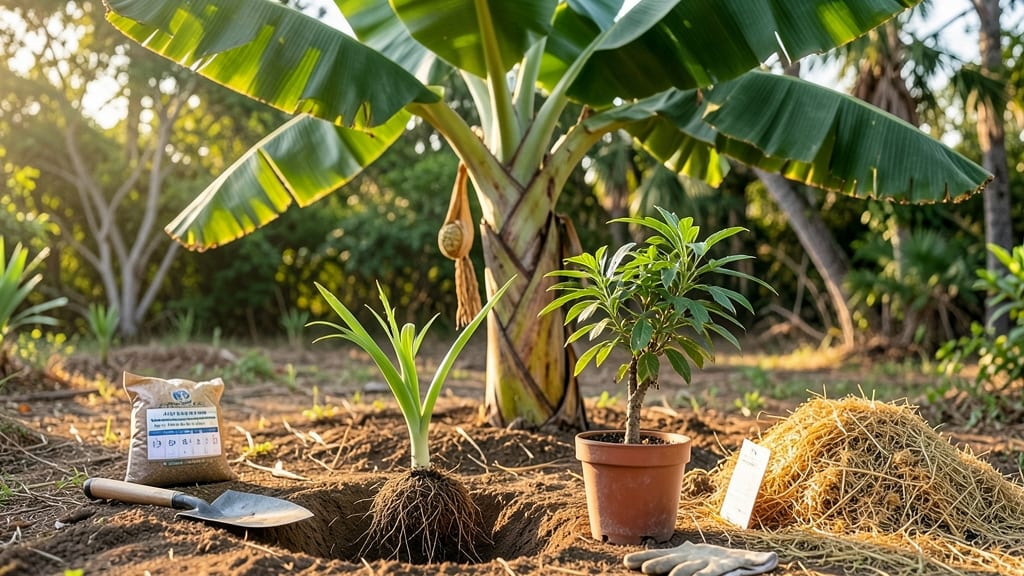
If you're dreaming of harvesting your own 🍌 from Florida’s frost-free soil, timing your banana tree planting could mean the difference between a thriving tropical garden and a costly mistake.
Florida’s 9a-11 zones make banana trees a year-round possibility, but the best window—March through May—aligns perfectly with warmer soil temperatures and minimal pest pressure. Planting outside this ideal period might still work, but you’ll face slower growth or even root stress.
I’ve seen firsthand how a spring start gives banana trees the head start they need to establish strong roots before Florida’s summer heat ramps up. Whether you’re in coastal Miami or inland Orlando, the right timing sets the stage for lush foliage and—eventually—those sweet, ripe bananas you’ve been craving.
Let’s break down exactly what you need to know to plant your banana tree at the perfect moment, from soil prep to regional microclimates that could change your approach entirely.
Best planting season for banana trees in Florida: spring vs. fall timing
Florida’s frost-free climate means you can plant banana trees year-round, but timing matters for faster growth and fruit production. The ideal window is March through May, when soil warms consistently above 60°F (15°C).
This aligns with Florida’s USDA Zones 9a-11, where frost is rare but possible in North Florida during January.
In South Florida (Zones 10-11), you can plant banana trees anytime—even in summer (June-August)—since temperatures stay warm. However, spring planting gives young trees a head start before summer’s intense heat. Fall planting (September) is also viable but risks slower growth before winter’s mild chill.
For North Florida (Zones 8b-9a), like Jacksonville or Tallahassee, avoid planting in December-February due to rare frost risks. Even a 28°F (-2°C) dip can damage young trees. Instead, opt for early spring (March) or late summer (August-September) to maximize growth before cooler months.
🌱Pro Tip: Check your local frost-free date (typically January 15 in North Florida) and plant 4-6 weeks after to ensure stable soil temperatures.
| Region | Best Planting Window | Soil Temp Requirement | Frost Risk |
|---|---|---|---|
| South Florida (Zones 10-11) | Year-round (best: March-May, Sept) | 60°F+ (15°C+) | None |
| Central Florida (Zones 9b-10) | Year-round (best: March-May) | 60°F+ (15°C+) | Rare (Jan-Feb) |
| North Florida (Zones 8b-9a) | March-May, Sept (avoid Dec-Feb) | 65°F+ (18°C+) | Moderate (Jan-Feb) |
🌡️ Note: Use a soil thermometer to confirm 60°F+ before planting.
Banana trees thrive in Florida’s humid subtropical climate, but soil temperature is critical. Young roots struggle in cool soil (<55°F/13°C), slowing growth. In North Florida, wait until April to ensure soil stays warm.
In South Florida, you can plant as early as February if soil is pre-warmed.
💡Regional Tip: Coastal areas (e.g., Miami, Fort Myers) have warmer microclimates than inland zones (e.g., Orlando, Gainesville). Plant 2-4 weeks earlier in coastal zones to capitalize on milder winters.
For container-grown banana trees, timing is less critical since pots warm faster. However, spring planting still yields the fastest growth. Use black plastic pots to absorb sunlight and keep roots warm in cooler months.
🌿Variety Matters: Dwarf varieties (e.g., 'Dwarf Cavendish') adapt better to North Florida’s cooler pockets than standard types. Choose hardier cultivars if you’re near Zone 8b.
After planting, focus on mulching to retain soil warmth. Use 3-4 inches of organic mulch (e.g., pine straw or wood chips) to protect roots from temperature swings. This is especially important in fall-planted trees facing winter’s mild chill.
Best planting season for banana trees in Florida: spring vs. fall timing
Florida’s frost-free climate means you can plant banana trees almost year-round, but spring (March–May) remains the optimal window for robust growth. The soil temperature typically reaches 65°F+ by March, signaling it’s safe to plant without risking cold damage.
In North Florida (Zone 9a), even a light frost can harm young trees, while South Florida (Zones 10b–11) enjoys frost-free conditions year-round.
For fastest establishment, aim for late March to early May. This aligns with Florida’s rainy season onset, providing natural moisture without over-reliance on irrigation. Fall planting (September) is also viable, but growth slows as temperatures drop, delaying fruit production by 1–2 seasons.
Avoid planting in summer’s peak heat (June–August), as young roots struggle to establish in dry, compacted soil.
| Season | Ideal Planting Window | Soil Temp Requirement | Growth Benefit |
|---|---|---|---|
| Spring | March–May | 65°F+ | Rapid root establishment, minimal frost risk |
| Fall | September | 70°F+ | Slower growth, but avoids summer heat stress |
| Summer | June–August | 75°F+ | Risk of transplant shock; high water needs |
Regional differences matter: North Florida growers should prioritize spring planting to outpace summer’s humidity and pests. Meanwhile, South Florida’s microclimates (like the Keys or Miami) allow year-round planting, though September still offers a slight edge for fall harvests.
Always check your local frost dates—even a 28°F dip can kill young banana trees.
Pro tip: Container-grown banana trees can be planted anytime in Florida, as you control soil temperature. Just ensure pots have drainage holes and use well-draining potting mix to mimic tropical conditions. For in-ground planting, amend clay-heavy soils with compost or coconut coir to improve drainage.
If you’re in Zone 9a (North FL), wait until after April 15 to plant, as late frosts occasionally dip below 32°F. Use mulch or frost cloth for added protection during January–February. In Zones 10b–11 (South FL), plant anytime—but spring still yields the fastest fruit production.
Remember, banana trees thrive on consistency. Planting in spring gives your tree 6–8 months of active growth before Florida’s cooler winter months (November–February), when growth naturally slows. With the right timing, you’ll enjoy harvests within 9–12 months—far faster than waiting for a fall-planted tree.