
Plants
Best planting months for summer grass in Arizona’s climate zones
Arizona’s diverse climate zones—from the low deserts of Phoenix to the high deserts of Flagstaff—create wildly different conditions for summer grass. The perfect planting window shifts based on elevation, monsoon timing, and soil temperatures.
In the Sonoran Desert (Phoenix/Tucson), you’ll plant earlier than in the Colorado Plateau (Flagstaff), where cooler nights delay growth. Let’s break down the exact months that work for your region.
For low desert areas (Phoenix, Tucson, Yuma), aim to plant between mid-April and early June. This window ensures soil temperatures stay above 65°F—critical for warm-season grasses like Bermuda and Zoysia.
Planting too early risks heat stress from sudden summer heatwaves, while late June planting may struggle with monsoon downpours and fungal risks. The University of Arizona Extension recommends late May as the sweet spot for most low-desert lawns.
In high desert regions (Flagstaff, Prescott, Sedona), shift your timeline to late May through July. Cooler nights and shorter growing seasons mean grasses establish slower. Start seeds or sod in June to avoid late-spring frosts (which can still occur in May at higher elevations).
These areas also benefit from July planting because the monsoon moisture arrives later, reducing drought stress during establishment.
Here’s the visual breakdown of your ideal planting window by region:
| Region | Ideal Planting Window | Soil Temp Requirement | Key Risk to Avoid |
|---|---|---|---|
| Low Desert (Phoenix, Tucson, Yuma) | Mid-April to early June | ≥65°F (consistently) | Heat stress from early planting |
| High Desert (Flagstaff, Prescott, Sedona) | Late May to July | ≥60°F (warmer preferred) | Late frosts or drought stress |
| Monsoon Zone (Tucson, Phoenix outskirts) | Early June (after last 90°F+ day) | ≥70°F (post-monsoon start) | Fungal diseases from excess moisture |
If you’re in a monsoon-prone area (like parts of Tucson or Phoenix outskirts), time your planting for early June—right after the last 90°F+ day of the year. This avoids the fungal risks that come with monsoon downpours.
For example, Bermuda grass planted in late May in Tucson may struggle with brown patch disease if heavy rains follow.
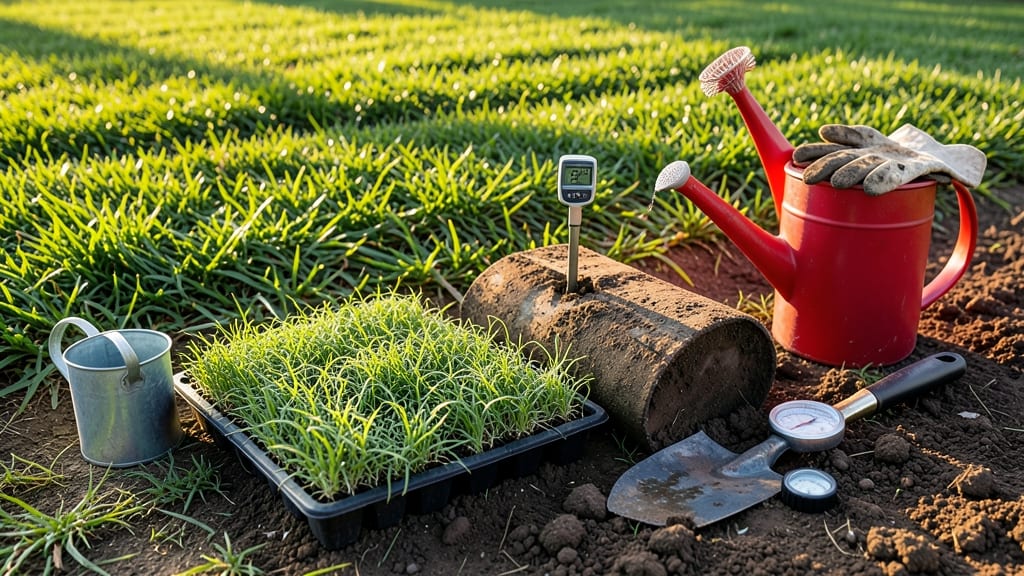
Adjust for microclimates too. A north-facing yard in Phoenix stays cooler and may handle April planting, while a south-facing slope in Flagstaff might need July starts. Use a soil thermometer to confirm temperatures—65°F+ is non-negotiable for seed germination or sod root establishment.
Pro tip: Sod establishes faster than seed in Arizona’s heat, so if you’re planting in June or July, sod gives you a 3-4 week head start over seed. Just ensure the sod is rolled out before 10 AM to minimize heat shock.
For drought-prone areas (like the Saguaro National Park region), consider hydromulching or mulch blankets to retain moisture during the critical first 30 days after planting. This is especially true for Zoysia grass, which needs consistent moisture to root deeply.
Remember: August planting is possible in high-desert areas but risky in low deserts. The intense heat and low humidity can stress young grass, leading to brownout. If you must plant late, choose shade-tolerant varieties like Buffalo grass and prioritize deep, infrequent watering.
Best planting months for summer grass in Arizona’s climate zones
Arizona’s diverse climate zones—from the scorching low deserts of Phoenix to the cooler high deserts of Flagstaff—create wildly different planting windows for summer grass. The key is planting when soil temperatures hit 65°F+ and monsoon rains aren’t yet overwhelming your lawn.
Get this wrong, and you’ll battle heat stress or fungal diseases. Let’s break it down by region and microclimate.
For the low desert (Phoenix, Tucson, Yuma), aim for late April to early June. This window ensures your grass establishes roots before 100°F+ temperatures peak in July. In higher elevations (Flagstaff, Prescott), wait until mid-May to early July—cooler nights and shorter growing seasons demand patience.
Even a 2-week delay can mean the difference between a thriving lawn and a failed patch.
🌡️ Arizona Summer Grass Planting Timeline
| Region | Ideal Planting Window | Soil Temp Requirement | Key Consideration |
|---|---|---|---|
| Low Desert (Phoenix, Tucson) | Late April – Early June | 65°F+ (18°C+) | Avoid monsoon downpours; water deeply post-planting. |
| High Desert (Flagstaff, Prescott) | Mid-May – Early July | 60°F+ (15°C+) | Cooler nights slow growth; extend window if needed. |
| Coastal (Sahuarita, Casa Grande) | Early May – Late June | 68°F+ (20°C+) | Higher humidity increases fungal risk; improve drainage. |
Monsoon season (July–September) is a double-edged sword. While the rains help establish new grass, they also drown roots if soil isn’t well-draining. Test your soil’s percolation rate—ideal drainage means water disappears in 2–4 hours. If your yard holds water longer, amend with sand or compost before planting. Pro tip: Avoid seeding during monsoon peaks; sod is a safer bet for heavy rain periods.
Timing isn’t just about months—it’s about soil temperature. Use a soil thermometer to confirm 65°F+ before planting. Cool mornings in May can fool you; check midday temps for accuracy.
If you’re in doubt, wait until June—your grass will thank you with faster root establishment and better heat resilience later in the summer.
One common mistake? Planting too early (March) in the low desert. Cool nights and 100°F+ days create heat shock, where new grass wilts within days. Conversely, planting too late (July+) risks monsoon fungal diseases like brown patch or dollar spot.
Balance is key—late May to early June is your sweet spot for most of Arizona.
For Bermuda grass, the fastest-growing summer grass, push the window to late April if your soil warms early. Zoysia and Buffalo grass, slower to establish, do better in May–June.
Adjust for shade: South-facing yards can plant 1–2 weeks earlier than north-facing spots, which stay cooler longer.