
Plants
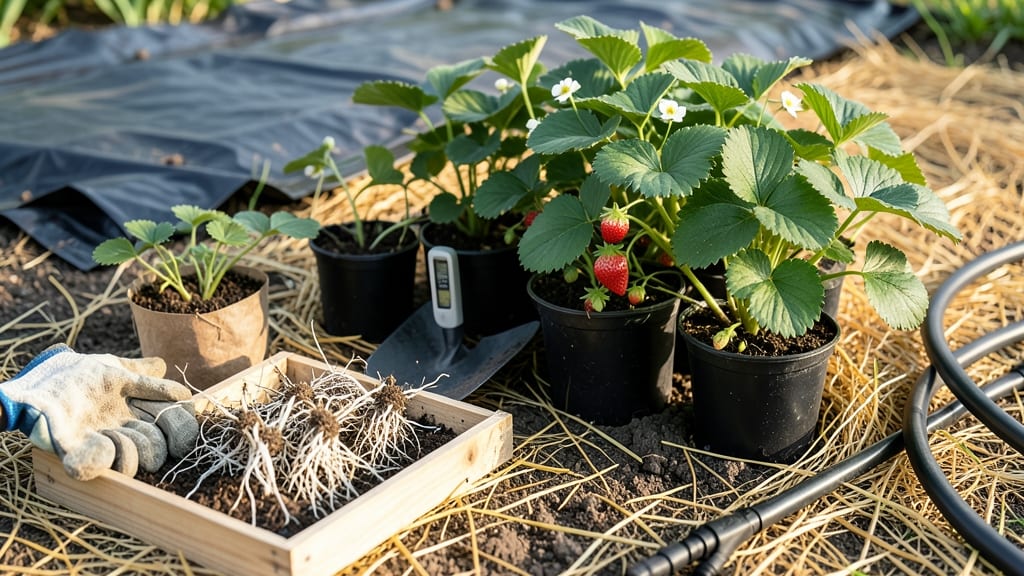
If you're asking "when do you plant strawberries in Kansas", the answer isn't just about the calendar—it's about matching your strawberries 🍓 to Kansas' 5b-7a climate zones and chill-hour requirements.
Plant too early, and frost will nip your young plants; too late, and summer heat will stunt growth before harvest. The key is timing your strawberries to align with soil temperatures and local microclimates, whether you're in humid eastern Kansas or drier western regions.
Most Kansas gardeners get the best results by planting strawberries in early spring (March-April) or late summer (August-September), but the exact window depends on your last frost date and variety. For example, June-bearing strawberries need 500-1,000 chill hours, while day-neutral varieties thrive with fewer.
I'll break down the best planting calendar for your specific zone, so you can avoid common mistakes and maximize your harvest.
Whether you're working with bare-root plants or potted varieties, understanding Kansas' frost patterns and soil readiness is the game-changer. You'll learn how to adjust for late frosts in Zone 5/6 and prepare your soil for optimal growth. Let's dive into the step-by-step guide tailored just for Kansas gardeners.
From choosing the right strawberry varieties to adjusting your planting schedule based on local weather, this guide will help you grow healthier plants and bigger yields.
You'll discover how to extend your growing season, protect your strawberries from Kansas' most common pests, and even troubleshoot issues before they start. Ready to get started?
Kansas strawberry planting zones by chill hours (2024 guide)
Kansas’ diverse climate—from the humid east to the arid west—means strawberries need chill-hour precision to thrive. June-bearing varieties demand 500–1,000 chill hours, while day-neutral types tolerate 300–500 hours.
In Zone 5b (northeast KS), plant by April 15; in Zone 7a (southwest KS), extend to May 1. Microclimates near rivers or hills can push windows 1–2 weeks earlier.
Your last frost dates vary wildly: Wichita averages April 15, while Topeka holds off until April 25. Kansas City sits in between at April 20. Plant 4–6 weeks before these dates for root establishment. Fall planting? Aim for August 1–15 to let roots harden before winter.
🌱
| Zone | Chill Hours | Spring Planting Window | Fall Planting Window | Last Frost Date |
|---|---|---|---|---|
| 5b (Northeast KS) | 800–1,000 | March 15–April 15 | August 1–15 | April 15 |
| 6a (Central KS) | 600–800 | March 20–April 20 | August 10–25 | April 20 |
| 6b (Southwest KS) | 500–700 | March 25–April 25 | August 15–30 | April 25 |
| 7a (Far Southwest KS) | 300–500 | April 1–May 1 | September 1–15 | May 1 |
June-bearing strawberries in Zone 5b need full chill hours to fruit. Skip varieties like Chandler if your area gets fewer than 600 hours—opt for day-neutral types like Seascape instead. Test your chill hours using a local weather station or USDA climate maps for precision.
Soil temperature matters too: roots struggle below 40°F. Use black plastic mulch in Zone 5/6 to warm soil 5–10°F faster. In Zone 7a, prioritize shade cloth during July–August to prevent heat stress.
🌡️
Container gardening extends your window. Potted strawberries in Zone 5b can plant 2 weeks earlier since pots warm faster. Use 5-gallon containers with drainage holes and move them to protected microclimates (e.g., near south-facing walls) for extra warmth.
Fall planting? August 1–15 is critical. Strawberries need 4–6 weeks to establish roots before winter. In Zone 6b, add 2–3 inches of straw mulch by October 15 to insulate crowns. Avoid planting after September 1 in Zone 7a—summer heat will stunt growth.
🍓
Pro tip: Bare-root plants (cheaper) need soaking for 2 hours before planting, while potted plants can go straight in. Both should have crowns at soil level—burying them causes rot. Space rows 18 inches apart for airflow and disease prevention.
Adjust for microclimates: Low spots freeze later; hills warm earlier. Use a frost clock app to track local trends. In Wichita, late frosts hit May 10 every 5 years—plan accordingly!
Step-by-step strawberry planting calendar for Kansas soil & weather
Kansas strawberries thrive when planted in a 4-week window before last frost, but soil prep starts 6 weeks earlier. Test your soil pH (5.5–6.5) in February—amend with lime or sulfur if needed.
In Zone 5b, begin prepping by March 1; in Zone 7a, wait until March 15. Work compost into the top 6 inches of soil for drainage and nutrients.
🌱
- 📅 February: Test soil pH (5.5–6.5) and amend with compost. Order bare-root plants if needed.
- 🌡️ March 1–15: Soak bare-root plants for 2 hours before planting. Space crowns 12–18 inches apart in rows 3 feet apart.
- 🌱 March 15–April 15: Plant potted strawberries or transplant bare-root ones. Mulch with straw (not hay) to retain moisture and suppress weeds.
- ☀️ April 1–May 1: Apply balanced fertilizer (10-10-10) at 1 tbsp per plant. Water deeply in the morning to prevent fungal diseases.
- 🌿 May–June: Remove first-year flowers to boost root growth. Thin plants to 6–8 inches apart for better airflow.
- 🍓 June–July: Harvest fully red berries. Replace mulch if it decomposes below 2 inches.
- 🍂 August–September: For fall planting, choose day-neutral varieties like Seascape. Plant 4–6 weeks before first frost.
Adjust your timeline based on microclimates. South-facing slopes warm 2–3°F faster than low spots—plant there 1 week earlier. In Zone 6b, use black plastic mulch to warm soil 5–10°F and plant 2 weeks ahead of schedule. Monitor soil temperature with a probe; roots need 40°F+ to establish.
💧
Watering is critical in Kansas’ dry spells. Strawberries need 1 inch of water per week, but deep soaks every 3–5 days prevent shallow roots. In July–August, increase to daily watering if no rain falls.
Use drip irrigation to keep leaves dry and reduce fungal diseases like gray mold. Mulch with straw to lock in moisture and keep soil temps stable.
🌡️
Frost protection is key in Zone 5b. Cover plants with frost cloth if temps drop below 28°F after planting. In Zone 7a, late frosts are rare, but shade cloth (30%) during July–August prevents heat stress.
Prune old leaves in early spring to improve airflow and reduce disease. For container-grown strawberries, move pots to protected areas during late frosts.
🍓
Harvest your strawberries when they’re fully red and slightly soft. In Zone 5bJune–July, while day-neutral types produce throughout summer. After harvest, fertilize lightly in early September to prepare plants for winter. In Zone 6b/7aeverbearing varieties in late summer for a fall harvest.