
Trees
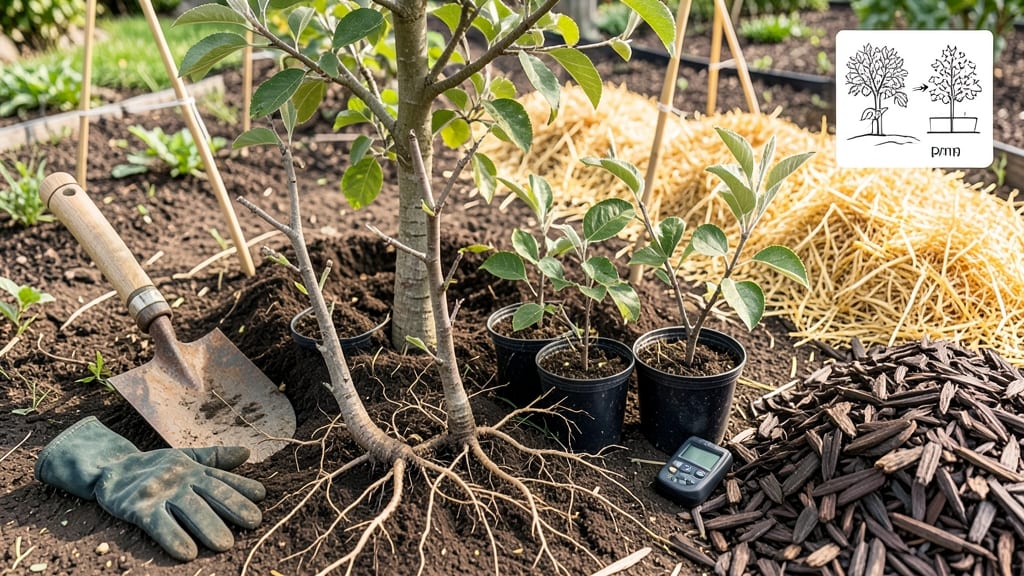
Timing your fruit tree 🍎 planting in Iowa isn’t just about the calendar—it’s about giving your tree the best shot at thriving in zones 5a to 6a. Plant too early, and frost could stunt its roots; too late, and it might struggle to establish before winter.
The key? Understanding your region’s last frost dates and chill-hour needs for varieties like apples or peaches.
Iowa’s climate throws a curveball with its unpredictable spring frost, which is why many gardeners swear by fall planting—especially for bare-root trees. But if you’re in South Iowa (6a), you’ve got a slightly longer window than those in North Iowa (5a).
Let’s break down the best months to plant, so your fruit tree 🍎 gets off to a strong start.
What you’ll discover here is how to align planting with your tree’s specific needs—whether it’s a chill-loving cherry or a hardy apple variety. We’ll also cover soil prep, transplanting tips, and seasonal care to set your tree up for success. No more guessing—just data-driven timing for a bountiful harvest.
Ready to plant with confidence? Let’s dive into the ideal windows, variety-specific advice, and pro tips to make your fruit tree 🍎 the star of your Iowa orchard. Your future harvest depends on getting this right!
Iowa fruit tree planting timeline: best months by chill-hour requirements
Timing is everything when planting fruit trees in Iowa, where USDA zones 5a-6a bring early frosts and short growing seasons. Chill-hour requirements determine when trees can break dormancy, so matching your variety to Iowa’s climate ensures strong root development before spring blooms. Bare-root trees planted in fall (September-October) or early spring (March-April) give roots time to establish before extreme heat or cold.
Iowa’s last frost dates vary dramatically—May 15 in northern Iowa vs. April 10 in southern Iowa.
Planting too early risks frost damage to new shoots, while delaying until after May may stunt root growth before summer heat arrives. Fall planting is ideal for dwarf varieties, as cooler temps reduce transplant shock.
🌱
| Variety | Chill-Hours Needed | Best Planting Window | Iowa Zone Fit |
|---|---|---|---|
| Apples (Honeycrisp) | 800-1,000 | Fall (Sept 15-Oct 15) or Spring (April 1-May 1) | 5a-6a |
| Cherries (Montmorency) | 600-800 | Fall (Sept 1-Oct 10) | 5b-6a |
| Peaches (Reliance) | 400-600 | Spring (April 15-May 10) | 6a only |
| Pears (Kieffer) | 500-700 | Fall (Sept 15-Oct 1) or Spring (April 1-May 15) | 5a-6a |
| Plums (Stanley) | 400-500 | Spring (April 1-May 10) | 5b-6a |
Northern Iowa (5a) gardeners should prioritize fall planting for apples and pears, as their higher chill-hour needs align with Iowa’s colder winters. Southern Iowa (6a) offers more flexibility—peaches and plums with lower chill-hour requirements can handle spring planting without risking frost damage to blossoms.
For container-grown trees, extend your window to May-June, but avoid planting after June 15 to prevent summer stress. Root growth slows in heat, so trees planted late may struggle to establish before winter. Always water deeply after planting to encourage root expansion into well-draining soil.
🌿
Iowa’s first frost dates create urgency—October 10 in the north vs. September 25 in the south. Fall-planted trees need 6-8 weeks to establish roots before dormancy. If planting in late September, choose dwarf varieties (like Honeycrisp on M.9 rootstock) that recover faster from transplant shock.
Pro tip: Mulch heavily (3-4 inches of straw) around newly planted trees to insulate roots during Iowa’s temperature swings. Spring-planted trees benefit from early-season fertilization (10-10-10) to kickstart growth before June’s heat sets in.
✂️
How to choose fruit tree varieties that thrive in Iowa’s short growing season
Selecting the right fruit tree varieties for Iowa means balancing chill-hour needs with your USDA zone. Northern Iowa (5a) gardeners should prioritize high-chill varieties like Honeycrisp apples (800-1,000 hours), while Southern Iowa (6a) can grow lower-chill peaches (400-600 hours).
The wrong match risks poor blooming or no fruit—so always check chill-hour requirements before buying.
Iowa’s short growing season (165 frost-free days) demands early-maturing varieties. Dwarf trees (like Kieffer pears) are ideal for small spaces, while semi-dwarf apples balance size and yield. Rootstock choice matters too—M.9 rootstock for apples produces faster but smaller trees, while B.9 rootstock adds vigor for heavier fruit loads.
| Variety | Chill Hours | Mature Height | Harvest Time | Iowa Tip |
|---|---|---|---|---|
| Honeycrisp Apple | 800-1,000 | 12-16 ft (semi-dwarf) | Late August-Sept | Plant on M.9 rootstock for compact growth |
| Montmorency Cherry | 600-800 | 15-20 ft (standard) | June-July | Needs cross-pollination with another cherry |
| Reliance Peach | 400-600 | 10-12 ft (dwarf) | July-August | Only for Southern Iowa (6a) |
| Kieffer Pear | 500-700 | 12-15 ft (semi-dwarf) | Late August-Sept | Resistant to fire blight |
| Stanley Plum | 400-500 | 15-20 ft (standard) | August-Sept | Self-pollinating variety |
Pollination partners are critical—most apple and pear varieties need a second tree for cross-pollination. Montmorency cherries must have a compatible partner within 50 feet for fruit set. Peaches and plums often self-pollinate, but yields improve with multiple trees. Always buy from Iowa-certified nurseries to avoid bringing in pests like fire blight.
For urban gardens, columnar varieties (like Urban Apple) save space while producing high yields.
These trees grow 12-15 feet tall but stay narrow, making them perfect for small yards. Dwarf varieties also fruit 2-3 years earlier than standard trees, giving you quicker rewards for your planting efforts.
🌳
Iowa’s heavy clay soils can stress young trees, so amend planting holes with compost and sand to improve drainage. Mulch heavily (3-4 inches of straw) to retain moisture and regulate soil temps. Fertilize lightly in early spring with 10-10-10 to avoid overstimulating growth before the tree’s root system can support it.
Pro tip: Label your trees immediately after planting—new shoots look identical until they fruit. Prune in late winter (before buds swell) to open the canopy for better airflow and sunlight penetration. This reduces disease risk and improves fruit quality for your Iowa harvest.
✂️