
Plants
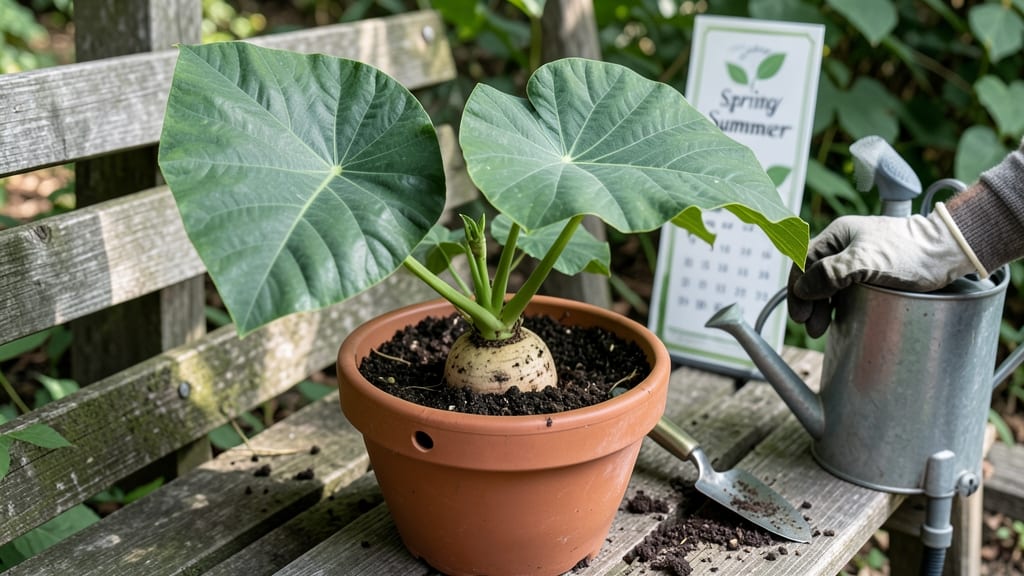
If you’ve ever watched your elephant ear bulbs in pots wilt after a surprise frost—or struggled to time their planting just right—you’re not alone. The difference between vibrant, towering foliage and sad, shriveled tubers often comes down to one critical factor: when you plant those bulbs in pots.
Get it wrong, and you’ll spend the season playing catch-up (or worse, digging up failed tubers).
Here’s the good news: with the right timing, you can enjoy those dramatic, tropical-looking leaves year after year—even in containers. The key? Planting after the last frost when soil temperatures hit at least 60°F, a rule that works for USDA Zone 6a and beyond.
But there’s more to it than just waiting for spring—container growing adds extra challenges like drainage and heat retention that ground planting doesn’t.
I’ll walk you through the exact window for your region, how to prep your pots for success, and why some gardeners treat elephant ears as annuals while others overwinter them like pros.
Spoiler: it’s all about understanding your microclimate and avoiding these 3 common mistakes that kill container-grown tubers before they even sprout.
Ready to stop guessing and start growing? Let’s dive into the science-backed schedule that’ll have your elephant ears thriving from the get-go—no frost damage in sight.
Optimal planting timeline for elephant ear bulbs in pots (by climate zone)
Timing is everything when planting elephant ear bulbs in pots—especially since these tropical plants despise cold soil and frost. The key is waiting until soil temperatures hit 60°F (15°C) and all frost risk has passed.
In warmer climates (USDA zones 9-11), you can plant as early as March, while cooler zones (7-8) should wait until mid-to-late May.
Containers add extra challenges because they heat up and cool down faster than in-ground soil. I always check my local last frost date (via the National Weather Service) and add an extra 2-3 weeks of buffer time for container plantings.
This extra window ensures your tubers won’t shock from sudden temperature swings.
Here’s how to align your planting with your USDA zone and container setup for maximum success:
| USDA Zone | Last Frost Date | Ideal Planting Window | Soil Temp Threshold | Container Prep |
|---|---|---|---|---|
| Zones 9-11 | Late Jan - Early March | Late Feb - Early April | 55°F (13°C) | Use black pots to absorb heat |
| Zones 7-8 | Mid-April - Early May | Late May - Early June | 60°F (15°C) | Add 1 inch mulch after planting |
| Zones 6 & Below | Mid-May | Late June - Early July | 65°F (18°C) | Plant in insulated pots with heat mats |
For container-specific adjustments, I always use pots with drainage holes and fill them with a mix of 50% potting soil and 50% perlite. This combo prevents the tuber rot that’s common when bulbs sit in soggy soil.
I also add a handful of compost to the bottom of each pot to boost drainage while retaining moisture.
Pro tip: If you’re in a cooler zone, try pre-sprouting your bulbs indoors. Place them in a shallow tray of sphagnum moss (kept moist) and set near a sunny window 4-6 weeks before your target planting date. This jumpstarts growth and gives you a head start on the season.
One mistake I see often is planting too early in small pots. Elephant ears need at least a 12-inch diameter container to accommodate their spreading roots.
I’ve learned the hard way—cramped roots = stunted growth and poor tuber development. Always choose a pot 2-3 inches larger than the bulb’s diameter.
After planting, place your pots in a protected location (like a patio covered by a frost cloth) for the first 2 weeks. This shields young plants from unexpected late spring frosts while they establish roots. Once they’re 6 inches tall, they’ll tolerate more direct sunlight.
Monitor your container soil moisture closely during the first 30 days after planting. Elephant ears love moisture but hate waterlogged conditions. I stick my finger 1 inch into the soil—if it’s dry, it’s time to water. Aim for consistently damp (not soggy) soil to encourage strong tuber development.
Finally, remember that elephant ear bulbs in pots are not perennial in most climates. In zones 7 and below, I treat them as annuals or dig up tubers before the first frost to overwinter indoors. This saves your investment and gives you a fresh start next season.
Optimal planting timeline for elephant ear bulbs in pots (by climate zone)
Timing your elephant ear bulbs in pots is all about avoiding frost damage while ensuring soil warmth. Unlike in-ground plantings, containers heat up faster but also cool down quicker—so precision matters.
In USDA zones 7-11, aim for planting after your last frost date, but with a key twist: wait until soil temps hit 60°F (15°C) to prevent tuber rot.
For cooler zones (6-7), delay planting until late May or early June. In warmer zones (8-11), you can start as early as March if nights stay above 50°F (10°C). The difference? Container soil dries out faster, so bulbs need consistent warmth to sprout without stress.
🌱 PRO TIP: Use a soil thermometer to check depth—elephant ear tubers thrive when top 2 inches of soil stay above 65°F (18°C).
If you’re in Zone 6 or cooler, treat elephant ear bulbs as annuals in pots—dig up tubers before first frost and store them in dry peat moss at 45-50°F (7-10°C).
Replant next spring after the soil warms. This trick lets you enjoy them year after year without risking freeze damage.
For container drainage, use pots with bottom holes and add a 2-inch gravel layer at the base. Stagnant water = root rot, and elephant ears hate soggy feet. Pair this with a well-draining potting mix (50% peat, 30% perlite, 20% compost) to mimic their tropical roots’ needs.
Remember: Elephant ear bulbs in pots need more frequent watering than in-ground plants—containers dry out 2x faster. Once planted, keep soil consistently moist (not waterlogged) and place pots where they get morning sun and afternoon shade to prevent leaf scorch.