
Planting
If you’ve ever watched a Texas cotton field burst into life—those first delicate 🧵 leaves pushing through warm soil—you know the magic of when to plant cotton in Texas happens only when timing is perfect. Planting cotton too early risks frost damage, while waiting too long cuts yields short.
For Texas growers in zones 8a-10b, mastering the right window means understanding soil warmth, frost-free dates, and regional microclimates that can shift months between North and South Texas.
Most gardeners focus only on calendar months, but the real secret lies in soil temperature. Cotton seeds need 60°F+ soil to germinate—something that varies wildly across the state. In North Texas, where last frosts linger until March 15, waiting until mid-April ensures safety.
Meanwhile, South Texas growers can start as early as February, thanks to milder winters and earlier frost-free periods.
This guide cuts through the guesswork by breaking down planting zones, soil prep tricks, and the exact countdowns you need to align with Texas’ unpredictable weather.
Whether you’re a backyard gardener or a large-scale farmer, knowing when to plant cotton isn’t just about dates—it’s about reading your land’s signals before the first 🧵 boll appears.
Let’s dive into the step-by-step calendar that’ll help you avoid common pitfalls and maximize your harvest—because in Texas, the difference between a thriving crop and a failed one often comes down to planting it just right.
Texas cotton planting zones: soil temperature and frost-free timeline
Texas stretches from USDA Zones 8a-10b, creating dramatic differences in cotton planting windows across regions. In the High Plains (Lubbock, Amarillo), growers wait until mid-April when soil reaches 60°F+ for 2+ weeks.
Meanwhile, the Gulf Coast (Houston, Corpus Christi) can plant as early as late February thanks to warmer microclimates.
These variations mean North Texas farmers face a higher frost risk—last frosts often hit March 15—while South Texas enjoys a 210-day frost-free season. Even within regions, elevation matters: Hill Country areas like Austin may need to wait until late March compared to flatter coastal plains.
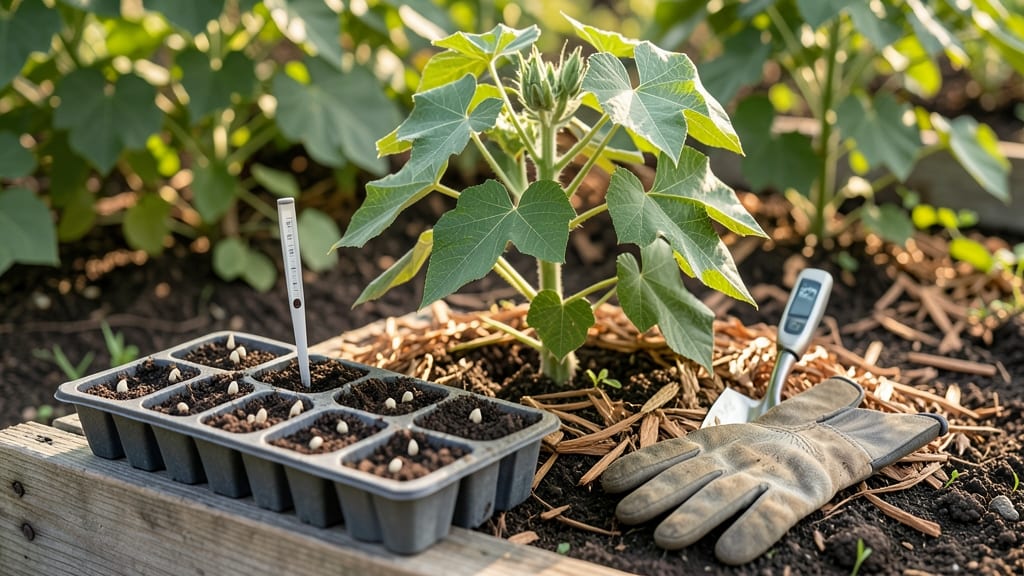
Here’s how soil warmth dictates planting: Cotton seeds won’t germinate below 55°F, but roots struggle in cold, wet soils. Use a soil thermometer to confirm 60°F+ at 4-inch depth—this is your green light to plant.
In Central Texas, this typically aligns with mid-March, but late frosts can push it to April 1.
The Blacklands region (Waco, Temple) offers a sweet spot: March 1–15 is ideal when paired with well-drained soils. Here, sandy loam (pH 6.0–7.5) prevents waterlogging—a common issue after spring rains. Pro tip: Test soil moisture before planting; soggy conditions invite root rot, which cotton hates.
Frost-free countdowns are your best friend. For North Texas, aim to plant 30–45 days before the average last frost (which can vary ±10 days yearly). South Texas growers have more flexibility but should still avoid unpredictable cold snaps in February. Historical data shows 2011 and 2018 had late-season freezes that damaged early plantings.
🌱Key takeaway: Soil temperature > calendar dates. Even if your neighbor plants in March, if your soil is still 58°F, wait. Use black plastic mulch to warm soils 2–3°F faster if you’re in a cooler microclimate.
| Region | USDA Zone | Last Frost Date | Optimal Planting Window | Soil Temp Requirement |
|---|---|---|---|---|
| High Plains (Lubbock, Amarillo) | 8a–8b | March 15–April 1 | Mid-April | 60°F+ (2+ weeks) |
| Blacklands (Waco, Temple) | 8a–9a | February 15–March 1 | March 1–15 | 60°F+ (1–2 weeks) |
| Gulf Coast (Houston, Corpus Christi) | 9a–10b | January 15–February 15 | Late February–Early March | 58°F+ (sooner in coastal areas) |
🌡️ Pro Tip: Use a soil thermometer—don’t guess! Plant when 60°F+ at 4" for consistent germination.
Microclimates add another layer. Urban heat islands in Austin or San Antonio can push planting 1–2 weeks earlier than rural areas. Conversely, elevated regions like Hill Country may need to delay until late March.
Check local AgriLife Extension reports for real-time soil data—they track daily temperature trends that calendar dates miss.
For container-grown cotton (yes, it’s possible!), warm soils faster by placing pots in south-facing beds or using heat mats. Just ensure pots have drainage holes—cotton hates waterlogged roots. In South Texas, some growers even plant January–February under row covers to extend the season.
💡 Remember: Early planting = higher yields, but only if frost risk is zero. Use frost-free date calculators (like Almanac’s Frost Calculator) to input your zip code and get a personalized countdown.
For North Texas, this often means waiting until April—patience pays off with stronger stalks and bigger bolls.
Step-by-step cotton planting calendar for Texas farmers
Planting cotton in Texas isn’t just about tossing seeds into the ground—it’s a precise timeline that varies by region. Whether you’re in North Texas, Central Texas, or the Gulf Coast, following this month-by-month guide ensures your cotton thrives from seed to harvest.
Let’s break it down so you can avoid frost damage and maximize yields.
Start with soil preparation in February, regardless of your Texas location. This is when you’ll test your soil’s pH (6.0–7.5) and amend it with compost or organic matter. Cotton loves well-draining, sandy loam soil, so avoid heavy clay.
If your soil is too acidic, add lime; if it’s alkaline, mix in sulfur. This prep work sets the stage for healthy roots once planting begins.
Here’s your region-specific planting calendar with actionable steps to follow:
Pro tip: Use black plastic mulch in early spring to warm the soil faster and suppress weeds. This trick is especially useful in North Texas, where cooler soils can delay germination. Pair it with drip irrigation to conserve water and keep roots consistently moist during Texas’s dry spells.
Remember, cotton is a warm-season crop, so rushing the process—like planting too early in North Texas—can lead to frost damage. Always check your local frost-free date and soil temperatures before breaking out the seed packets.
With this calendar, you’ll be well on your way to a bountiful harvest by August–October.