
Plants
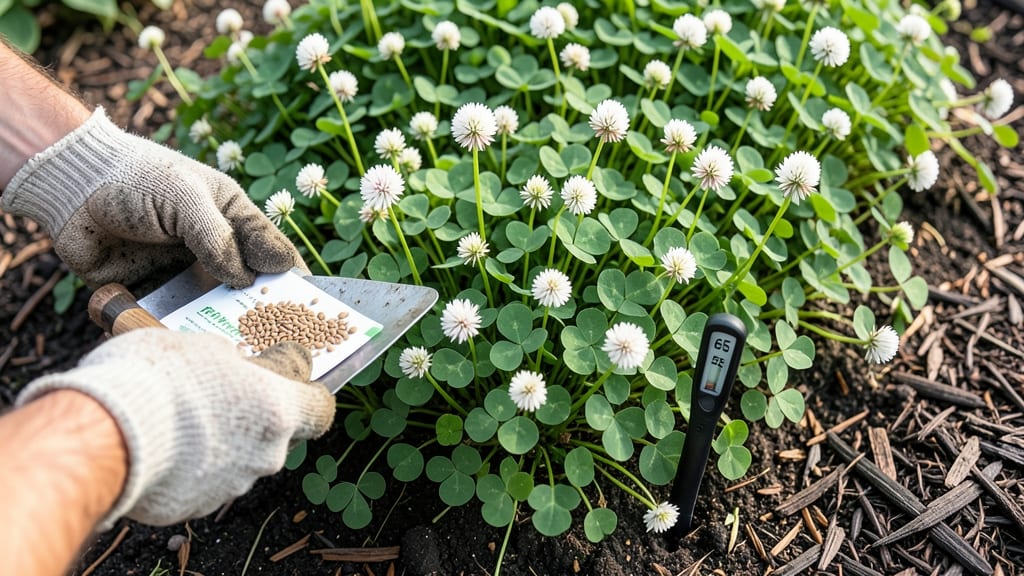
Timing your clover planting in Utah isn’t just about following a calendar—it’s about outsmarting the state’s tricky microclimates and alkaline soils to get that fast, lush growth you’re after.
Whether you’re seeding for pollinators, erosion control, or livestock forage, Utah’s USDA Zones 5-7 demand precision to avoid common pitfalls like slow germination or weed competition.
Most gardeners in Utah swear by early spring (March-April) or early fall (September-October) planting, but the real secret lies in adjusting for your specific region. Wasatch Front areas play by one set of rules, while desert zones like the Uintas need a completely different approach.
I’ll show you how to read frost dates and soil conditions like a pro to maximize your clover’s chances.
The key to fast establishment? Soil prep that tackles Utah’s compacted, alkaline dirt head-on. We’re talking pH adjustments, organic matter boosts, and drainage fixes—all tailored to your microclimate. Skip this step, and you’ll waste seeds on struggling plants. Let’s cut to the tricks that actually work in Utah’s harsh conditions.
From windbreaks to irrigation hacks, I’ll walk you through the exact techniques Utah farmers use to turn clover from a gamble into a guaranteed green success. Ready to plant with confidence? Let’s get started.
Utah’s best planting windows for clover by region (high desert vs. mountain valleys)
Utah’s diverse microclimates create dramatic differences in clover planting success. The Wasatch Front (Zone 6-7) enjoys longer growing seasons, while high desert areas (Zone 5) face earlier frosts. Timing your planting to these local frost dates is critical for germination and establishment.
For most of Utah, early spring (March-April) and early fall (September-October) offer the best windows. Spring planting lets clover establish before summer heat, while fall planting gives roots time to develop before winter dormancy. Elevation adjustments are key—plant 2-4 weeks later at higher elevations.
Last frost dates vary widely: Salt Lake City averages April 15, while Cache Valley may see frost until May 1. Check your local USDA Plant Hardiness Zone and adjust planting by 1-2 weeks accordingly.
Mountain valleys like Park City (Zone 5) should aim for late April to early May planting, while St. George (Zone 8) can plant as early as February for winter cover crops. High desert regions like Moab benefit from September planting to avoid summer drought stress.
Here’s how Utah’s regions compare for optimal clover planting:
| Region | USDA Zone | Spring Planting Window | Fall Planting Window | Key Consideration |
|---|---|---|---|---|
| Wasatch Front (Salt Lake City) | 6-7 | March 20 - April 15 | September 1 - September 20 | Moderate drought risk; irrigate consistently |
| Cache Valley (Logan) | 5-6 | April 1 - April 30 | August 15 - September 10 | Later frosts; use frost cloth if needed |
| Uintah Basin (Vernal) | 5 | April 15 - May 1 | August 20 - September 5 | Cold nights; choose cold-hardy varieties |
| Southern Utah (St. George) | 8 | February 15 - March 15 | October 1 - October 15 | Extreme heat; plant early or late |
| High Desert (Moab) | 6 | March 1 - March 15 | September 10 - September 25 | Low humidity; mulch heavily to retain moisture |
Spring planting offers faster establishment but requires consistent moisture during Utah’s dry summers. Fall planting reduces weed competition and gives clover time to develop deep roots before winter. For livestock forage, many Utah ranchers prefer late summer planting (August) to establish before frost.
Use a soil thermometer to confirm soil temps are above 50°F (10°C) before planting—cold soils delay germination. In Zone 5 areas, wait until soil warms to 55°F (13°C) for best results. Seed depth should be ¼ inch maximum; deeper planting risks poor emergence.
Pro tip: Mix clover seeds with sand or peat moss for even distribution, especially in windy Utah conditions. A light starter fertilizer (5-10-10) at planting can boost early growth, but avoid over-fertilizing—clover fixes its own nitrogen once established.
🌱
Soil prep secrets for Utah’s alkaline and compacted soils (before planting clover)
Utah’s soils are famously alkaline and compacted, posing major challenges for clover germination. Most Utah soils test between pH 7.5-8.5, far above clover’s ideal 6.0-7.0 range. Without proper prep, your seeds will struggle to break through hardpan or starve in nutrient-poor conditions.
The good news? With targeted adjustments, you can transform even rocky Utah soil into clover-friendly real estate.
Start with a soil test kit (available at local extension offices or online) to measure your pH and organic matter. Utah’s clay-heavy soils in areas like Davis County or sandy loams in Cache Valley require different approaches. Aim for 6.0-6.5 pH—this is non-negotiable for clover’s nitrogen-fixing bacteria to thrive.
Alkaline soil fix: Apply elemental sulfur at 1 lb per 100 sq ft for every 0.5 pH points above 7.0. Work it into the top 6 inches of soil 2-3 months before planting. For faster results, use peat moss or pine fines (both acidify soil) mixed into beds. Never use lime—it’ll make your soil even more alkaline.