
Trees
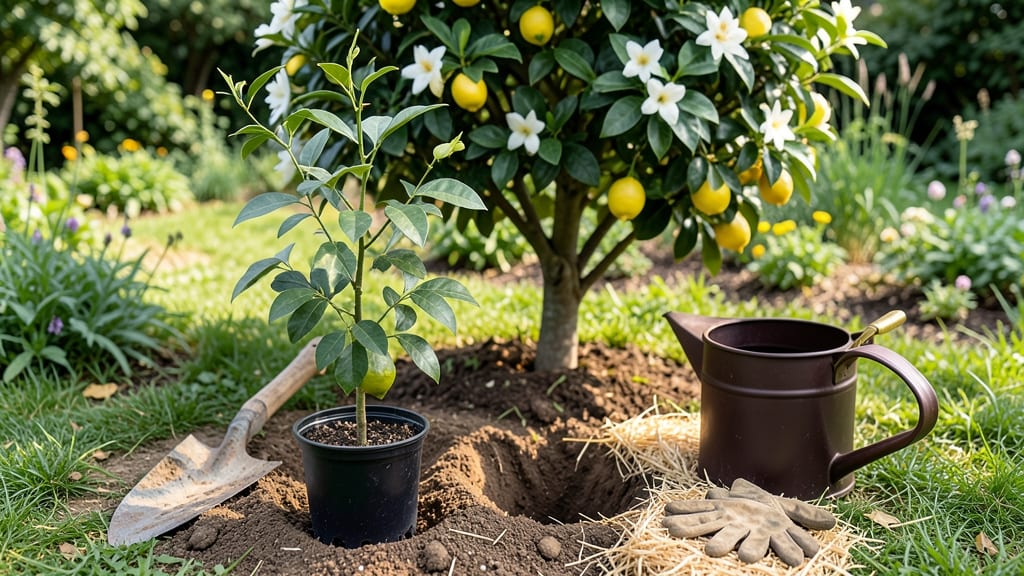
Planting your 🍊 citrus tree at the wrong time in Southern California could mean the difference between a thriving grove and a struggling sapling that never reaches its full potential.
The Mediterranean climate here is ideal for citrus—but timing is everything, especially when it comes to matching varieties to the region's unique chill-hour requirements.
Most gardeners assume citrus can be planted year-round, but the best window for success is actually late winter to early spring. This timing aligns with natural rainfall patterns and gives young trees a head start before summer heat arrives.
I’ve seen firsthand how planting outside this window can lead to stress, poor root establishment, and even tree death in extreme cases.
What you might not realize is that different citrus varieties have specific chill-hour needs—some thrive with minimal cold exposure, while others require more. In zones 9b-11, this means choosing the right variety for your microclimate can make or break your harvest.
Let me show you exactly how to pick the perfect planting window and variety for your Southern California garden.
From coastal areas with milder winters to inland zones with occasional heatwaves, we’ll cover everything you need to know to give your citrus tree the best possible start.
Whether you’re planting in containers or directly in the ground, these insights will help you avoid common mistakes and set your tree up for years of abundant fruit production.
Best planting months for citrus trees in Southern California by variety
Southern California’s Mediterranean climate makes it ideal for citrus, but timing is everything. The optimal planting window spans from late winter to early spring, when temperatures are mild and rainfall provides natural moisture. This period—January through March—gives young trees time to establish roots before summer’s intense heat.
Coastal areas like San Diego can plant slightly later, while inland zones like Riverside should start earlier to avoid heat stress.
For container-grown citrus, you can plant year-round, but bare-root trees (common in nurseries) need cooler soil temps to avoid transplant shock. If you must plant in summer, choose dwarf varieties like Meyer lemons or Calamondin oranges, which handle heat better.
Always acclimate container trees for 1-2 weeks before planting to reduce shock from temperature swings.
🌱
| Citrus Variety | Best Planting Months | Chill-Hours Needed | Coastal vs. Inland | Key Tip |
|---|---|---|---|---|
| Lemon (Eureka, Meyer) | Jan–Feb (coastal); Dec–Jan (inland) | 250–400 hrs | Coastal: year-round; Inland: Dec–Feb | Meyer lemons tolerate heat better |
| Orange (Navel, Valencia) | Dec–Feb | 500–700 hrs | Inland only (coastal lacks chill) | Use semi-dwarf varieties for containers |
| Grapefruit (Ruby Red) | Jan–Feb (inland only) | 600–800 hrs | Avoid coastal—needs high chill | Plant near a heat-reflective wall |
| Lime (Bearss, Key) | Dec–Feb (coastal); Nov–Jan (inland) | 300–500 hrs | Coastal: best; Inland: Nov–Dec | Bearss limes need slightly more chill |
| Calamondin (Citrus × microcarpa) | Year-round (container) | 150–250 hrs | Thrives in both zones | Dwarf variety—perfect for patios |
If you live in coastal Southern California, like Malibu or Santa Barbara, you can plant lemon and lime varieties almost year-round due to milder winters. However, inland areas (e.g., Palm Springs, Riverside) must plant by January to avoid summer heat stress.
For example, a Valencia orange tree planted in April in the Inland Empire will struggle to establish roots before the 100°F+ temperatures of June and July.
Pro tip: Use mulch (2–4 inches of wood chips or straw) to retain soil moisture and regulate temperature. This is especially critical in summer plantings, where mulch can reduce soil temps by 5–10°F.
Pair this with drip irrigation set to water deeply but infrequently—citrus roots hate soggy soil but thrive with consistent moisture.
For urban gardeners, container planting extends your options. Smaller varieties like Improved Meyer lemons or Calamondin oranges can be planted in 15–25 gallon pots and moved to shaded areas during summer’s peak heat.
Just ensure pots have drainage holes and use a well-draining citrus mix (50% potting soil, 30% perlite, 20% compost).
One common mistake is assuming all citrus trees have the same needs. For instance, navel oranges require 500+ chill hours, while Meyer lemons thrive with just 250 hours
How to match citrus varieties to Southern California’s chill-hours for maximum fruit production
Southern California’s Mediterranean climate offers year-round citrus growing—but not all varieties thrive equally. The key lies in chill-hours, the number of hours below 45°F (7°C) your citrus tree needs to set fruit properly.
Coastal areas like San Diego average just 200–300 chill-hours, while inland zones like Riverside can reach 500+ hours. Matching your variety to your microclimate ensures abundant fruit production and avoids disappointing harvests.
For example, Meyer lemons and Calamondin oranges thrive in coastal zones with 250–400 chill-hours, while Valencia oranges and Navel oranges need 500+ chill-hours for optimal fruit set. Urban heat islands can also reduce chill accumulation, so container-grown trees in Los Angeles may need 10–20% more chill-hours than rural areas.
Always check your USDA Zone (9b–11) and local weather data to fine-tune your selection.
| Variety | Chill-Hours Needed | Best Zones | Fruit Maturity |
|---|---|---|---|
| Meyer Lemon | 250–400 | Coastal (9b–10a) | 6–8 months |
| Improved Meyer Lemon | 300–450 | Inland (9b–11) | 7–9 months |
| Eureka Lemon | 350–500 | Coastal to inland (9b–11) | 8–10 months |
| Valencia Orange | 500–700 | Inland (10a–11) | 9–12 months |
| Navel Orange | 500–800 | Inland (10a–11) | 10–14 months |
| Lime (Bearss or Mexican) | 200–350 | Coastal (9b–10a) | 6–9 months |
| Grapefruit (Ruby Red) | 400–600 | Inland (9b–11) | 9–12 months |
If you’re unsure about your local chill-hours, use a home weather station or check data from NOAA’s Climate Normals for your nearest city. For example, Santa Barbara averages 300 chill-hours, while Palm Springs often falls below 200 hours.
In low-chill areas, opt for dwarf varieties like Calamondin oranges or Lemon Limequats, which produce fruit with minimal chill requirements. These varieties also adapt better to container growing, giving you flexibility in urban spaces.
Pro tip: If you’re planting in January or February, your citrus tree will benefit from natural chill accumulation during cooler nights. Avoid planting in summer months when high temperatures can stress young roots.
For container-grown trees, move pots to a shaded, sheltered spot during winter to protect them from unexpected light frosts (below 28°F).
Finally, remember that young citrus trees (under 3 years old) need extra care to establish strong root systems. Use a well-draining citrus mix with 50% native soil and 50% compost to improve water retention and nutrient uptake.
Mulch with wood chips or straw to maintain even soil temperatures and reduce water evaporation. With the right variety and care, your citrus tree will reward you with bountiful harvests year-round.