
Plants
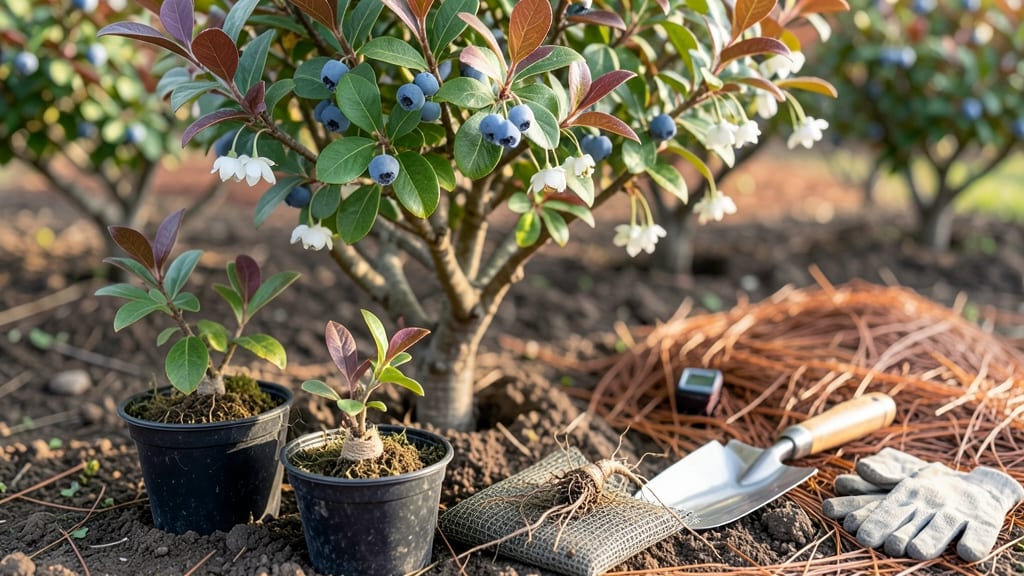
Planting blueberries in Indiana at the wrong time could mean waiting years for your first harvest—or never getting those sweet, juicy 🫐 berries at all. The key isn’t just avoiding frost; it’s matching your variety to Indiana’s 5b-6b chill hours, which determine whether your bushes thrive or struggle.
Most gardeners in Indiana make one of two mistakes: planting too early when the soil is still cold, or waiting until summer when roots can’t establish before winter.
The best windows are late April through early June (after last frost) or fall between September and October—when soil temps are ideal and plants can settle in before dormancy.
Why does timing matter so much? Blueberries need 300–900 chill hours to fruit properly, and Indiana’s climate varies enough between northern and southern regions that the wrong variety could leave you with bitter berries—or none at all.
I’ll show you exactly which varieties work where and how to prep your soil for maximum success.
Ready to turn your backyard into a blueberry powerhouse? Let’s break down the exact schedule, soil tweaks, and variety picks that’ll have you harvesting plump, flavorful berries by June or July—no guesswork required.
Indiana blueberry planting timeline by chill-hour zones
Indiana’s USDA zones 5b-6b create a unique challenge for blueberry growers—too much heat can stress plants, while too little cold prevents fruiting. The key to success? Planting at the right time based on your chill hours (the number of hours below 45°F needed to trigger flowering).
Northern Indiana typically sees 700–900 chill hours, while southern regions average 500–700 hours.
Blueberries thrive when planted during two optimal windows: early spring (after last frost) or fall (4–6 weeks before first frost). Fall planting gives roots time to establish before winter, while spring planting avoids late-season frost risks.
For Indiana, September–October is ideal for fall planting, while late April–early June works for spring.
Your local chill hours determine which blueberry varieties will thrive. For example, 'Patriot' (700+ hours) excels in northern Indiana, while 'Jersey' (500+ hours) suits southern regions. Always check your last frost date (typically mid-April) and first frost date (mid-October) to time your planting perfectly.
Before planting, amend your soil to a pH of 4.5–5.5—blueberries are acid-loving and won’t thrive in alkaline soil. Mix in peat moss or sulfur if your soil tests higher than 6.0.
Choose a well-draining spot with 6+ hours of sunlight daily, and space plants 4–6 feet apart for proper airflow.
| Zone & Chill Hours | Best Planting Window | Soil Prep | Top Varieties |
|---|---|---|---|
| Northern IN (5b, 700–900 hrs) | Fall: Sept 15–Oct 15 | pH 4.5–5.0, peat moss | Patriot, Bluecrop, Earliblue |
| Central IN (6a, 500–700 hrs) | Spring: Apr 20–May 15 or Fall: Sept 1–Oct 10 | pH 4.8–5.2, sulfur | Jersey, Bluegold, Legacy |
| Southern IN (6b, 400–600 hrs) | Spring: May 1–June 1 | pH 5.0–5.5, compost | Duke, Premier, Chandler |
🌱 Pro Tip: Use a chill-hour calculator (like Purdue’s) to confirm your local requirements.
Spring planting in Indiana requires patience—wait until after your last frost date (usually mid-April) and before summer heat sets in. If planting in containers, use well-draining mixes with 30% peat or pine bark. Water deeply after planting to settle soil and reduce air pockets around roots.
Fall planting offers a head start for root growth before winter. Aim to plant 4–6 weeks before first frost (mid-October in most of Indiana). Mulch heavily with pine straw or wood chips to insulate roots and retain moisture.
Avoid planting too late—young plants need time to establish before freezing temperatures arrive.
After planting, monitor your blueberries for yellowing leaves (a sign of nutrient deficiency) or wilting (underwatering). In northern Indiana, protect young plants with burlap wraps during harsh winters. Southern Indiana gardeners should focus on shade cloth during peak summer heat to prevent stress.
Blueberries in Indiana typically harvest in June–August, depending on variety. Early varieties like 'Earliblue' ripen first, while late varieties like 'Bluecrop' extend your season. Plan for 2–3 years before your bushes produce full yields, but proper timing now ensures decades of juicy, homegrown berries.
🫐 Remember: Chill hours + soil pH + planting timing = the trifecta for Indiana blueberry success. Get these right, and you’ll be picking berries in no time!
Indiana blueberry planting timeline by chill-hour zones
Indiana’s USDA zones 5b-6b mean your blueberry planting success hinges on chill hours—the number of hours below 45°F your plants need to flower properly.
Most Indiana regions average 700–900 chill hours, but northern areas (like Gary) may see 900+ hours, while southern zones (like Evansville) often get 600–700 hours.
For spring planting (late April–early June), aim for after last frost (typically mid-April in northern IN, early April in southern regions). Fall planting (September–October) is ideal because cooler temps reduce transplant shock, but avoid planting when frost is forecasted within 2 weeks.
Here’s how to match your local chill hours to the right planting window:
| Zone/Region | Chill Hours | Best Planting Window | Soil Prep Tip |
|---|---|---|---|
| Northern IN (Gary, South Bend) | 900+ hours | Late April–May (spring) or Sept 15–Oct 15 (fall) | Add peat moss to raise acidity |
| Central IN (Indianapolis, Lafayette) | 700–900 hours | Late April–June 1 (spring) or Sept 1–Oct 10 (fall) | Test pH—aim for 4.5–5.5 |
| Southern IN (Evansville, Louisville border) | 600–700 hours | May 1–June 1 (spring) or Sept 15–Oct 1 (fall) | Mulch with pine needles for acidity |
Before planting, amend your soil with sulfur or aluminum sulfate if your pH is above 5.5—blueberries are acid-loving and won’t thrive in alkaline soil. Work in 3–4 inches of compost or well-rotted manure to improve drainage, especially in clay-heavy Indiana soils.
Pro tip: Plant on a cloudy day to reduce transplant shock. Dig a hole twice as wide as the root ball but only as deep—blueberries hate having their crowns buried too deep. Water deeply immediately after planting to settle the roots.
Once established, blueberries in Indiana typically harvest in late June–August, but fall-planted bushes may take 1–2 years longer to bear fruit. Patience pays off—well-timed plantings in the right chill zone can yield pounds of berries per bush for decades! 🫐