
Plants
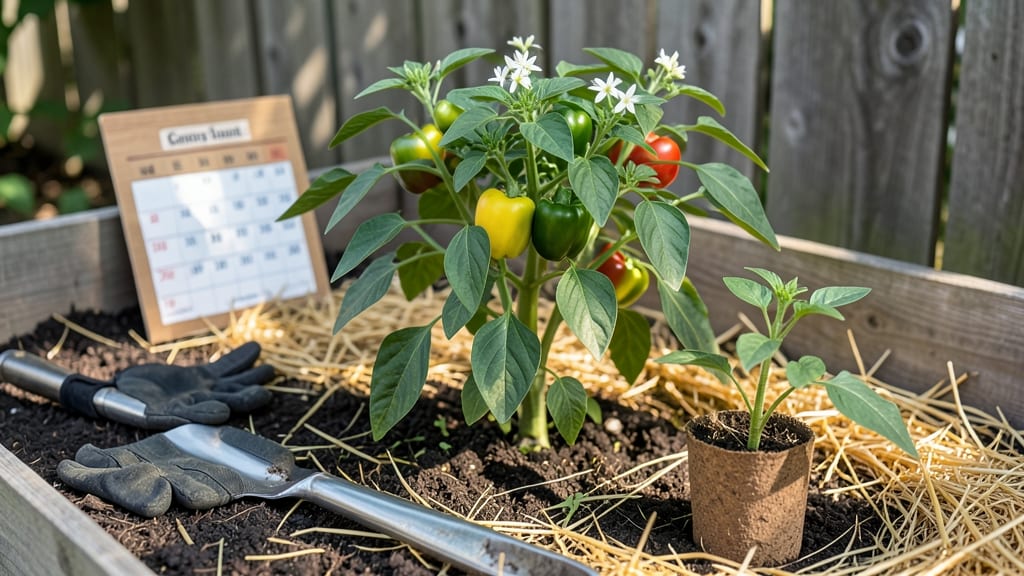
Timing your bell pepper 🌶️ planting in Virginia isn’t just about avoiding frost—it’s about working with the state’s unpredictable microclimates, where a few miles can mean weeks of difference between success and failure.
Whether you’re in the humid Coastal Plain or the cooler Blue Ridge Mountains, planting too early risks seedling loss, while waiting too long cuts your harvest short.
For Virginia gardeners in USDA zones 6a-8a, the ideal window runs from mid-April to late May for spring plantings—or August to mid-September for a fall harvest. But here’s the catch: soil temperature matters more than calendar dates.
Your bell peppers 🌶️ need 60°F+ soil to thrive, and black plastic mulch can shave 2-3 weeks off that wait.
This guide breaks down the exact frost-free timelines by region, from the Piedmont’s earlier springs to the Valley’s later starts. You’ll learn how to adjust for early vs. late varieties, use row covers, and even salvage a late planting with cold-hardy tricks.
No more guessing—just data-driven planting for bigger, healthier peppers 🌶️ all season.
Ready to stop playing roulette with your garden? Let’s dive into the Virginia-specific strategies that’ll turn your bell pepper 🌶️ patch from “maybe” to “miracle.”
Virginia’s bell pepper planting zones: frost-free timelines by region
Virginia’s diverse geography creates 5 distinct microclimates, each with unique last frost dates and soil warming patterns. Bell peppers (Capsicum annuum) thrive only when nighttime temps stay above 55°F and soil reaches 60°F+.
Planting too early risks frost damage, while waiting too long cuts harvest time. Let’s break down the ideal planting windows by region to maximize your bell pepper yield.
Use the USDA Plant Hardiness Zones 6a-8a as a starting point, but Virginia’s coastal areas warm 2-3 weeks earlier than mountain regions. For example, Norfolk’s Coastal Plain (Zone 8a) can plant in early April, while Roanoke’s Blue Ridge (Zone 6b) must wait until mid-May.
Always verify your local frost dates using the Virginia State Climate Office or Old Farmer’s Almanac.
🌱
| Region | USDA Zone | Avg. Last Frost | Soil Temp. Threshold | Transplant Window | Harvest Window |
|---|---|---|---|---|---|
| Coastal Plain | 8a | March 15-April 1 | 60°F+ (early April) | April 15-May 1 | July-October |
| Piedmont | 7a-7b | March 25-April 10 | 60°F+ (mid-April) | April 30-May 15 | July-November |
| Blue Ridge | 6b-7a | April 10-May 1 | 60°F+ (late April) | May 15-June 1 | August-November |
| Valley & Ridge | 6a-7a | April 15-May 5 | 60°F+ (early May) | May 20-June 10 | August-October |
| Appalachian Plateau | 6a-6b | May 1-May 15 | 60°F+ (late May) | June 1-June 20 | September-October |
For fall harvests, aim to plant bell pepper seedlings 80-90 days before your region’s first frost. In Virginia, this means August 1-September 15 for most zones.
Use black plastic mulch to extend the season by 2-3 weeks—it warms soil faster and suppresses weeds. Row covers can push back frost sensitivity by another 2-4 weeks if temps dip unexpectedly.
Pro tip: Test your soil temperature with a soil thermometer before transplanting. Bell peppers won’t thrive below 60°F, even if frost risk is low. In cooler zones like Roanoke or Blacksburg, consider starting seeds indoors 8-10 weeks before your last frost date to give seedlings a head start.
🌡️
Virginia’s humidity levels (especially in summer) can stress bell peppers, so prioritize well-draining soil with a pH of 6.0-6.8. Amend clay-heavy soils with compost or sand to prevent root rot.
If your garden sits in a low-lying area, expect later frost risks—monitor microclimate variations by checking local weather
How to adjust planting dates for early vs late varieties in Virginia
Virginia’s short growing season and humidity swings make timing critical for bell peppers. Early-maturing varieties like ‘Sweet Banana’ (60 days) can handle cooler soils, while late varieties like ‘Jupiter’ (90 days) need perfect conditions. Adjusting your planting strategy ensures you maximize harvests—whether you’re aiming for summer heat or fall flavors.
For spring plantings, start indoor seedlings 8-10 weeks before your last frost date. In Virginia’s Coastal Plain (Zone 7b-8a), this means sowing seeds by March 1 for transplanting by May 1.
In cooler Appalachian Plateau (Zone 6a-7a), delay until March 15 to avoid frost damage. Use grow lights if natural light is limited during seedling stages.
| Variety Type | Days to Maturity | Best Planting Window | Virginia-Specific Tip |
|---|---|---|---|
| Early Varieties | 60-75 days | March 15–April 15 (indoor start) | Tolerates cooler soils (55°F+). Use black plastic mulch to warm beds faster in Piedmont. |
| Mid-Season | 75-85 days | April 1–May 1 (transplant) | Ideal for Coastal Plain. Space 18 inches apart to avoid crowding in humid summers. |
| Late Varieties | 90+ days | May 15–June 1 (transplant) | Risky in Northern VA—use row covers for early protection. Prioritize Blue Ridge valleys. |
| Fall Planting | 60-80 days | August 1–September 1 | Choose quick-maturing varieties like ‘Carolina Wonder’. Harvest before first frost (Oct 15–Nov 15). |
Succession planting is your secret weapon in Virginia. For continuous harvests, stagger plantings every 2-3 weeks from late April through June. This works especially well for ‘Early California Wonder’, which matures in just 60 days.
In fall plantings, focus on heat-tolerant varieties like ‘Jupiter’—they thrive in Virginia’s late-summer heat before cooler temps arrive.
Row covers are a game-changer for extending seasons. Use floating row covers to protect seedlings from late spring frosts or early fall chills. Remove covers when flowers appear to allow pollination.
In humid Piedmont regions, ensure covers allow airflow to prevent fungal diseases like powdery mildew. Pair this with drip irrigation to keep foliage dry.
For late varieties, consider container growing in Virginia’s Zone 6a areas. Move pots to sunny spots during the day and bring them indoors or under covers at night if temperatures dip below 50°F.
This buys you 2-3 extra weeks of growing time. Just ensure containers have drainage holes and use lightweight potting mix to prevent root rot in Virginia’s heavy clay soils.
Finally, monitor soil temperatures with a soil thermometer. Bell peppers need 60°F+ soil to thrive—waiting for this threshold prevents stunted growth. In Coastal Virginia, soil warms faster due to humidity, while mountain regions may need black plastic mulch or straw covers to reach ideal temps.
🌱