
Planting
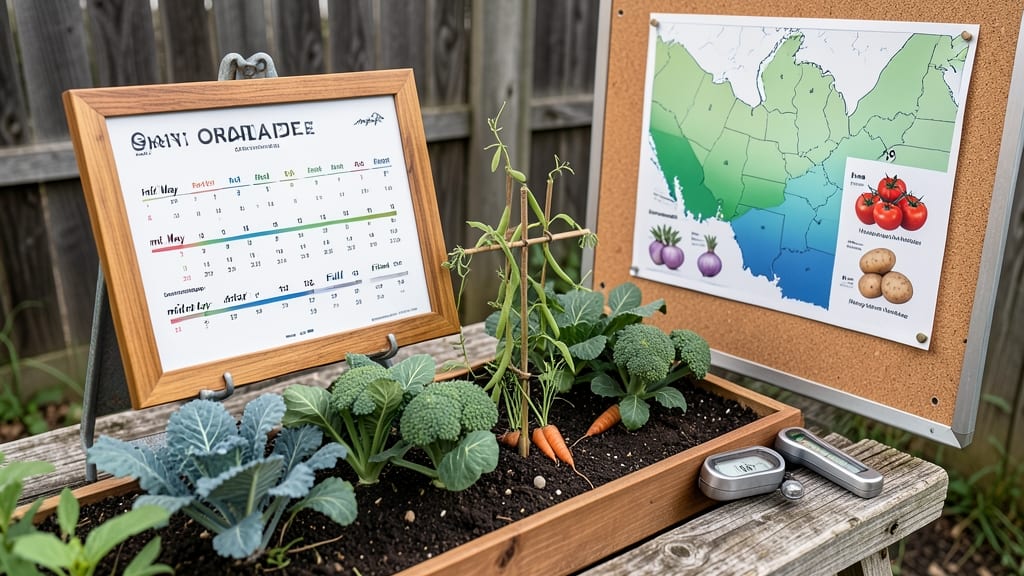
Ontario planting zones & heat tolerance chart: avoiding bolting in cool-season vs warm-season crops
Ontario’s climate zones—ranging from 3a in the far north to 7b in the southwest—create wildly different planting windows. A cool-season crop like spinach thrives in Zone 5a’s early spring, while warm-season tomatoes need Zone 7b’s long, hot summers to avoid bolting.
Getting this wrong means bitter greens or flower-stalked cucumbers instead of harvests.
To nail your timing, start with Ontario’s last frost dates. In Zone 4b (Toronto area), expect frost until mid-May, while Zone 6a (London) sees frost-free soil by early May.
Warm-season crops like peppers and eggplants won’t tolerate chilly soil—plant them only after soil hits 60°F (15°C), usually late May to early June in most zones.
Here’s the heat tolerance chart for Ontario’s most popular vegetables, organized by zone and planting window to prevent bolting:
For Zone 4b (e.g., Toronto), aim to plant cool-season crops like kale and peas by April 15—they’ll bolt if temperatures climb above 70°F (21°C). Meanwhile, warm-season crops like tomatoes should wait until after May 20, when nighttime temps stay above 50°F (10°C).
Use black plastic mulch to warm soil faster in cooler zones.
Pro Tip: In Zone 3a (e.g., Sault Ste. Marie), extend your season with row covers or cold frames—they can push your planting window 2–3 weeks earlier for heat-sensitive crops like lettuce. Just remove covers when temps hit 80°F (27°C) to prevent overheating.
Fall planting is just as critical—cool-season crops like broccoli and Brussels sprouts can handle Ontario’s first frost (usually mid-October in Zone 5a). Sow them 8–10 weeks before your first frost date for a winter harvest.
In Zone 7b, you might even squeeze in a second planting of radishes in August for a late-fall crop.
Mistake to Avoid: Planting warm-season crops too early. I once tried sowing tomatoes in Zone 5a on May 1—they sat in cold soil for weeks, then bolted before producing a single fruit. Always check soil temperature with a thermometer; 60°F (15°C) is the magic number for tomatoes and peppers.
Use this chart as your **Ont
How to adjust planting times for Ontario’s microclimates: urban heat islands vs rural frost pockets
Ontario’s climate isn’t just about USDA zones—it’s a patchwork of microclimates that can shift planting windows by weeks. Urban areas like Toronto often experience heat islands, where pavement and buildings trap warmth, allowing you to plant tomatoes 2 weeks earlier than rural areas.
Meanwhile, lake-effect zones near Georgian Bay or Lake Erie may see delayed springs due to cold air masses.
Even within a single city, frost pockets in low-lying areas can delay your last frost date by 10–14 days compared to higher elevations.
For example, a garden in Ottawa’s Rideau Valley might safely plant peas by April 15, while a neighbor just 5 miles away in a frost pocket could wait until May 1. Understanding these nuances is key to avoiding bolting in heat-sensitive crops like lettuce or radishes.
Here’s how to adapt your planting schedule based on Ontario’s most common microclimates:
Pro tip: Use local weather stations (like Environment Canada’s Agri-Weather) to track soil temperatures in your specific area. For example, in Zone 5b, aim to plant cucumbers when soil hits 60°F—but in a frost pocket, that could mean waiting until June 1 instead of May 15.
For succession planting, adjust your schedule based on microclimate. In urban areas, you might plant radishes every 2 weeks from April to July, while rural gardeners might start in mid-May to avoid frost.
Always keep a planting journal to refine your timing each year—Ontario’s weather is unpredictable, but your garden doesn’t have to be!
🌱