
Companion Plants
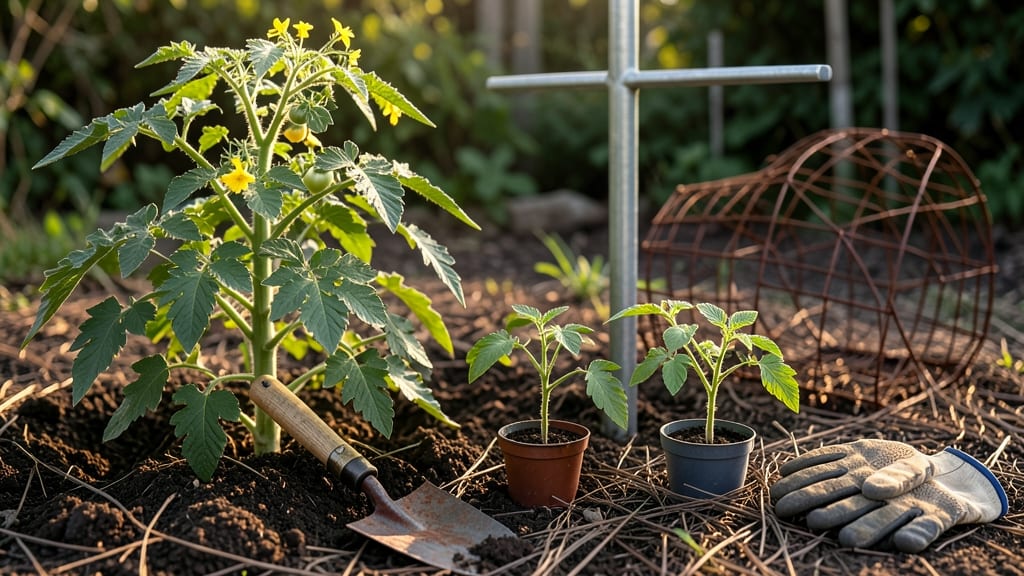
If you’ve ever stared at a seed packet wondering "when should I plant tomatoes in Ohio", you’re not alone—timing is everything for a bountiful harvest.
Ohio’s 6a-6b climate means frost can linger until mid-April, but planting too early risks losing tender seedlings, while waiting too long cuts your harvest short.
The sweet spot? Aim for April 15–May 15, once soil hits 60°F and nighttime temperatures stay above 50°F. Urban gardens in Columbus might wait until May 1, while rural areas in Zone 5 could start as early as late April with row covers.
Microclimates matter—south-facing slopes warm faster, while low-lying spots stay cooler.
But what if you’re eager to get growing? Cold frames or black plastic mulch can shave weeks off your wait, letting you plant 2–3 weeks earlier without frost risk. And don’t forget succession planting: stagger seeds every 2 weeks through June to keep tomatoes rolling in until October.
I’ll break down the exact dates for your corner of Ohio, plus pro tips to stretch your season—so you’re not left with empty vines when the 🍅 season peaks. Let’s get those seeds in the ground the right way!
Ohio’s last-frost dates by microclimate: Zone 5 vs. Zone 6 vs. 7B
Ohio’s gardening zones (5, 6, and 7B) create wildly different planting windows for tomatoes. In Zone 5, where winters are colder, the average last frost date hovers around May 1-15, while Zone 7B gardeners can plant as early as April 15 in warmer microclimates.
These dates shift based on elevation, proximity to lakes, and urban heat islands—so your neighbor’s timeline might not match yours!
To pinpoint your exact window, check the USDA Plant Hardiness Zone Map and cross-reference with local almanac records. For example, Columbus (Zone 6a) typically sees its last frost around April 25, while Toledo (Zone 6b) might be frost-free by April 10 due to lake effects.
Even a 10-mile difference can mean 1-2 weeks of variance!
Here’s the critical rule: Wait until soil temperatures hit 60°F and nighttime lows stay above 50°F consistently. Cold soil stunts root growth, and chilly nights stress young plants. Use a soil thermometer—it’s your best tool for accuracy, especially in Ohio’s unpredictable springs.
For early varieties (like ‘Stupice’ or ‘Early Girl’), aim to transplant 2-3 weeks after your last frost date. Mid-season varieties (e.g., ‘Better Boy’) need the full growing season, so plant them 1 week after the early batch. Late varieties (like ‘Brandywine’) should go in 3-4 weeks after your last frost to avoid early blight from lingering moisture.
Pro tip: Ohio’s microclimates can be sneaky. A south-facing slope warms up faster than a north-facing yard, and urban areas (like Cincinnati) often have earlier last frosts due to the heat island effect.
Test your spot by placing a frost-sensitive plant (like basil) in early April—if it survives, you’re likely safe for tomatoes!
| Zone | Avg. Last Frost | Safe Planting Window | Early Variety | Mid-Season Variety |
|---|---|---|---|---|
| Zone 5 (e.g., Cleveland, Akron) | May 1–15 | May 16–31 | ‘Stupice’ (55 days) | ‘Celebrity’ (70 days) |
| Zone 6 (e.g., Columbus, Dayton) | April 15–30 | May 1–15 | ‘Early Girl’ (60 days) | ‘Better Boy’ (80 days) |
| Zone 7B (e.g., Cincinnati, southern OH) | April 1–15 | April 16–30 | ‘Mountain Merit’ (65 days) | ‘Sungold’ (60 days) |
🌱 Note: Adjust for microclimates—urban areas plant 1-2 weeks earlier!
If you’re starting seeds indoors, begin 6-8 weeks before your last frost date. For Zone 5, that means mid-March; Zone 7B gardeners can start in late February.
Use grow lights or a sunny windowsill (south-facing) to avoid leggy seedlings. Harden off plants for 1-2 weeks before transplanting to toughen them up for Ohio’s wind and temperature swings.
For container gardening, warm up pots with black plastic mulch or a heat mat to speed up soil warming. Containers also let you move plants to warmer microclimates (like patios or near foundations) when nighttime temps dip.
Just ensure pots are at least 12 inches deep—tomatoes need room for roots!
Remember: Ohio’s first frost typically arrives around October 20, but late varieties (like ‘Cherokee Purple’) can keep producing until then. Use row covers or move potted tomatoes indoors (with grow lights) to extend harvests into November in mild years.
🌱 Key takeaway:
How to extend Ohio’s tomato growing season: cold frames, row covers, and succession planting
Ohio’s short growing season can feel like a race against time for tomato lovers, but with the right strategies, you can stretch your harvest from early summer well into fall.
The key is extending the season—whether by protecting tender seedlings from late frosts or shielding ripe fruit from early chills. I’ve tested these methods in my own garden, and they’ve added 4-6 extra weeks of tomato production.
One of my favorite tricks is using row covers or floating row covers to create a protective barrier. These lightweight fabrics allow sunlight and water to pass through while blocking frost and even some pests.
For early plantings, I lay them down 2-3 weeks before the last frost date to warm the soil faster and give seedlings a head start. In my Zone 6 garden, this has let me plant early varieties like 'Stupice' as soon as late March—without risking frost damage.
🌱
For container gardeners, black pots absorb heat better than traditional terracotta, giving you a 5-7 day head start on soil warming. I plant cherry tomatoes like 'Tiny Tim' in 5-gallon black pots by mid-April and move them to a sunny patio—no frost damage in sight!
The key is monitoring soil temps with a thermometer; tomatoes won’t germinate well below 60°F.
Don’t overlook succession planting—it’s my secret weapon for continuous harvests. By planting fast-maturing varieties every 2 weeks, I’ve turned my garden into a tomato-producing machine from June through October.
For example, I’ll plant 'Early Girl' (60 days) in late May, 'Celebrity' (70 days) in early June, and 'Brandywine' (85 days) in mid-July. This ensures I’m always picking ripe tomatoes!
🌿