
Plants
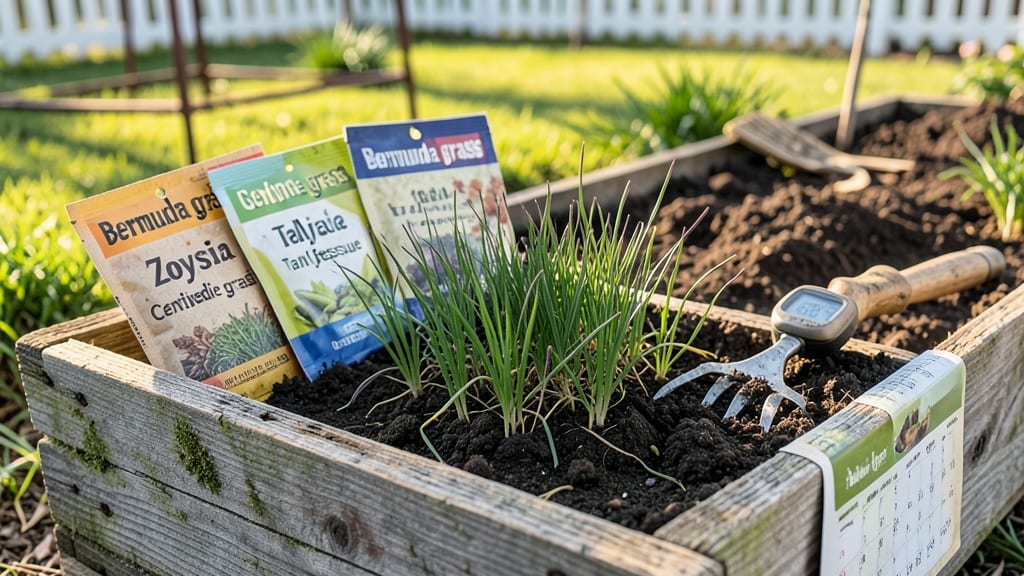
The best time to plant grass in Georgia isn’t just about the calendar—it’s about beating the heat, avoiding drought, and giving your 🌱 a fighting chance to take root before summer’s brutal sun takes over.
If you’ve ever stared at a patchy lawn wondering why your grass never quite thrives, chances are you planted at the wrong time. Georgia’s climate demands precision: too early, and frost or weeds steal the show; too late, and your grass wilts under the sun.
I’ll break down the fastest, most reliable windows for planting—when soil temps and rainfall align for success—and share the exact steps to prep your yard so your grass grows thick, green, and resilient.
Skip the trial-and-error. Let’s get your lawn on the right track before the next heatwave hits.
Georgia grass planting timeline: soil temperature & rainfall rules by month
Georgia’s three distinct climate zones—Coastal, Piedmont, and Mountain—create wildly different grass-growing conditions. In the North Georgia Mountains (Zone 7a), frost lingers until mid-April, while Coastal Georgia (Zone 8b) sees mild winters with no frost after November 15.
This variability means your planting window shifts dramatically depending on location.
For fast germination and drought-resistant roots, aim for soil temperatures between 60-65°F. In Northern Georgia, this typically aligns with late March to early April, while Southern Georgia can start as early as February.
Fall planting works best in September-October, giving grass 6-8 weeks to establish before winter.
Here’s the month-by-month breakdown of ideal planting conditions, including soil temperature targets and rainfall patterns to watch:
| Month | Soil Temp (°F) | Rainfall (in) | Planting Window | Key Considerations |
|---|---|---|---|---|
| February | 55-60°F | 2.5-3.5 | Southern GA only | Risk of false spring frost |
| March | 60-65°F | 3.0-4.5 | Best for North GA | Soil warms quickly; monitor daily |
| April | 65-70°F | 2.5-4.0 | Ideal for all zones | Peak germination; water daily |
| May | 70-75°F | 2.0-3.5 | Late planting; risk of drought | Use shade cloth for new seedlings |
| September | 65-70°F | 3.0-5.0 | Best fall window | Cool nights = faster root growth |
| October | 60-65°F | 2.5-4.0 | Last chance for North GA | Avoid planting after mid-October |
Use a soil thermometer to confirm readiness—60°F+ at 4 inches deep signals it’s time to plant. In drought-prone years (like 2024), prioritize fall planting when Georgia’s average rainfall peaks in September-October, giving seedlings 6-8 weeks of moisture before winter.
For Northern Georgia, watch for the last frost date (typically March 15) and plant 4-6 weeks beforehand. In Southern Georgia, you can start as early as February, but be prepared for false spring frosts that can kill tender seedlings.
Pro tip: Test your soil’s moisture-holding capacity before planting. Georgia’s clay-heavy soils often need compost or sand amendments to prevent water runoff during critical germination weeks. Aim for 1 inch of water per week during establishment, split into two morning sessions to reduce evaporation.
🌱
If you
Best grass types for Georgia’s climate & when to plant each
Georgia’s diverse climate zones demand the right grass type for your yard. Warm-season grasses like Bermuda and Zoysia dominate the South, while Tall Fescue thrives in cooler North Georgia regions.
Choosing the wrong variety means struggling with heat stress or winter dormancy—so let’s match your location to the perfect grass.
Warm-season grasses outperform in Georgia’s heat, but they go dormant in winter. Cool-season grasses stay green longer but struggle in summer droughts. The key is planting at the right time: spring for warm-season and fall for cool-season varieties.
Below, we break down the best options and their ideal planting windows.
🌱 Did You Know? Bermuda grass can grow 1 inch per week in peak summer, but it needs 60-70°F soil temps to germinate. Planting too early risks fungal diseases like brown patch.
| Grass Type | Best Planting Months | Heat Tolerance | Shade Tolerance | Establishment Time |
|---|---|---|---|---|
| Bermuda | April–May, August–September | Excellent (9/10) | Poor (3/10) | 4–6 weeks |
| Zoysia | April–June, August–September | Very Good (8/10) | Moderate (5/10) | 6–8 weeks |
| Tall Fescue | September–October, March–April | Good (6/10) | Good (7/10) | 3–4 weeks |
| Centipede | April–June | Good (7/10) | Excellent (9/10) | 8–12 weeks |
For North Georgia (USDA Zones 7a–7b), Tall Fescue is the gold standard—it stays green through mild winters and recovers quickly from drought. In Central and South Georgia (Zones 8a–8b), Bermuda or Zoysia are non-negotiable for year-round durability.
Pro tip: If you’re in a transition zone (like Atlanta), consider a mix of warm-season and cool-season grasses for year-round coverage. Overseed Bermuda with Ryegrass in fall to keep your lawn green during winter months.
Once planted, water deeply 2–3 times per week for the first month to encourage deep root growth. Avoid light, frequent watering, which promotes shallow roots that brown in Georgia’s heat. 💧