
Plants
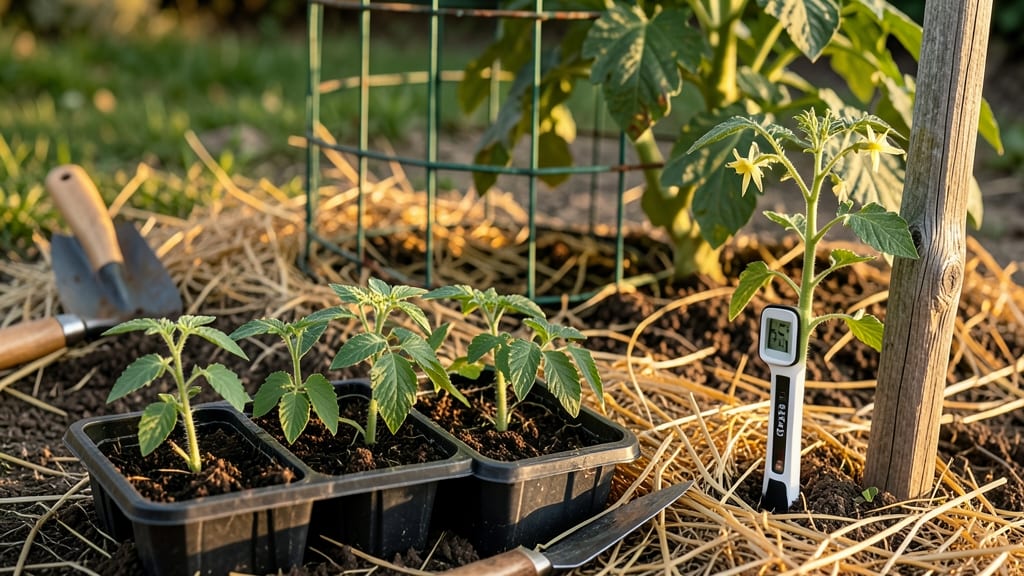
When do you plant tomatoes in Kentucky? Timing your 🍅 tomato planting in Kentucky can make or break your harvest—get it wrong, and you might end up with frost-nipped seedlings or wasted effort.
The April 15 to May 15 window works for most of the state, but Kentucky’s microclimates (from the Bluegrass to the Cumberland Plateau) mean your exact start date could vary by 2-3 weeks depending on elevation and local frost patterns.
Why does this matter? Tomatoes thrive in warm soil (60°F+) and hate even light frosts, so planting too early risks stunted growth, while waiting too long cuts your harvest window short.
The key is knowing your county’s last-frost average—and adjusting for urban heat islands or mountain valleys that can shift those dates dramatically.
In this guide, I’ll break down region-specific planting timelines for Kentucky’s USDA zones 6a-7a, including when to start seeds indoors versus transplanting hardened-off seedlings. You’ll also learn how to extend your season with row covers or succession planting for continuous harvests from June to October.
Whether you’re a first-time gardener or a veteran grower, these insights—backed by Kentucky State University Extension data—will help you avoid common mistakes and maximize your tomato yield this year. Let’s get those seeds in the ground at the perfect moment!
Kentucky’s last-frost dates by region (2024 planting timeline)
Kentucky’s last-frost dates shift dramatically from west to east, with Western Kentucky often seeing frost-free soil by early April, while Eastern Kentucky may wait until mid-May. These variations mean your tomato planting window could differ by 4-6 weeks depending on your county.
Always check the Kentucky Climate Center for your specific area, as microclimates—like river valleys or urban heat islands—can push dates even earlier or later.
For most of Kentucky’s USDA Zones 6a-7a, the optimal planting window for tomatoes falls between April 15 and May 15.
However, this range can expand to March 20 (Western KY) or shrink to May 20 (Eastern KY) in extreme cases. Soil temperature is just as critical as air temperature—tomatoes thrive when soil reaches 60°F, which often lags behind frost-free dates.
Here’s a breakdown of last-frost averages by region, including historical data from the Kentucky State University Extension. Use these as a starting point, but always monitor local forecasts for adjustments.
| Region | Avg. Last Frost | Safe Planting Window | Notes |
|---|---|---|---|
| Western KY (e.g., Paducah, Owensboro) | March 20 - April 5 | March 25 - April 15 | Warmer microclimates; start transplants early. |
| Central KY (e.g., Louisville, Lexington) | April 1 - April 15 | April 10 - May 1 | Moderate risk; use row covers for early starts. |
| Eastern KY (e.g., Corbin, Pikeville) | April 15 - May 1 | May 1 - May 15 | Cooler zones; opt for heat-tolerant varieties. |
| Northern KY (e.g., Covington, Madisonville) | April 5 - April 20 | April 20 - April 30 | Urban areas may warm faster; monitor soil temps. |
🌱 Pro Tip: Use a soil thermometer to confirm 60°F+ before planting!
If you’re planting tomato seeds indoors, start them 6-8 weeks before your region’s last frost date. For example, Western Kentucky gardeners can begin seeds by February 1, while Eastern Kentucky should wait until March 15.
Transplant seedlings outdoors only after hardening them off for 7-10 days and ensuring nighttime temperatures stay above 50°F.
For extended growing seasons, consider succession planting: Sow a second batch of seeds in early June for a fall harvest. This works best in Western and Central Kentucky, where the growing season stretches into October or November.
In Eastern Kentucky, limit succession planting to heat-tolerant varieties like ‘Celebrity’ or ‘Solar Fire’, which mature in 60-70 days.
Always cross-reference these dates with the Kentucky Mesonet or your local Cooperative Extension Service for real-time updates. A late frost in April can devastate early plantings, so err on the side of caution—especially if you’re growing heirloom varieties, which are more sensitive to temperature fluctuations.
Remember, tomatoes hate cold soil. Even if the air is warm, cool soil temperatures can stunt growth or cause blossom drop. Use black plastic mulch or straw mulch to warm the soil faster and maintain consistent moisture.
This is especially useful in Central and Eastern Kentucky, where soil warms more slowly.
For container gardening, adjust your planting window by 2-3 weeks later than in-ground plantings. Pots heat up and cool down faster, making them more vulnerable to temperature swings. Place containers in south-facing locations and use self-watering systems to prevent stress during Kentucky’s humid summers.
Finally, keep an eye on the 2024 Kentucky Growing Degree Days (GDD) forecast. Tomatoes need 1,200-1,500 GDDs
How to adjust planting dates for Kentucky’s microclimates
Kentucky’s geography creates microclimates that can shift your tomato planting window by 2-3 weeks. Mountainous regions like Eastern Kentucky often see frost until May 10, while Western Kentucky’s river valleys may warm up by April 15.
Urban areas like Louisville can experience heat islands that allow earlier planting—sometimes as early as April 1.
To fine-tune your schedule, check your county’s historical frost data from the Kentucky Climate Center. For example, Lexington averages a last frost on April 15, but Paducah in Western Kentucky typically warms up by April 5.
Adjust your planting date 1-2 weeks earlier for warmer microclimates or delay by 2 weeks in cooler areas.
🌱
Adjusting for Kentucky’s Microclimates
- Use row covers to plant 2 weeks earlier in cooler zones.
- Choose early-maturing varieties (60-70 days) for mountain regions.
- Plant transplants instead of seeds for a 2-week head start.
- Monitor soil temperature—wait until it hits 60°F.
- Plant seeds before April 1—risk frost damage.
- Ignore river valleys—they warm faster than uplands.
- Skip hardening off transplants if starting indoors.
- Overlook urban heat islands—they can advance planting by 10+ days.
For mountain regions, consider using cold frames or greenhouses to start seeds 4-6 weeks before your area’s last frost date. This extends your growing season by 30-45 days, letting you plant heirloom varieties that need more time to mature.
In river valleys, you can often plant transplants as early as mid-March under protective covers.
If you’re in a transition zone (like Northern Kentucky near Cincinnati), err on the side of caution. Plant transplants after May 1 to avoid late frosts, which can kill young plants. Use frost cloth for an extra layer of protection if you’re pushing the envelope with early planting.
For succession planting, stagger your plantings every 2 weeks from April 15 to May 15. This ensures a continuous harvest and maximizes your garden’s productivity. Choose a mix of determinate (bush) and indeterminate (vining) varieties to spread out your harvest window.
Always double-check with your local Cooperative Extension Service. They provide hyper-localized advice based on recent weather patterns, which can vary significantly from year to year. For example, the 2023 growing season saw unusually late frosts in Eastern Kentucky, delaying planting by 3 weeks for many gardeners.
☀️