
Plants
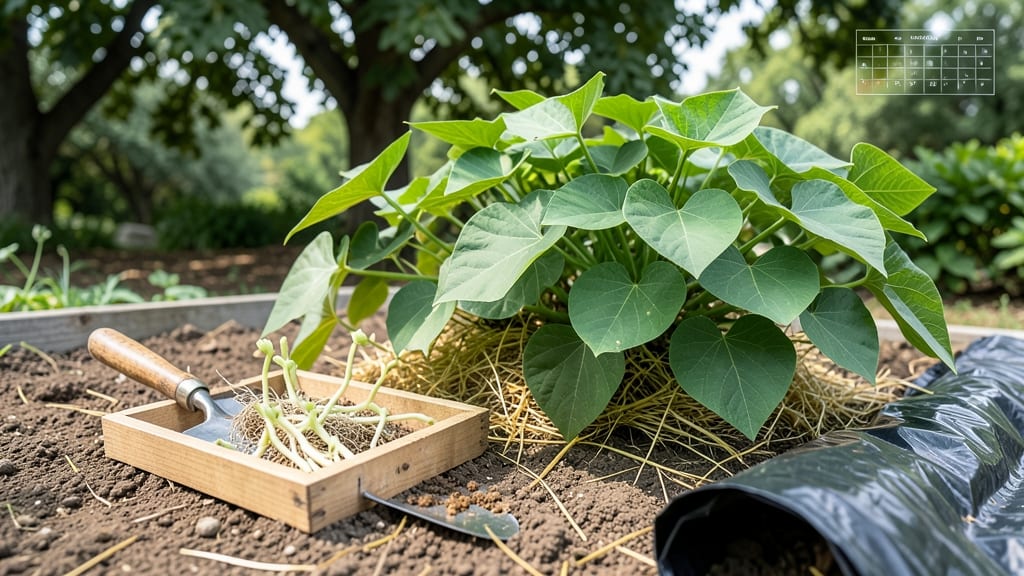
If you’ve ever wondered when do you plant sweet potatoes in North Carolina to avoid small, bitter tubers, timing is the secret weapon you’ve been missing. Planting too early risks frost damage, while waiting too long cuts your harvest short—both mistakes are easy to avoid with the right schedule.
North Carolina’s 7a-8b climate gives gardeners a narrow but critical window: mid-April to early June, after the last frost has passed. This isn’t just about dates—soil temperature (65°F+) and regional microclimates (Coastal vs. Piedmont) play just as big a role in success.
In this guide, I’ll break down the exact months to plant for zero frost risk, whether slips or seeds work best in your zone, and how to space them for maximum yield. Spoiler: The 3-month window between late spring and early summer is your golden ticket to a bumper harvest.
Ready to skip the guesswork? Let’s dive into the planting calendar that’ll have your sweet potatoes thriving—no more wasted effort or disappointing tubers.
North Carolina sweet potato planting calendar: exact months by region for maximum yield
North Carolina’s diverse climate means your sweet potato planting window depends on whether you’re in the Coastal Plain, Piedmont, or Mountains. The key? Planting after your last frost date—typically mid-April to early June—when soil warms to 65°F+.
Coastal areas can start earlier, while mountain regions must wait until late May. Get this wrong, and you risk stunted tubers or wireworm damage.
Sweet potatoes need a 90–120-day growing season, so timing is critical. In NC’s USDA zones 7a–8b, your frost-free window spans 180–240 days.
Coastal gardeners have the longest season, while mountain zones must choose fast-maturing varieties. Miss the window, and you’ll harvest small, woody tubers—or none at all.
Here’s the breakdown by region, with exact months and soil temperature targets to maximize your harvest:
| Region | Last Frost Date | Ideal Planting Window | Soil Temp Requirement | Harvest Window |
|---|---|---|---|---|
| Coastal Plain (Zones 8a–8b) | March 15–April 1 | Mid-April to May 15 | 65°F+ (earlier than Piedmont) | Late September–November |
| Piedmont (Zones 7a–7b) | April 1–April 15 | Late April to June 1 | 68°F+ (warmer soil needed) | Mid-September–October |
| Mountains (Zones 6b–7a) | May 1–May 15 | Late May to June 15 | 70°F+ (latest to warm) | Early September–October |
For Coastal NC, aim for April 15–May 1—this gives your vines 120+ days before frost. In the Piedmont, wait until May 1–June 1 to avoid early-season wireworms, which thrive in cooler soil.
Mountain gardeners should stick to short-season varieties like Georgia Jet (90 days) and plant by June 1 to harvest before October’s first frost.
Soil temperature is non-negotiable. Use a soil thermometer to confirm 65°F+ at 4 inches deep. Cold soil delays growth and attracts pests. Mulch with straw to retain heat and moisture—critical in NC’s humid summers. Skip this, and you’ll battle fungal diseases like black rot.
Microclimates matter too. A south-facing slope warms faster than a north-facing garden. If your yard has shaded spots, choose partial-shade-tolerant varieties like Centennial (110 days). But full sun is ideal for maximum tuber size. Shade = smaller harvests.
Three planting mistakes NC gardeners make: planting too early (frost damage), skipping soil tests (pH should be 5.8–6.5), and overcrowding slips (space them 12–18 inches apart). Fix these, and you’ll see 3x larger tubers.
Extend your season by planting in stages. Start with early slips in April (Coastal), then mid-season slips in May (Piedmont), and late slips in June (Mountains). This spreads your harvest and reduces pest pressure.
Now’s the time to mark your calendar. Grab your slips, test your soil, and plant by your region’s deadline. Your sweet potato harvest depends on it! 🍠
How to time your sweet potato planting for zero frost risk and pest avoidance
Timing your sweet potato planting in North Carolina isn’t just about avoiding frost—it’s about syncing with your local climate’s peak humidity windows (May–June) and soil temperature (70°F+). Plant too early, and wireworms or fungal diseases like black rot may strike.
Plant too late, and your harvest could shrink before the first frost hits in November.
Start by checking your last frost date, which varies by region: March 15 in the Piedmont, March 1 in Coastal NC, and as late as April 15 in the Mountains.
Sweet potatoes need 180–240 frost-free days to mature, so count backward from your first frost date to pinpoint your ideal planting window.
- 1.
- 2.
- 3.
For Coastal NC gardeners, aim for April 15–May 1 to capitalize on the region’s longer growing season. In the Piedmont, May 1–15 is ideal, while Mountain growers should plant by June 1 to ensure tubers mature before frost.
Use black plastic mulch to warm soil faster and suppress weeds, which is especially critical in cooler microclimates.
Watch for wireworm infestations, a common pest in NC’s sandy soils. Plant marigolds nearby as a natural deterrent, or apply beneficial nematodes if you’ve had past issues. If your slips wilt within 48 hours of planting, it’s often a sign of overwatering or root rot from soggy soil.
Once planted, focus on consistent moisture—water deeply every 3–5 days—but avoid overhead sprinklers to prevent fungal diseases like Alternaria leaf spot. Mulch with straw to retain moisture and regulate soil temperature, which is key for sweet potatoes’ 90–120-day growth cycle.
By aligning your planting with these NC-specific cues, you’ll dodge frost, pests, and poor soil conditions—guaranteeing a harvest of sweet, fibrous tubers by late fall. 🍠