
Plants
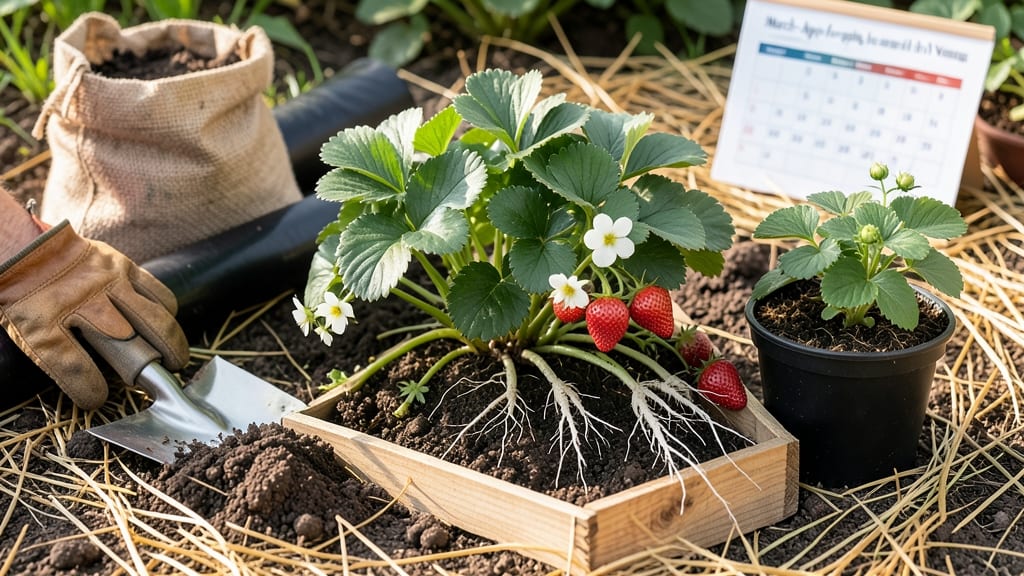
Planting strawberries in Virginia isn’t just about grabbing a few plants and sticking them in the ground—it’s about matching your variety to the state’s chill-hour zones to avoid bitter, bolted plants that never produce fruit.
Whether you’re growing June-bearing or everbearing varieties, timing is everything, especially in zones 7a-7b where frost can still linger into April.
Most gardeners in Virginia plant their 🍓 strawberries in early spring (March–April) or early fall (September–October), but the real secret lies in understanding how many chill hours your plants need. Skip this step, and you might end up with leafy greens but no sweet berries.
I’ll break down the exact planting windows for your region, so you can finally get the harvest you’ve been dreaming of.
From coastal Tidewater to the Piedmont hills, Virginia’s climate varies enough to make a difference in your strawberry success. Bare-root plants, potted varieties, and even your choice between June-bearing and everbearing types all play a role.
Let’s dive into the data-driven schedule that’ll help you plant at the perfect moment—no more guesswork, just zero-bolt success.
Ready to transform your garden into a strawberry paradise? You’ll learn how to prep your soil, adjust for frost risks, and even troubleshoot common mistakes that derail Virginia gardeners every year. Let’s get those plants in the ground the right way.
Virginia’s chill-hour zones: the secret to avoiding bolted strawberries
Virginia’s climate isn’t one-size-fits-all—its 5 chill-hour zones (ranging from 0-1,000+ hours) dictate when to plant strawberries for maximum sweetness and yield. June-bearing varieties need 300-500 chill hours, while everbearing types thrive with 500-1,000 hours.
Plant at the wrong time, and you’ll end up with bitter, bolted berries that never ripen properly.
Most of Virginia falls into USDA Zones 7a-7b, but microclimates like the Tidewater coast (warmer) and Shenandoah Valley (colder) shift planting windows by 2-4 weeks.
For example, Norfolk’s mild winters (Zone 8a) allow fall planting until November 15, while Roanoke’s colder winters (Zone 7a) demand earlier fall planting by October 15.
Here’s the golden rule: Plant strawberries when soil temps hit 40°F (4°C) and stay above freezing. In Virginia, this typically means early March for spring or late September for fall.
But chill hours—measured during dormancy—are the real game-changer. Miss the window, and your plants may bolt (send up flowers) before producing fruit.
🌱
| Virginia Region | Chill-Hour Range | Best Planting Window | Varieties to Choose |
|---|---|---|---|
| Tidewater (Zone 8a) | 500-1,000+ hours | Fall: Sept 15–Nov 15 Spring: Feb 15–Mar 15 |
Albion (everbearing), Fort Laramie (day-neutral) |
| Piedmont (Zone 7a-7b) | 300-700 hours | Fall: Sept 1–Oct 15 Spring: Mar 1–Apr 15 |
Chandler (June-bearing), Seascape (everbearing) |
| Shenandoah Valley (Zone 7a) | 400-800 hours | Fall: Aug 15–Sept 30 Spring: Mar 15–Apr 1 |
Jewel (June-bearing), Ozark Beauty (everbearing) |
| Mountains (Zone 6b) | 700-1,000+ hours | Fall: Aug 1–Sept 15 Spring: Apr 1–May 1 |
Honeoye (June-bearing), Tristar (everbearing) |
If you’re unsure about your chill hours, check your last frost date (typically mid-April in most of Virginia) and count backward.
For June-bearing varieties, aim to plant 6-8 weeks before last frost so roots establish before flowering. Everbearing varieties, like Albion, are more flexible but still need 400+ chill hours to fruit reliably.
Pro tip: Use black plastic mulch in spring to warm soil faster and extend your planting window by 2-3 weeks. This is especially useful in cooler Piedmont regions where soil stays cold longer. Just remove the mulch once flowers appear to prevent overheating.
For bare-root plants, soak roots in water for 2-3 hours before planting to reduce transplant shock. If using potted strawberries, plant them 1 inch deeper than their container level to encourage root growth. Both methods work, but bare-root plants are cheaper and adapt better to Virginia’s varied soils.
🌿
One common mistake? Planting too early in fall. If you miss the September-October window, your strawberries may bolt prematurely during winter’s mild spells. To avoid this, mulch heavily with straw (4-6 inches) after planting to insulate roots and regulate soil temps.
This trick works especially well in Tidewater’s warmer microclimates.
Finally, test your soil pH (ideal range: 5.8-6.5). Virginia’s native clay soils often need lime or sulfur to adjust pH. A simple $10 soil test kit from your local extension office can save you from blossom-end rot or stunted growth.
Amend soil 4-6 weeks before planting to give nutrients time to integrate.
Step-by-step planting timeline: from bare-root to first fruit
Planting strawberries in Virginia isn’t just about picking a month—it’s about preparing your soil, choosing the right method (bare-root or potted), and timing mulching to protect roots from winter’s chill or summer’s heat.
Whether you’re planting in early spring (March–April) or early fall (September–October), follow this timeline to avoid common pitfalls like frost damage or bolting before fruiting.
Start by testing your soil pH (ideal: 5.5–6.5) and amending it with compost or aged manure. Strawberries thrive in well-draining, slightly acidic soil, so avoid heavy clay without sand or peat moss.
If your soil is too alkaline, add sulfur or pine needles to lower the pH gradually over 2–3 months before planting.
⚠️ CRITICAL DEADLINE ALERT: For fall planting, aim to finish by mid-October in Virginia’s USDA Zones 7a–7b. Roots need 4–6 weeks to establish before the ground freezes. In cooler mountain regions (Zone 6), push planting to late September to avoid early frost.
📅 Spring Planting Timeline (March–April)
- Late February: Order bare-root plants or potted strawberries if not already in stock. Soak bare-root crowns in lukewarm water for 2 hours before planting.
- March (after last frost): Plant bare-root crowns with the crown at soil level (not buried). Space 12–18 inches apart in rows 3–4 feet apart for airflow.
- April: Apply 2–3 inches of straw mulch to retain moisture and suppress weeds. Water deeply 2–3 times per week until roots establish (about 6–8 weeks).
- May: Fertilize with 10-10-10 balanced fertilizer (1 tbsp per plant). June-bearing varieties will bolt (send up flower stalks) in late May, so avoid heavy nitrogen after this point.
For fall planting, shift your focus to late summer prep. In August, add compost and a slow-release fertilizer (like 10-10-10) to the planting area. This gives roots time to absorb nutrients before dormancy.
When planting in September–October, use potted strawberries (they’re easier to handle than bare-root) and cover with 4–6 inches of straw mulch to insulate roots through winter.
Pro Tip: If you plant in fall, avoid June-bearing varieties like ‘Chandler’—they need full dormancy and may bolt prematurely. Opt for everbearing or day-neutral varieties (like ‘Albion’ or ‘Fort Laramie’) that handle Virginia’s mild winters better. After planting, water deeply once a week until the ground freezes to encourage root growth before dormancy.
By following this timeline, you’ll maximize your strawberry yield and avoid the heartbreak of bitter, underripe fruit or plants that never fruit. The key? Prep early, plant at the right chill-hour window, and mulch like your life depends on it—because in Virginia’s climate, it might!