
Plants
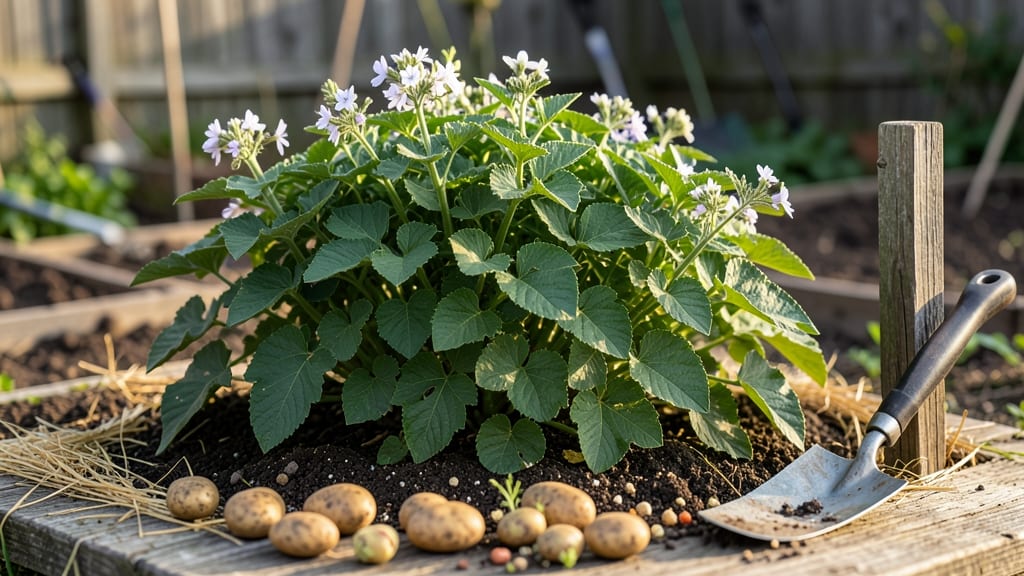
If you've ever wondered when to plant potatoes in Indiana, timing is everything—especially when unpredictable spring frosts can turn your hard work into a gamble.
The key to a thriving 🥔 harvest lies in planting at the right moment, when soil temperatures and frost risks align perfectly for your favorite varieties.
For Indiana gardeners in USDA Zone 6a, the ideal window opens as early as late February for cold-hardy types, but most varieties thrive when planted between March and April.
This timing ensures tubers develop before the last frost date around April 15, giving you the best chance for a full-season yield.
But here's the catch: not all potatoes are created equal. Early varieties like red potatoes need a head start, while late-season Russets can wait until soil warms to 45°F.
I'll break down the exact frost-free timeline by variety so you can avoid common mistakes and maximize your harvest from July through August.
Ready to transform your garden into a potato powerhouse? Let's dive into the strategies that work for Indiana's climate—because with the right timing, you'll be digging up those golden spuds like a pro.
Indiana potato planting timeline by variety: early vs. late season choices
Indiana’s USDA Zone 6a climate means your potato planting window is short but sweet—typically 4-6 weeks before the average last frost date (April 15). However, not all potato varieties thrive under the same schedule.
Early varieties like Red Pontiac can handle cooler soils, while late-season Russet Burbank needs warmer temperatures to bulk up properly. Let’s break down the best planting times for Indiana’s most popular varieties.
Your first step is understanding Indiana’s microclimates. Northern Indiana (e.g., Fort Wayne) tends to have 2-3 weeks earlier frost dates than southern Indiana (e.g., Evansville).
This means gardeners in northwest Indiana might plant as early as late February to early March, while those in southeast Indiana should wait until mid-to-late March to avoid frost damage to tender sprouts.
Here’s the critical rule: Soil must reach 45°F (7°C) for seed potatoes to sprout reliably. In Indiana, this usually aligns with mid-March to early April, but clay-heavy soils (common in central Indiana) warm up slower.
If your soil is still cold, use black plastic mulch to accelerate warming by 2-3 weeks.
🥔
| Variety | Days to Maturity | Best Planting Window (Indiana) | Soil Temp Threshold | Harvest Window |
|---|---|---|---|---|
| Early Varieties (Red Pontiac, Yukon Gold) | 60-90 days | Late February - Early April | 45°F (7°C) | Early to Mid-July |
| Mid-Season (Kennebec, Fingerling) | 90-110 days | Mid-March - Early April | 48°F (9°C) | Mid-July to Early August |
| Late Varieties (Russet Burbank, Purple Viking) | 110-130 days | Late March - Mid-April | 50°F (10°C) | Late August - Early September |
🌱 Pro Tip: For a continuous harvest, plant successive crops every 2 weeks starting in early March.
If you’re planting early varieties like Red Pontiac, aim for late February to early March in southern Indiana or mid-March in northern regions. These 60-90 day varieties mature quickly and can handle cooler soils, making them ideal for stretching Indiana’s short growing season.
For Yukon Gold, which falls in the mid-early category, wait until mid-March to ensure soil warmth and avoid blight risks from lingering frost.
For late-season varieties like Russet Burbank, patience pays off. Plant these no earlier than late March—ideally in early April—to give tubers time to bulk up before Indiana’s first frost (October 15).
These varieties need warmer soil (50°F+) to develop their signature thick skins and high starch content. If you’re in northern Indiana, consider row covers to extend the season by 2-3 weeks.
One common mistake Indiana gardeners make is planting too early in hopes of a longer harvest window. However, cold soil slows sprouting and increases the risk of rot and disease. Always test soil temperature with a soil thermometer—if it’s below 45°F, wait.
For clay soils, which are prevalent in central Indiana, amend with compost to improve drainage and warmth retention.
For those in southern Indiana (e.g., near Louisville), you can push the envelope and plant early varieties in February under row covers or cold frames. This gives you a 4-6 week head start on the harvest.
Just be prepared to remove covers during the day to prevent overheating and reapply at night to protect from unexpected frosts.
🌿
5 Critical signs Indiana’s soil is ready for potato planting (and how to fix delays)
Indiana’s clay-heavy soils and unpredictable spring frosts can turn potato planting into a guessing game. But these 5 key indicators will tell you exactly when your soil is primed for success—before you risk frost damage or stunted growth.
Let’s break down what to watch for and how to troubleshoot common delays.
First, check your soil temperature—potatoes need at least 45°F (7°C) to sprout properly. Use a soil thermometer (or your elbow—if it’s too cold to keep your arm buried for 30 seconds, wait longer).
In northern Indiana, this usually means waiting until mid-to-late April, while southern Indiana gardeners can start as early as early April.
🌱 Visual Element: Numbered Highlights
✅ 5 Signs Your Soil Is Ready
- Soil temp: 45°F+ (7°C+) at 4" depth (use thermometer)
- Moisture: Damp but not waterlogged (squeeze a handful—should crumble)
- Frost risk: No hard frosts predicted for 2+ weeks (check NOAA forecasts)
- Drainage: Water disappears within 6 hours (no standing pools)
- Weather: 3+ days of consistent warmth (50°F+ nights)
💡 Pro Tip: Test soil in morning sunlight—it warms faster than shaded areas.
If your soil is too cold or soggy, don’t panic. Raised beds warm up 1-2 weeks faster than in-ground plots, and adding compost or straw mulch can raise temperatures by 5-10°F.
For clay-heavy soils (common in Indiana), mix in sand or peat moss to improve drainage—this prevents rotten tubers and encourages faster sprouting.
Another red flag? Frequent frost warnings after your soil warms up. Planting too early risks blackened leaves and wasted seed potatoes. Instead, use frost blankets or plant cold-hardy varieties like Kennebec if you’re eager to start. These can tolerate light frosts after sprouting, buying you extra time.
Finally, watch for consistent nighttime warmth. Potatoes need 50°F+ (10°C+) nights to thrive—if temps drop below this, growth stalls. Use a mini greenhouse or row cover to create a 5-10°F warmer microclimate if needed. This is especially critical in Indiana’s Zone 5-6 transition areas, where late frosts linger.
Once you’ve checked all five signs, it’s time to plant! But remember: early planting (February-March) gives you a longer harvest window, while late planting (May) reduces disease risk but may yield smaller tubers.
Balance your timeline with your variety’s maturity date—early potatoes (like Red LaSoda) need 90 days, while late varieties (like Russet Burbank) take 120 days.
With these signs in mind, you’ll avoid the #1 mistake Indiana gardeners make: planting too soon and losing their crop to frost. Now grab your seed potatoes, and let’s get growing! 🥔