
How To
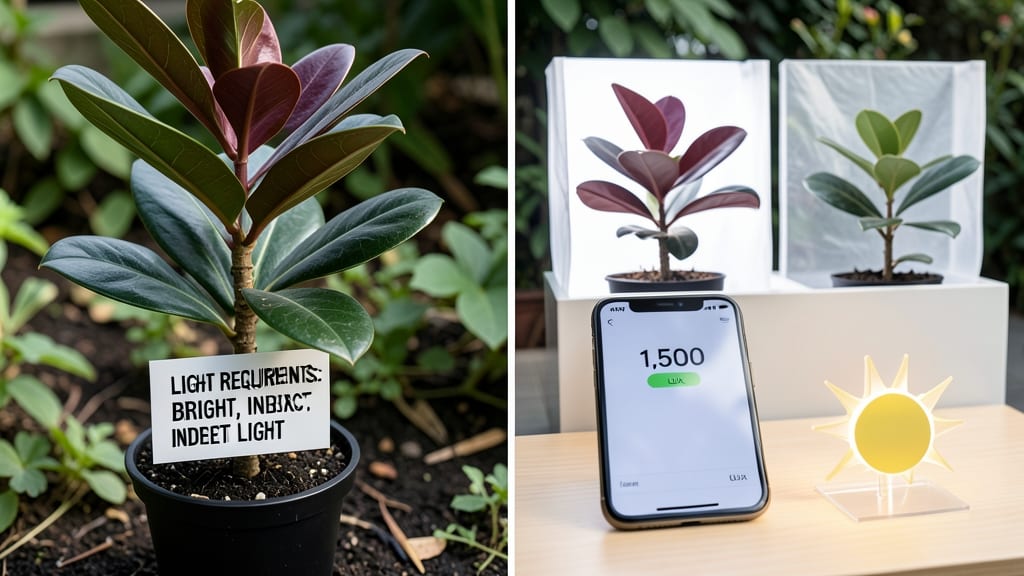
Optimal daily light requirements for healthy rubber plant growth
Your rubber plant (Ficus elastica) thrives on bright indirect light, but finding the perfect balance is key—too little causes leggy growth, while too much leads to sunburned leaves.
Aim for 4-6 hours of filtered light daily, mimicking its natural understory habitat in tropical forests. This range supports vibrant foliage and strong stems without stressing the plant.
Direct sunlight is a no-go for rubber plants—even 2-3 hours of harsh afternoon rays can scorch leaves, leaving crispy brown edges. Instead, position your plant near a north or east-facing window, where sunlight is gentler.
If you notice leaves turning pale or developing yellow patches, it’s a sign the light is too intense or inconsistent.
For indoor growers, think of bright indirect light as the Goldilocks zone—not too dim, not too harsh. A spot 3-5 feet from a window (depending on glass clarity) usually works, but rotate your plant quarter-turns weekly to ensure even growth.
This prevents one side from stretching toward the light while the other stays weak.
Seasonal adjustments are crucial. In summer months, when sunlight is strongest, move your rubber plant a few feet farther from the window or use a sheer curtain to diffuse light.
Conversely, during winter’s shorter days, supplement with a grow light for 6-8 hours daily to maintain its light needs.
Here’s a quick science-backed breakdown: Rubber plants evolved under 50-70% shade in their native Southeast Asia, so they’re not built for full sun. Their large, glossy leaves are adapted to filter bright but indirect rays.
When light drops below 30% intensity (common in dim offices), growth slows, and leaves lose their signature deep green color.
| Light Condition | Daily Hours Needed | Plant Response | Ideal Placement |
|---|---|---|---|
| Bright Indirect Light | 4-6 hours | Vibrant leaves, strong stems | East/west window, 3-5 ft away |
| Low Light (<30% intensity) | 2-3 hours (supplement needed) | Leggy growth, pale leaves | North window or grow light |
| Direct Sunlight | 0-2 hours (max) | Sunburn, crispy edges | Avoid south windows |
Pro tip: Use a light meter app (like "Light Meter" for smartphones) to measure your space’s light intensity. Aim for 500-1,000 foot-candles—this range keeps your rubber plant happy without overdoing it.
If your home lacks natural light, a 10-15W LED grow bulb (with a cool white spectrum) can bridge the gap for 6-8 hours daily.
Watch for seasonal light shifts, too. In spring and fall, when days are longer, your rubber plant may need partial shade during peak sun hours (10 AM–3 PM). In winter, reduce watering slightly since lower light means slower growth and less moisture evaporation.
Remember, rubber plants are forgiving but not resilient—they’ll survive in low light, but they’ll thrive in bright indirect conditions. The difference? A plant in ideal light grows 1-2 feet taller per year with glossy, deep green leaves, while one in poor light may struggle to grow at all.
Investing 10 minutes to find the perfect spot pays off in lush, healthy foliage.
For extra peace of mind, rotate your plant every 2-3 weeks to ensure all sides get equal light exposure. This prevents the plant from leaning toward the light source, which can make it look lopsided. A well-lit rubber plant isn’t just prettier—it’s more resilient to pests and diseases, too.
Signs your rubber plant isn’t getting enough (or too much) light
Your rubber plant’s leaves whisper secrets about its light struggles—learn to listen! Purple stems or yellowing leaves scream for more brightness, while crispy edges or bleached patches reveal sunburn from too much direct sun. These visual cues help you diagnose the issue fast and adjust placement before permanent damage occurs.
Start by checking the leaf color. Healthy rubber plants boast deep green leaves with glossy surfaces. If you spot pale or red-tinged leaves, your plant’s begging for brighter conditions. Move it closer to a window or supplement with a grow light to revive its vibrancy within weeks.
🌱 Key Light Struggles & Fixes
- Purple stems → Low light → Rotate plant 180° weekly + move east-facing
- Crispy edges → Too much sun → Filter light with sheer curtain
- Leggy growth → Insufficient light → Prune leggy stems + add grow light
- Brown patches → Overwatering + sunburn → Reduce water + move to indirect light
Seasonal changes demand adjustments too. During winter months, when daylight shrinks, supplement with a 12-hour LED grow light to maintain growth. Conversely, in summer’s intense sun, watch for afternoon sun—it’s the biggest culprit for leaf scorch.
Don’t ignore new growth patterns. If your rubber plant’s new leaves are smaller than usual, it’s stretching toward light. This etiolation weakens the plant over time. The fix? Rotate your plant weekly and place it 2-3 feet from an east-facing window for balanced light exposure.
For office dwellers with west-facing windows, beware of the afternoon sun. Even filtered light can cause damage. Test placement by moving the plant 6 feet back and observing for 3 days—if leaves stay green, you’ve found the sweet spot.
Pro tip: Use a light meter app (like Light Meter by Awareness Technologies) to measure 1,000-2,000 foot-candles—the ideal range for rubber plants. This data removes guesswork and helps you fine-tune placement for peak health.