
Plants
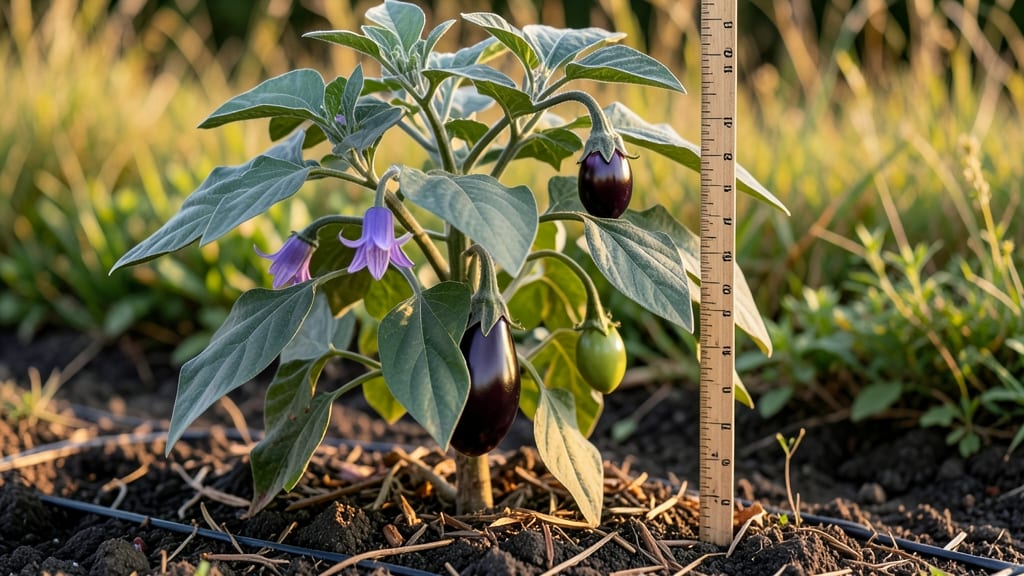
If you’ve ever wondered how tall does an eggplant plant grow and whether it’ll fit in your garden, the answer might surprise you—these plants can range from compact bushes to towering vines that need support.
For most gardeners in USDA Zone 6a, eggplants like the classic 'Black Beauty' typically grow 3-4 feet tall, while dwarf varieties stay under 2 feet, making them perfect for small spaces or containers.
But here’s the thing: eggplant height isn’t set in stone. With the right pruning or trellising, you can shape their growth to match your garden’s layout.
Whether you’re planting in spring or squeezing them into a balcony, knowing these growth habits is the key to a bountiful harvest without the space struggles.
Let’s break down the different varieties—from the fairy-tale-sized 'Patio Baby' to the taller 'Ichiban'—and share practical tips to control their height naturally. You’ll learn how to maximize your space while keeping your eggplants happy and productive.
Ready to grow eggplants that fit your garden and your goals? Let’s dive into the details so you can plan your 🍆 patch with confidence.


Standard eggplant heights: from dwarf to towering varieties
Eggplant plants come in a surprising range of heights, from compact bush varieties that stay under 2 feet to towering giants reaching nearly 5 feet. Knowing these differences helps you plan your garden layout and choose the right variety for your space.
Most standard eggplants fall between 2 to 4 feet tall, making them ideal for in-ground beds or large containers.
The height of your eggplant depends on its genetic variety, growing conditions, and even your pruning habits. For example, the classic 'Black Beauty' variety typically grows 3 to 4 feet tall, while newer hybrids like 'Rosa Bianca' can stretch up to 4.5 feet without support.
Understanding these ranges ensures you allocate enough space for healthy growth and airflow.
| Variety Type | Height Range | Space Needs | Best For |
|---|---|---|---|
| Dwarf Varieties | 1–2 feet | Containers, small beds | Balconies, patios, urban gardens |
| Standard Varieties | 2–4 feet | In-ground beds, large pots | Traditional gardens, raised beds |
| Tall Varieties | 4–5 feet | Trellises, tall cages | Vertical gardens, small spaces |
If you're growing eggplants in containers, dwarf varieties like 'Fairy Tale' or 'Patio Baby' thrive in 5-gallon pots and rarely exceed 18 inches tall. These compact plants are perfect for balconies or windowsills, producing plenty of fruit without sprawling.
In contrast, taller varieties like 'Ichiban' can reach 3.5 feet and benefit from staking or trellising to prevent flopping.
Growing conditions also play a role in height. Eggplants grown in full sun (6+ hours daily) tend to grow taller and produce more fruit, while those in partial shade may stay shorter but can become leggy.
Poor soil fertility or overcrowding can stunt growth, so always plant seeds or transplants 18–24 inches apart for optimal airflow and sunlight penetration.
For small gardens, consider bush-type eggplants like 'Rosa Bianca', which stays under 3 feet but yields large, globe-shaped fruits. These varieties are ideal for intensive planting schemes where you maximize space.
Meanwhile, vining types like 'Black Beauty' need more room to spread, so plan for at least 2 feet of space in all directions.
Pruning can also influence height. If you pinch back the main stem early, the plant may grow wider instead of taller, producing a bushier habit. This technique is especially useful for container gardening, where vertical growth is limited.
Just avoid heavy pruning late in the season, as it can reduce fruit production.
One common misconception is that all eggplants need tall cages or trellises. While some varieties benefit from support, others—like 'Fairy Tale'—stay compact enough to thrive without it. Always check the seed packet or plant tag for height expectations before planting to avoid surprises.
In my own garden, I’ve found that standard-height varieties like 'Ichiban' produce the most fruit when given a mix of support and pruning. I use bamboo stakes to guide the vines upward while trimming side shoots to encourage stronger central growth.
This balance keeps the plant manageable while maximizing yield.
For first-time growers, I recommend starting with dwarf or semi-dwarf varieties to build confidence. Once you understand their growth habits, you can experiment with taller types. Just remember: height isn’t everything—healthy roots and proper care matter just as much as the final plant size.
Standard eggplant heights: from dwarf to towering varieties
Eggplant plants come in a surprising range of sizes, from dwarf varieties that barely top your knee to giant types reaching waist height. Most standard eggplants grow between 2 to 4 feet tall, but their growth habits vary dramatically depending on the variety and growing conditions.
Understanding these differences helps you plan your garden layout and choose the right plants for your space.
For example, the classic Black Beauty variety typically reaches 3 to 4 feet tall and produces large, glossy fruits perfect for grilling. Meanwhile, Fairy Tale eggplants stay compact at just 1 to 2 feet tall, making them ideal for containers or small gardens.
These height differences aren’t just about aesthetics—they also affect how you’ll need to care for your plants, especially when it comes to support structures and pruning techniques.
| Variety | Height Range | Notes |
|---|---|---|
| Dwarf Varieties (e.g., Fairy Tale, Patio Baby) | 1–2 ft | Ideal for containers or small spaces |
| Standard Varieties (e.g., Black Beauty, Ichiban) | 3–4 ft | Best for in-ground planting with support |
| Giant Varieties (e.g., Rosa Bianca, Long Purple) | 4–6 ft | Requires strong trellising and staking |
Even within the same variety, factors like pruning practices, trellising, and soil fertility can influence how tall your eggplant grows. For instance, if you prune your Black Beauty aggressively to encourage bushier growth, it may stay shorter and produce more fruit.
Conversely, leaving it unpruned can result in a taller, leggier plant with fewer fruits. This flexibility makes eggplants adaptable to different garden setups, from balcony containers to large backyard plots.
Another key consideration is how eggplant height affects fruit production. Taller varieties often produce larger individual fruits, but they may require more space and support. Dwarf varieties, while smaller, can yield just as many fruits if given proper care.
For example, Patio Baby eggplants produce miniature fruits but thrive in 5-gallon containers, making them perfect for urban gardeners or those with limited space.
If you’re growing eggplants in containers, container size directly impacts height. A 5-gallon pot will restrict root growth, often resulting in a shorter, stockier plant, while a 15-gallon container allows for taller growth similar to in-ground plants.
Always choose a container at least 12 inches deep to accommodate the plant’s root system and prevent stunted growth.
For gardeners in cooler climates, eggplant height can also be influenced by season length. Shorter growing seasons may limit how tall your plants become, as they focus energy on producing fruit rather than vertical growth.
In these cases, opting for early-maturing varieties like Ichiban (which grows to 3 feet tall) ensures you still get a harvest before the first frost.
Ultimately, the height of your eggplant plants depends on a mix of genetics, care, and environment. By choosing the right variety for your space and providing proper support, you can enjoy a bountiful harvest—whether your plants are knee-high or waist-high! 🌱