
Companion Plants
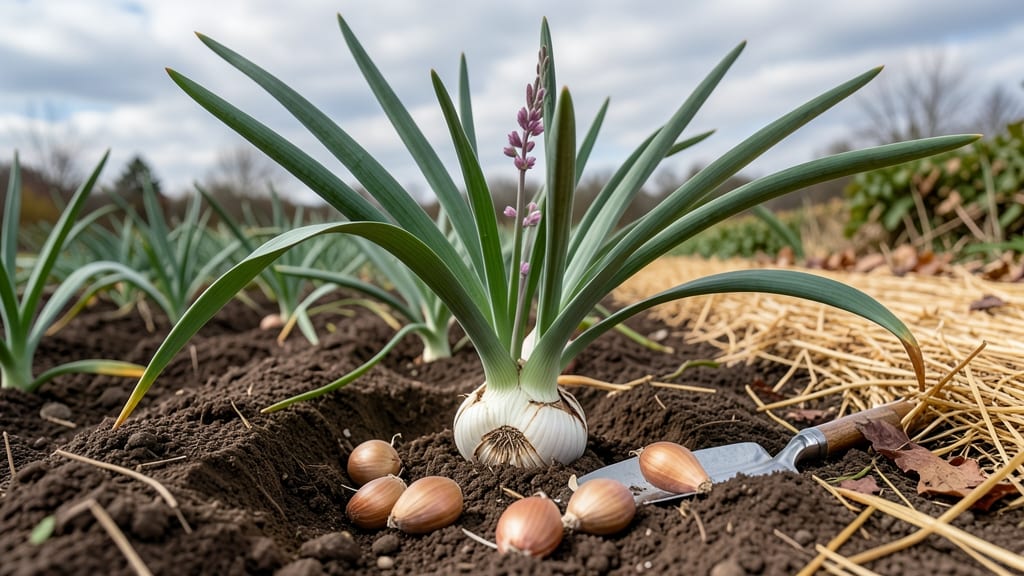
Timing your garlic planting in Northeast PA could mean the difference between a bumper crop and a total flop—especially when you’re dealing with hardneck varieties like Rocambole that need just the right chill hours.
If you plant too early, your cloves might rot in soggy soil; too late, and you’ll miss the sweet spot for strong bulb formation before summer heat kicks in.
Here’s the secret: Northeast PA’s 5b-6b zone gives you two prime windows—October to November for fall planting or early March to April for a spring start. But getting it right means paying attention to soil temps (ideally 40–50°F) and avoiding frost-sensitive periods.
I’ll walk you through exactly when to plant, how deep to bury those cloves, and what to do if winter throws a curveball.
Why does this matter? Because hardneck garlic like Music or German Red thrives on cold—30–50°F chill hours are non-negotiable for those flavorful bulbs. Skip the guesswork and follow my step-by-step guide to match your planting schedule with Northeast PA’s frost dates, soil conditions, and variety needs.
Trust me, your future summer harvest will thank you.
Ready to dive in? Let’s break down the best months, soil prep tricks, and even how to adjust for microclimates—whether you’re in the Poconos or Scranton. By the end, you’ll know exactly when to plant 🧄 for bulbs that’ll make your kitchen the talk of the neighborhood.
Best planting windows for Northeast PA garlic based on chill-hours
Northeast Pennsylvania’s USDA Zones 5b-6b demand precision when planting hardneck garlic. The key is matching your variety’s chill-hour requirements—typically 30–50°F for 300–600 hours—with the region’s October–January frost patterns. Plant too early, and cloves rot; too late, and bulbs won’t mature properly.
For hardneck varieties like Rocambole or German White, aim for 4–6 weeks before ground freezes (usually mid-October to early November).
Spring planting is riskier but works if you use certified disease-free cloves and plant by early March. The trade-off? Spring garlic often yields smaller bulbs due to shorter growing seasons.
For best results, prioritize fall planting—it gives garlic enough time to establish roots before winter dormancy. My go-to window is late October, balancing frost risk and root development.
| Planting Window | Chill-Hour Goal | Soil Temp Threshold | Frost Risk | Best Varieties |
|---|---|---|---|---|
| Late October | 400–600 hours | 40–50°F | Low (after mid-Nov) | Rocambole, German White |
| Early November | 300–400 hours | 35–45°F | Moderate | Music, German Red |
| Early March | 200–300 hours | 45–55°F | High (late frosts) | Silverskin (softer neck) |
🌱 Pro Tip: Use a soil thermometer to confirm 40–50°F soil temps before planting—critical for root establishment.
For high-elevation areas like the Poconos, push planting to mid-October—colder microclimates freeze sooner. In valley regions (e.g., Scranton), early November works better. Always plant pointy-end up, 2 inches deep, and 4–6 inches apart for optimal spacing.
Mulch with straw or leaves after planting to insulate cloves during winter.
If you miss the fall window, spring planting is still viable but requires earlier varieties like Silverskin. Start cloves indoors in February and transplant by March 15 to avoid late frosts.
I’ve had success with this method, though yields are 20–30% smaller than fall-planted garlic. The key is soil warmth—wait until soil temps hit 45°F consistently before planting.
Watch for soil temperature spikes in late winter—garlic can bolt prematurely if it warms too soon. In NE PA, this is rare but possible in unusually mild winters.
If you notice shoots emerging by February, cover rows with lightweight row fabric to delay growth until stable 50°F+ temps arrive. This trick has saved my spring-planted batches from bolting.
Hardneck garlic needs 6–8 months to mature, so fall planting aligns perfectly with NE PA’s 165 frost-free days. Plant by November 1, and you’ll harvest by late July—just in time for summer recipes.
For early harvests, try softneck varieties like Artichoke, though they’re less cold-hardy and better suited for spring planting.
One common mistake? Planting garlic too shallow or in wet soil. NE PA’s clay-heavy soils drain poorly—amend with compost or sand to prevent rot. I always test soil moisture before planting; if it’s soggy, wait 1–2 weeks for drainage. A well-draining bed ensures healthy root development over winter.
Finally, label your rows! NE PA’s variable microclimates mean frost dates differ by 1–2 weeks even within the same county. Track your local frost dates for 3 years to refine your planting schedule. Over time, you’ll nail the perfect window for your specific yard.
Best planting windows for Northeast PA garlic based on chill-hours
Northeast Pennsylvania’s USDA Zones 5b-6b demand precision when planting hardneck garlic. The key? Matching your planting window to the 30–50°F chill-hours these varieties need to form bulbs.
For most hardnecks like Rocambole or German White, aim to plant 4–6 weeks before the ground freezes—typically mid-October to early November. This ensures roots establish before winter while still accumulating enough cold.
If you miss fall, don’t despair—early spring planting (March) works too, but bulbs may be smaller. The trade-off? Spring-planted garlic skips winter’s natural chill, so you’ll need to vermilion it (cover with row fabric) to mimic cold exposure.
For softneck varieties (like Silverskin), spring planting is fine, but hardnecks thrive best with fall’s chill.
Soil temperature is your best guide. Plant when soil hits 40–50°F—cold enough to slow rot but warm enough for roots to grow. In Scranton/Wilkes-Barre, this usually aligns with late October, while Poconos’ higher elevations may push planting to early November.
| Planting Window | Chill-Hours Needed | Soil Temp | Best Varieties | Frost Risk |
|---|---|---|---|---|
| Mid-October to Early November | 30–50°F (hardneck) | 40–50°F | Rocambole, German White, Music | Low (roots established) |
| Late March to Early April | 0°F (requires vermilion) | 45–55°F | Silverskin, Artichoke | High (late frosts) |
| September (early) | Partial chill (smaller bulbs) | 50–60°F | Softnecks only | Moderate |
🌱 Pro Tip: Test soil moisture before planting—cloves rot in soggy ground!
For maximum bulb size, prioritize fall planting. Hardnecks like ‘German Red’ or ‘Chesnok Red’ need 60–80 days of cold to form properly. If you plant in December or January, bulbs may bolt prematurely in spring’s warmth.
Use straw mulch (4–6 inches) to insulate cloves and prevent heaving during freeze-thaw cycles.
Watch for first frost dates: In Poconos, expect frost by mid-October, while Wilkes-Barre may see it 2 weeks later. Plant 2–3 weeks before your area’s average frost to give roots time to anchor.
Pro growers swear by planting into warm soil—even in cold weather—by amending beds with compost or leaf mold to retain heat.
Spring planting? Vermilion is non-negotiable for hardnecks. Use floating row covers or a cold frame to simulate winter chill. Without it, bulbs may split or produce small, weak cloves. Time it right, and you’ll still harvest 60–70% of a fall-planted yield.