
Plants
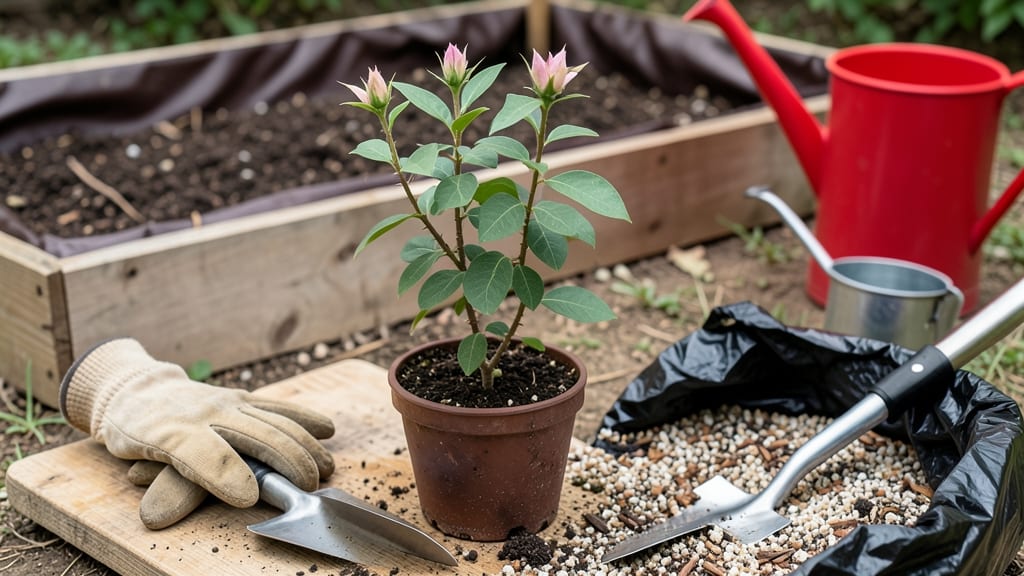
Timing your bougainvillea 🌸 planting in Arizona isn't just about avoiding frost—it's about leveraging the state's unique climate to give your plants the best possible start.
With 300+ frost-free days and intense summer heat, planting too early or late can leave your vibrant vines struggling before they even begin to thrive.
Most gardeners in USDA Zone 9b know the ideal window runs from November through March, but what you might not realize is how microclimates across Arizona create three distinct planting zones.
Whether you're in the low desert's scorching valleys or the slightly cooler high desert, the right timing ensures your bougainvillea establishes roots before summer's relentless heat arrives.
I'll show you exactly when to plant based on your specific location, plus how container planting can extend your flexibility. You'll discover how to prepare your soil, when to water deeply, and which bougainvillea varieties handle Arizona's extreme conditions like champions.
Skip the guesswork and learn the precise month-by-month schedule that will have your bougainvillea blooming beautifully from spring through fall—with minimal water and maximum color. Let's get your garden ready for a showstopper that actually survives Arizona's challenges.
Optimal Arizona bougainvillea planting windows by climate zone
Arizona’s diverse microclimates mean your bougainvillea’s planting window depends heavily on elevation. In the Low Desert (Phoenix, Tucson), where winters are mild, you can plant as early as November after the first soil warming rains.
Meanwhile, High Desert areas (Flagstaff, Prescott) wait until March to avoid late frosts, while Mountain Regions (above 5,000 ft) should delay until May when frost risk is zero.
Bougainvillea thrives in USDA Zone 9b, but Arizona’s 300+ frost-free days create flexibility. The key is planting when soil temperatures hit 60°F+—a threshold that triggers root growth. In Phoenix, this happens by mid-November, while Flagstaff waits until mid-April.
For container-grown bougainvillea, you gain 2-4 weeks of planting flexibility since pots warm faster. However, root-bound plants struggle in Arizona’s heat, so transplant bare-root or 1-gallon container specimens for best results.
Timing also aligns with Arizona’s monsoon season. Planting in late summer (August-September) lets you take advantage of natural rainfall, reducing irrigation needs during establishment. Just ensure your site has well-draining soil—bougainvillea hates soggy roots.
| Climate Zone | Best Planting Window | Soil Temp Threshold | Key Consideration |
|---|---|---|---|
| Low Desert (Phoenix, Tucson) | November–February | 60°F+ | Frost-free; plant after first rains |
| High Desert (Flagstaff, Prescott) | March–April | 65°F+ | Avoid late frosts (Jan 10–Dec 15) |
| Mountain Regions (5,000+ ft) | May–June | 70°F+ | Longer frost risk; wait for heat |
| Containers (Anywhere) | 2–4 weeks earlier | 60°F+ (soil in pot) | Pots warm faster; monitor moisture |
If you miss the ideal window, don’t panic. Bougainvillea is highly adaptable, and April plantings still succeed in Low Desert areas. However, avoid planting in June–September—the 110°F+ heat stresses young roots. Instead, opt for container planting during summer to control soil temperature.
Pro tip: Use a soil thermometer to confirm 60°F+ soil temps before planting. In Low Desert, this often aligns with the holiday season (November–January), while High Desert gardeners aim for spring festivals (March–April). Align your schedule with local events to stay motivated!
For urban gardeners in Phoenix or Tucson, November is prime time—cooler temps and monsoon prep create perfect conditions. Just ensure your site gets 6+ hours of sun; bougainvillea’s colorful bracts need full exposure to thrive.
Remember: Prune lightly after planting to encourage root establishment over flower production. Save heavy pruning for late winter (February), when new growth signals the plant’s readiness for Arizona’s intense summer.
🌸
Optimal Arizona bougainvillea planting windows by climate zone
Arizona’s diverse climate zones—from the Low Desert to High Desert—create distinct planting windows for bougainvillea. In the Low Desert (Phoenix, Tucson), where frost is rare, you can plant as early as November after soil temperatures drop below 80°F.
Meanwhile, the High Desert (Flagstaff, Prescott) has cooler winters, so aim for March when frost risk passes completely.
Mountain regions like Sedona and Jerome face even later planting due to late frosts—wait until April to ensure safety. Container planting extends flexibility, allowing you to move plants indoors during unexpected cold snaps or plant earlier in milder microclimates like Tucson’s Santa Catalina Mountains.
Soil temperature is your best guide: bougainvillea roots thrive when soil is between 60-75°F. Use a soil thermometer to confirm readiness—planting too early in warm soil can stress roots, while waiting too long risks summer heat before establishment.
| Zone | Ideal Planting Window | Soil Temp Threshold | Frost Risk |
|---|---|---|---|
| Low Desert | November–February | 60–75°F | Minimal (Dec–Jan) |
| High Desert | March–April | 55–65°F | Moderate (Jan–Mar) |
| Mountain Regions | April–May | 50–60°F | High (Oct–May) |
For container-grown bougainvillea, you can plant 2–4 weeks earlier in the Low Desert, as pots warm up faster. However, avoid planting in October—even in frost-free zones—because summer heat arrives quickly, and roots won’t establish before 100°F+ temperatures stress young plants.
Pro tip: Time your planting with Arizona’s monsoon season (July–September). While this isn’t the ideal planting window, the extra moisture helps newly planted bougainvillea recover from transplant shock before winter dormancy. Just ensure soil is well-draining to prevent root rot.
Always check your local USDA Zone 9b frost dates, as microclimates can vary wildly. For example, Yuma’s frost-free window starts in October, while Flagstaff’s extends into June.
When in doubt, err on the side of later planting—a well-established bougainvillea in Arizona’s heat is far easier to manage than one struggling to survive premature stress.