
Plants
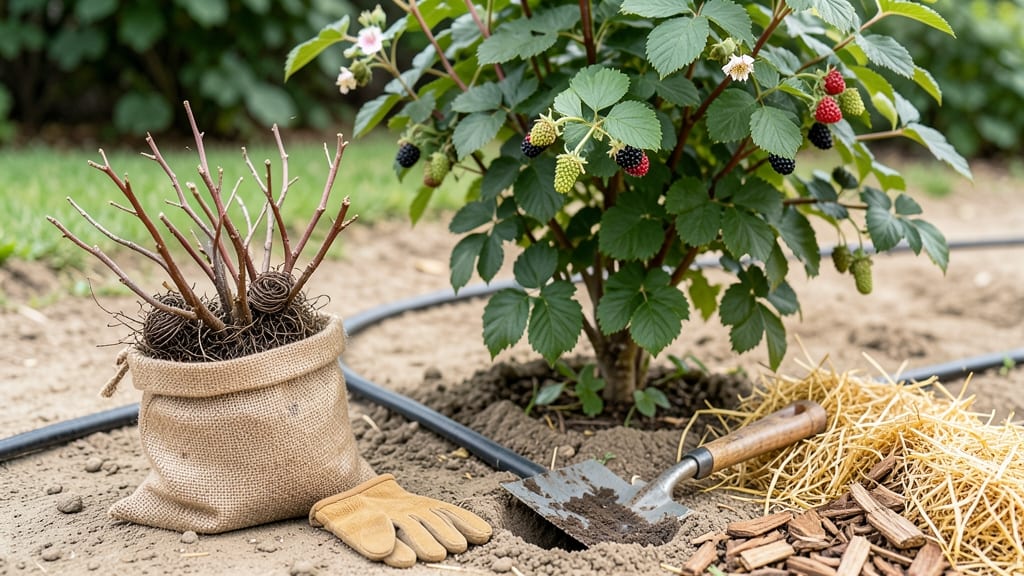
Planting blackberries in Georgia at the wrong time could mean the difference between a thriving 🫐 harvest and a disappointing flop. The state’s unique climate—with its mild winters and hot summers—demands precise timing to match your variety’s chill-hour needs and avoid heat stress.
Most Georgia gardeners swear by fall planting (September–October) for bare-root canes, when soil stays warm but nights cool down. But early spring (February–March) works too—just be ready to protect young plants from late freezes.
The key? Understanding whether your blackberries need 400–600 chill hours (like rabbiteye varieties) or can handle fewer (like primocanes).
I’ll break down the best planting windows for Georgia’s 7b–8b zones, including when to adjust for North vs. South Georgia’s microclimates. You’ll also learn how to prep soil, choose the right varieties, and avoid common mistakes that kill blackberry bushes before they even fruit.
Ready to grow juicy, disease-resistant berries? Let’s get your blackberries in the ground at the perfect moment for your part of Georgia—so you can enjoy that first harvest by late spring.
Georgia’s best planting months for blackberries by chill-hour needs
Georgia’s climate offers two prime windows for planting blackberries—fall (September-October) and early spring (February-March)—but the best choice depends on your chill-hour zone and blackberry variety. Most of Georgia falls within USDA Zones 7b-8b, where rabbiteye varieties dominate due to their lower chill-hour needs (300-600 hours).
Southern highbush types, however, thrive in zones with 500-1,000 chill hours, common in North Georgia.
Fall planting gives roots time to establish before winter, while spring planting avoids late frosts. The key is matching your variety’s chill-hour requirements to your region’s winter cold accumulation. For example, ‘Powell’ rabbiteye (400-600 hours) does well in South Georgia, while ‘Arapaho’ primocane (600-800 hours) suits North Georgia’s cooler winters.
Here’s how Georgia’s regions break down for optimal planting:
| Region | Chill Hours | Best Varieties | Ideal Planting Window | Key Tip |
|---|---|---|---|---|
| North Georgia (Zone 7b) | 600-1,000 hrs | Arapaho, Chester, Natchez | Early spring (Feb-Mar) or fall (Sep-Oct) | Wait until soil warms to 50°F+ in spring |
| Central Georgia (Zone 8a) | 400-700 hrs | Powell, Osage, Ouachita | Fall (Sep-Oct) preferred | Mulch heavily to protect roots in winter |
| South Georgia (Zone 8b) | 300-500 hrs | Natchez, Prime-Ark Freedom | Late winter (Jan-Feb) | Use black plastic mulch to warm soil |
For fall planting, aim for 6-8 weeks before first frost (typically mid-November in most of Georgia). This gives roots time to establish before winter dormancy. In North Georgia’s cooler zones, fall planting is riskier due to earlier frosts, so early spring (after last frost, usually mid-March) is safer.
If you’re planting bare-root blackberries, soak canes for 2-4 hours before planting to rehydrate roots. For potted plants, transplant as soon as soil is workable in spring or after harvest in fall. Both methods work, but bare-root is often 20% cheaper and equally effective when planted correctly.
Pro tip: Test your soil’s chill-hour accumulation using a chill-hour calculator (like the one from UGA Extension). This ensures you’re planting varieties that will reliably flower and fruit in your microclimate. For example, ‘Natchez’ southern highbush may struggle in South Georgia’s low-chill zones.
Remember, Georgia’s humid summers can stress young plants, so prioritize well-draining soil and morning watering to prevent fungal diseases like botrytis. A 3-inch layer of mulch keeps roots cool and moist—critical for first-year survival.
🌱
How to adjust planting time for Georgia’s unpredictable weather patterns
Georgia’s weather can be as unpredictable as a summer thunderstorm—one day it’s 60°F, the next it’s 90°F with a frost warning. This variability means your blackberry planting timing might need extra flexibility.
The key is understanding how to adjust for frost risks, late freezes, and sudden heatwaves without sacrificing your bushes’ growth potential.
For fall planting (September–October), aim for 6–8 weeks before the first frost, typically mid-November in most of Georgia. This gives roots time to establish before winter dormancy. However, if unseasonably warm temperatures linger, delay planting until soil temps drop below 75°F to prevent root stress.
For early spring planting (February–March), monitor soil temperature—wait until it reaches 55–60°F for 2–3 consecutive days. A soil thermometer is your best tool here. If late freezes threaten (common in North Georgia), consider using row covers or planting in microclimates like south-facing slopes for extra warmth.
🚨 CALLOUT WARNING 🚨
To extend the growing season for fall-planted bushes, apply a 4–6 inch layer of mulch in late fall to protect roots from freeze-thaw cycles. In South Georgia, where winters are milder, you can even plant as late as November if soil remains workable. Just avoid planting when soil is waterlogged—blackberries hate soggy roots!
For backup planting dates, keep bare-root canes refrigerated (not frozen) until conditions improve. If you miss the ideal window, container growing is a great alternative—you can move pots indoors during cold snaps. Just ensure containers have drainage holes and use a lightweight potting mix to prevent root rot.
Finally, water deeply after planting to encourage root growth, especially if drought conditions follow. In North Georgia’s higher elevations, where chill hours are greater, prioritize fall planting for varieties like Powell or Arapaho, while South Georgia gardeners can lean toward Natchez or Chester for their lower chill needs.