
Plants
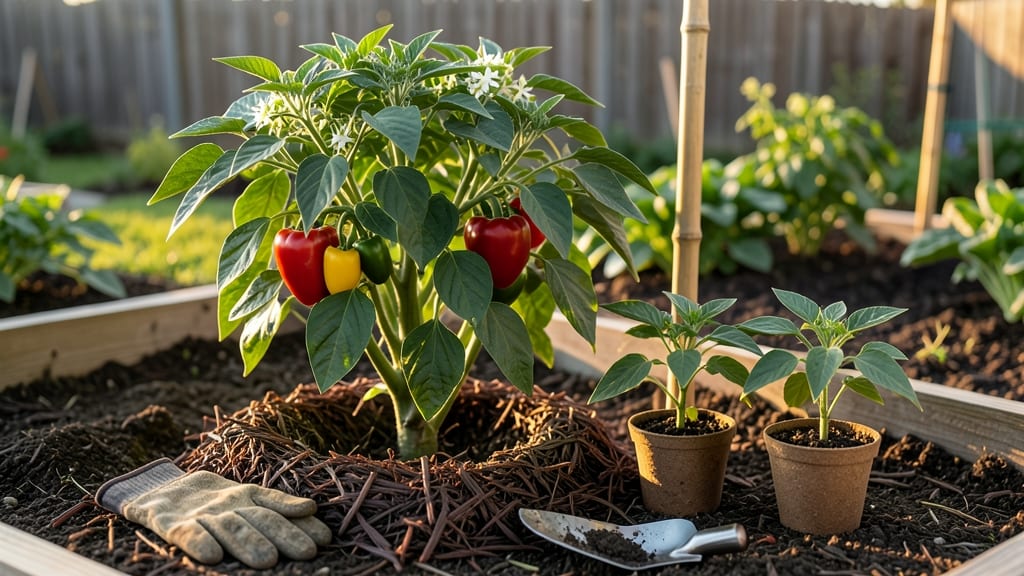
Timing your 🌶️ bell pepper planting in Oregon isn’t just about avoiding frost—it’s about mastering the region’s wild swings from coastal chill to inland heat. One wrong move, and your peppers bolt before you even taste them.
The secret? Planting between April 15 and June 15—but with a twist for your specific microclimate.
Oregon’s USDA zones 7b-9a create a puzzle: Willamette Valley gardeners can start earlier, while coastal areas play it safe with late May transplants. Inland spots like Bend? You’ve got a narrower window to nail soil temps at 70°F+.
I’ll break down the exact timing for your corner of the state—no guesswork, just zero-bolt success.
Why does this matter? Because 75-day varieties need every warm day to mature, and Oregon’s unpredictable springs make patience (and planning) non-negotiable. Skip the generic advice—here’s how to align your planting with your local heat zone, whether you’re in the foggy west or the sunbaked east.
Ready to grow peppers that actually ripen? Let’s cut through the chaos with a planting schedule tailored to your Oregon backyard—so you can harvest from July through October without the stress.
Oregon’s bell pepper planting calendar by USDA zone and microclimate
Oregon’s USDA zones 7b-9a create a patchwork of planting windows—coastal areas like Astoria and Seaside face delays from fog, while Bend and Redmond in the high desert enjoy earlier starts.
The key? Aligning your last frost date with soil temperature thresholds of 70°F+ to prevent bolting. Let’s break it down by microclimate so you can plant with confidence.
For coastal Oregon (zones 7b-8a), your window narrows due to late spring chills. In Portland and the Willamette Valley (zone 8b), warmth arrives earlier, giving you a 3-week advantage.
Meanwhile, high-desert areas (zone 9a) like Pendleton can start 4-6 weeks earlier than coastal zones. Use these adjustments to avoid flowering too soon—a common pitfall in Oregon’s unpredictable springs.
🚨 INSERT VISUAL ELEMENT HERE 🚨
| Microclimate | USDA Zone | Last Frost Date | Optimal Planting Window | Soil Temp Threshold |
|---|---|---|---|---|
| Coastal (Astoria, Cannon Beach) | 7b-8a | Late April - Early May | May 15 - June 15 | 70°F+ (use row covers) |
| Willamette Valley (Portland, Eugene) | 8b | Mid-April | April 20 - May 30 | 65°F+ (soil warms faster) |
| High Desert (Bend, Redmond) | 9a | Early April | April 1 - April 30 | 60°F+ (dry heat speeds warming) |
| Southern Oregon (Medford, Ashland) | 8a-9a | Mid-March | March 20 - April 15 | 68°F+ (longer growing season) |
If you’re starting seeds indoors, begin 8-10 weeks before your last frost date. For coastal gardeners, that means mid-February starts, while high-desert growers can wait until early March. Seedlings need 12-16 hours of light daily—supplement with grow lights if natural light is limited in Oregon’s short winter days.
Transplant seedlings outdoors only after hardening them off for 7-10 days. Coastal areas should wait until nighttime temps stay above 50°F, while inland zones can transplant 2 weeks earlier. Choose overcast days to reduce transplant shock—a critical trick for Oregon’s unpredictable spring weather.
For direct sowing, wait until soil temperatures consistently hit 70°F+ for 7-10 days. In Portland, this typically happens by mid-May, while Southern Oregon can direct-sow as early as late April.
Use black plastic mulch to warm soil faster in cooler zones—a hack I’ve used to shave 2 weeks off my coastal planting schedule.
Bolting risk spikes if peppers experience temperatures below 55°F for extended periods. In zone 7b (coastal), this means delaying planting until June for heat-loving varieties like ‘Carmen’ or ‘Jupiter’. For bolting-resistant varieties (like ‘NuMex Sandia’
How to avoid bolting: soil temperature and seedling hardening tricks for Oregon gardeners
Oregon’s unpredictable spring can turn your bell pepper seedlings into bolting disasters if you’re not careful. Bolting—when plants prematurely flower and fruit—happens when seedlings experience temperature swings or cold soil.
The key to avoiding this is controlling soil warmth and hardening seedlings gradually. Here’s how I do it in my Oregon garden to keep peppers productive.
First, soil temperature is the #1 factor for bolting. Bell peppers need consistent warmth—70°F+ for roots and 65°F+ for air. In coastal Oregon, where soil stays chilly, I use black plastic mulch or row covers to raise temperatures.
Inland areas like Bend or Pendleton warm up faster, but nighttime drops can still trigger bolting. A soil thermometer is your best friend here.
🌱
Install black plastic mulch 2 weeks before planting. This raises soil temps by 10-15°F and speeds up warming.
Move seedlings outdoors for 1 hour/day the first week, then 3 hours/day the second. Use a shaded area to avoid sunburn.
Wait until seedlings have 4-6 true leaves and are 3-4 inches tall. Transplant in the late afternoon to reduce stress.
If your last frost is late (like in Astoria), use floating row covers to protect seedlings until soil warms to 60°F+.
If temps drop below 55°F, cover seedlings with lightweight fabric or move pots to a protected spot.
Another trick I swear by is delaying transplanting until after the last frost and when soil hits 60°F+.
In Zone 8 (Medford), that’s usually mid-April, but in Zone 7 (Eugene), it’s often late April to early May. Coastal gardeners should wait until June in some areas—don’t rush it! I’ve lost three batches of seedlings to bolting by planting too early.
For extra insurance, I mix compost into the planting hole to improve warmth retention. And if you’re in a high-desert area like Burns, where daytime temps soar but nights stay cool, consider staking plants early to prevent stem damage from temperature shifts.
The goal? Stable conditions so your peppers focus on fruit production, not flowers.
Finally, watch for bolting signs: elongated stems, yellowing leaves, or tiny white flowers. If you catch it early, prune the flowers and reduce watering to stress the plant back into veggie mode. But prevention is easier—so time it right and keep it warm! 🌿