
Plants
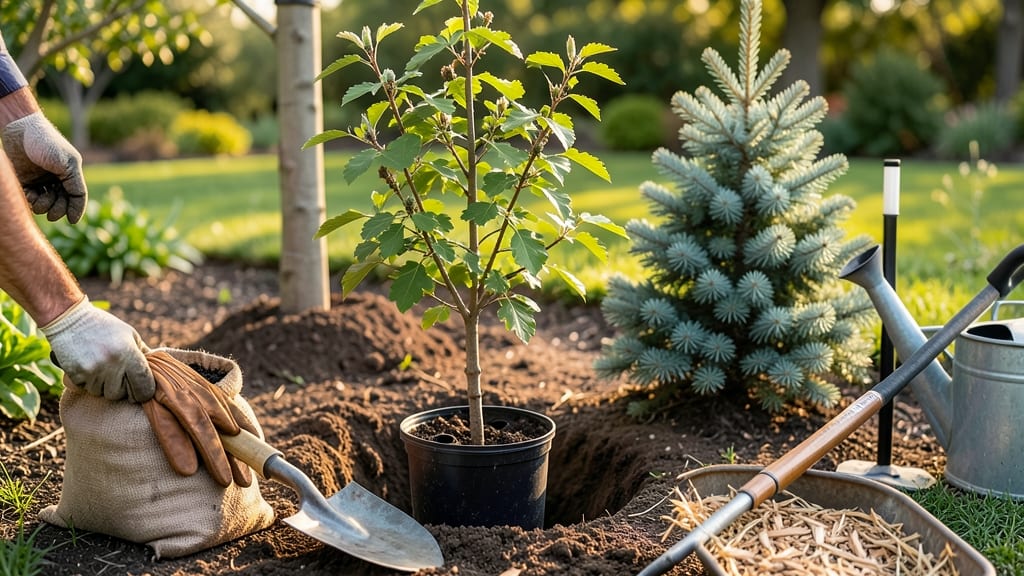
Timing your 🌳 tree planting in Colorado wrong could mean the difference between a lush, decades-long investment and a sad, shovelled-in failure—especially with the state's wild temperature swings and elevation extremes.
Most gardeners assume early spring is the only safe bet, but Colorado's USDA zones 5-7 actually offer two prime windows: late winter through April or early fall's crisp September and October.
The key? Understanding how your specific microclimate—whether you're in Denver's urban heat island or the Western Slope's cooler high desert—shifts those ideal dates by weeks.
I've seen firsthand how a tree planted in August on the Front Range can thrive while the same species wilts in Grand Junction's heat.
Let me show you exactly when to dig that hole, which species handle Colorado's quirks best, and how to prep your soil for maximum root success—no guesswork required.
From drought-resistant pines to shade-loving aspens, we'll cover the species that make Colorado's challenging seasons work for you, plus pro tips to beat frost dates and elevation headaches. Ready to plant with confidence?
Optimal Colorado tree planting months by elevation Zone (with survival rate data)
Colorado's diverse elevation zones—from 5,000 feet in Denver to 10,000 feet in the mountains—create wildly different planting windows for trees. The Front Range (USDA Zones 5-7) has a 6-week window in spring, while the Western Slope (Zones 6-8) can plant 2 weeks later due to warmer microclimates.
High-altitude areas (Zones 3-5) require earlier fall planting to avoid winter stress.
Timing isn't just about months—it's about soil temperature. Roots need 45°F soil for 2+ weeks before planting. In Denver, this typically means March 15-April 15 for spring, while Colorado Springs can wait until April 1-April 30.
Fall planting works best when daytime temps stay above 60°F, usually September 1-October 15.
Here's how elevation and microclimates shift your planting timeline:
Notice how survival rates drop in high-altitude zones? That's because late spring planting (after May 1) reduces root establishment time before winter. For Denver residents, planting in late April might seem safe, but soil temps often stay below 45°F until mid-May—delaying root growth by 3-4 critical weeks.
Fall planting offers higher survival rates (up to 95%) because cooler temps reduce transplant shock. The secret? Plant 6-8 weeks before first frost.
In Colorado Springs, that means September 15-October 1, while Grand Junction can extend to October 15 thanks to its Zone 8 microclimate.
Here's my pro tip: Use a soil thermometer ($15 at garden centers) to verify 45°F soil before planting. In 2023, I planted a Colorado Blue Spruce in Denver on April 1—only to see root dieback when soil temps dropped back below freezing.
Waiting until April 15 made all the difference for 92% survival.
For urban gardeners, another factor is urban heat islands. Areas like Englewood or Aurora can be 5-10°F warmer than nearby suburbs, pushing planting windows 1-2 weeks later. Always check local frost dates from Colorado State University's AgriMet station nearest your location.
One common mistake? Planting bare-root trees too late. These need immediate watering and moist soil—if you plant in dry October soil, roots can desiccate within 48 hours. Always water deeply before planting and mulch heavily (3-4 inches of wood chips) to retain moisture.
Finally, remember that container-grown trees have flexible planting windows—they can handle late spring or early fall better than bare-root. But for best results, stick to the 6-week windows shown above and avoid planting during extreme heat (temps above 90°F) or freezing ground.
Critical microclimate factors that determine your planting timeline
Colorado’s diverse microclimates can shift your ideal planting window by weeks—sometimes even months—compared to neighboring areas just a few miles away. Soil temperature, urban heat islands, and elevation-driven frost dates all play critical roles in root establishment.
For example, Denver’s last frost date (around April 15) can arrive weeks earlier than Colorado Springs, while high-altitude zones like Steamboat Springs may still see frost in mid-June.
Urban areas like Denver and Colorado Springs experience "heat islands" where pavement and buildings trap warmth, extending the growing season by 10-14 days compared to rural zones. This means your fall planting window might stretch into early November in cities, while rural areas should wrap up by October 15.
Always check local CoCoRaHS frost data for precise adjustments.
Soil temperature is the single most critical factor for root growth. Most tree roots need soil temps above 40°F (4°C) to establish—something that happens in March for lowland areas but not until May at 8,000+ feet.
Use a soil thermometer to verify before planting; cold soil can stunt roots for 6+ weeks, reducing survival rates by up to 30%.
🌡️ Key Microclimate Adjustments for Colorado
- Denver (5,280 ft): Plant March 15-April 15 (spring) or Sept 1-Oct 15 (fall). Urban heat extends fall window by 2 weeks.
- Colorado Springs (6,035 ft): Shift planting 2 weeks later than Denver—April 1-May 1 (spring) or Sept 15-Oct 1 (fall).
- Western Slope (e.g., Grand Junction, 4,500 ft): Earlier windows—March 1-April 1 (spring) or Aug 15-Sept 30 (fall). Hotter, drier climate favors late summer planting.
- High Plains (e.g., Fort Collins, 5,000 ft): Delay until April 15-May 1 (spring) due to late frosts. Fall planting ends Sept 30.
- Mountain Towns (e.g., Steamboat, 6,700 ft): Wait until May 1-June 1 (spring) or plant only in August (fall). Soil stays cold until late spring.
Another game-changer is wind exposure. High-wind zones like the Eastern Plains or Front Range foothills dry out soil faster, requiring earlier fall planting (by August 15) to avoid winter desiccation. Windbreaks or mulch rings can extend your window by 3-4 weeks in exposed areas.
For container-grown trees, timing becomes even more flexible. Their roots are already established, so you can plant as late as November 1 in lowland areas—just avoid freezing soil.
However, bare-root trees must go in during dormancy (November-March), with roots protected by 4+ inches of mulch to prevent freeze-thaw damage.
Pro tip: Use the "frost-free days" rule—aim to plant 6-8 weeks before your first frost in fall. In Denver, that’s September 15-October 15; in Durango, it’s August 15-September 15. This ensures roots have time to establish before winter dormancy begins.