
Companion Plants
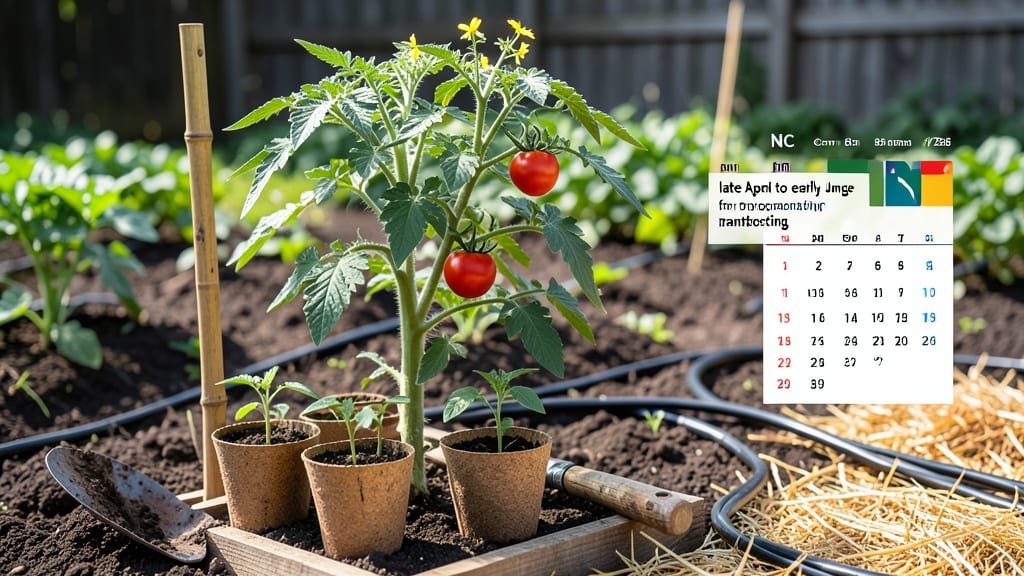
If you’ve ever wondered when to plant tomatoes in North Carolina and dreaded getting it wrong, you’re not alone. The 🍅 season here can be tricky—one wrong move, and your hard work could end up in a sad, wilted pile instead of a juicy harvest.
But here’s the good news: with the right timing, you can turn your NC garden into a tomato powerhouse, no matter if you’re in the mountains, Piedmont, or coastal plains.
North Carolina’s diverse climate means planting dates vary wildly—from early April in the coastal areas to late May in the cooler mountain regions.
The key is knowing your last frost date and soil temperature, because planting too soon can kill young plants, while waiting too long might leave you with a short harvest window.
I’ll break down exactly when to start seeds indoors or transplant seedlings in each microclimate, so you can avoid common mistakes and maximize your yield.
What you’ll discover in this guide isn’t just about dates—it’s about strategies to protect your plants from NC’s unpredictable weather, whether it’s late frosts, heat waves, or humidity.
We’ll cover everything from soil prep to variety selection, so you can confidently plant your tomatoes at the perfect time for your specific corner of the state. Ready to grow a garden full of homegrown flavor? Let’s get started.
Don’t guess your planting schedule—plan it—and watch your tomato plants thrive from the first seedling to the last harvest. Whether you’re a seasoned gardener or a beginner, these insights will help you grow tomatoes that taste like summer all season long. Your future 🍅 harvest is waiting!
North Carolina tomato planting dates by region: mountain, Piedmont, and coastal timelines
North Carolina’s three distinct regions—Mountains, Piedmont, and Coastal Plain—each demand different tomato planting strategies. The Mountains (USDA Zones 6a-7a) have shorter growing seasons, while the Coastal Plain (Zones 7b-8b) enjoys longer summers.
Even within these zones, microclimates can shift planting windows by 2-4 weeks. Let’s break down the ideal timing for each region, including soil temperature thresholds and frost-free averages.
For transplants (young plants from nurseries), aim to plant after your area’s last average frost date.
In the Mountains, this typically falls between April 15-30, while the Piedmont and Coastal Plain can start as early as March 15-30 in warmer microclimates. Direct-sown seeds should wait until soil temperatures reach 60°F (15°C), usually 2-4 weeks after transplants.
Coastal gardeners can sometimes start seeds indoors in February for an earlier harvest.
Soil temperature is critical—tomatoes won’t germinate well below 55°F (13°C), and slow growth below 60°F invites disease. Use a soil thermometer to confirm readiness. In cooler mountain regions, black plastic mulch can raise soil temps by 5-10°F, accelerating planting by 1-2 weeks.
Always check your local USDA zone and historical frost data for precision.
Here’s a side-by-side comparison of planting windows for NC’s three regions, including key dates for transplants, direct sowing, and harvest expectations:
| Region | USDA Zone | Last Frost Date | Transplant Window | Direct Sow Window | Harvest Window |
|---|---|---|---|---|---|
| Mountains (Asheville, Boone) | 6a-7a | April 15-30 | April 20-May 15 | May 1-May 31 | July 15-October 1 |
| Piedmont (Raleigh, Greensboro) | 7a-7b | March 25-April 15 | April 1-May 1 | April 15-May 15 | June 15-October 15 |
| Coastal Plain (Wilmington, Fayetteville) | 7b-8b | March 1-April 1 | March 15-April 30 | April 1-May 1 | May 15-November 1 |
If you’re in a transition zone (e.g., Charlotte or Durham), err on the side of later planting—even a single 28°F (-2°C) frost can devastate young plants.
For coastal gardeners, early varieties like ‘Early Girl’ (55 days to maturity) can be direct-sown as soon as soil is workable in late February, while heirlooms like ‘Brandywine’ (80+ days) need the full window.
Pro tip: Use row covers or cold frames to extend your mountain season by 3-4 weeks. In the Piedmont, where heat and humidity spike early, shade cloth (30-50%) can protect plants during 90°F+ days.
Always monitor your plants for early blight or hornworms, which thrive in NC’s warm, humid summers.
For container gardening, coastal gardeners can start transplants 2 weeks earlier since pots warm up faster. Just ensure containers are at least 5 gallons and have drainage holes—root-bound tomatoes produce 20-30% fewer fruits. In the Mountains, opt for determinate varieties (bush-type) to maximize harvests in shorter seasons.
Ready to plant? Bookmark your local Cooperative Extension Service frost dates and set a reminder for soil temperature checks. With the right timing, you’ll be enjoying homegrown tomatoes from
How to adjust tomato planting for NC’s unpredictable weather: heat waves, late frosts, and microclimates
North Carolina’s spring weather can be as unpredictable as a mountain breeze—one day sunny and warm, the next a surprise frost. If you’ve ever watched your tomato seedlings shiver under a late frost or wilt in a sudden heat wave, you know how quickly things can go wrong.
The key to success? Flexibility and protective strategies tailored to your microclimate.
Even if you’ve planted at the "right" time, late frosts (common in the Piedmont and Mountains) or early heat waves (especially in the Coastal Plain) can derail your harvest.
I’ve learned the hard way that rigid planting dates won’t cut it—you need a backup plan. Here’s how to safeguard your tomatoes against NC’s weather whims.
🌱 Pro Tip: Use a frost calendar (like the one from the NC State Extension) to track your local last-frost dates. Even if the average is April 15, a late frost in May isn’t unheard of—especially in the High Country.
Plan to have row covers or a cold frame ready to deploy at a moment’s notice.
⚠️ Warning Signs for Late Frosts and Heat Stress
- 1. Frost Warning: Check the National Weather Service for freeze alerts 3 days out. Temperatures below 32°F (0°C) can kill young plants.
- 2. Blackened Leaves: If leaves turn black or brown overnight, frost damage has occurred—even if the plant looks fine by day.
- 3. Wilting in Heat: Tomatoes droop suddenly in 90°F+ (32°C+) temps? They’re heat-stressed—act fast with shade cloth.
- 4. Blossom Drop: Flowers fall off without setting fruit? Temps above 95°F (35°C) or below 55°F (13°C) can cause this.
- 5. Soil Temp Shock: If soil is below 50°F (10°C), roots can’t absorb water, leading to stunted growth.
🌡️ Act Now: Cover plants with frost blankets or move containers to a sheltered spot if frost is forecasted.
For gardeners in cooler microclimates (like the Mountains or western Piedmont), succession planting is your best friend. Instead of planting all your tomatoes at once, stagger them every 2 weeks from April 15 to May 15.
This ensures you’ll have a continuous harvest, even if the first batch gets nipped by frost.
In hotter zones (like the Coastal Plain or southeastern Piedmont), focus on heat-tolerant varieties and shade solutions. I’ve had great success with shade cloth (30-50%) during peak afternoon sun—it keeps temps down without sacrificing too much light.
Pair this with drip irrigation to avoid wetting leaves (which fuels fungal diseases like early blight).
💧