
Watering
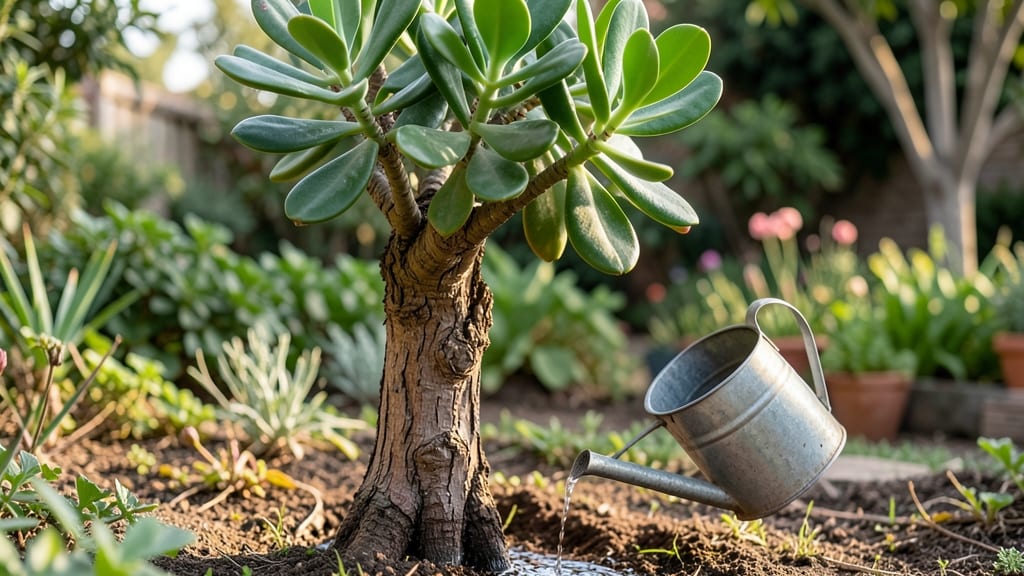
Figuring out how much water a jade plant needs is like walking a tightrope—one wrong move and you’re either drowning its roots or watching its leaves shrivel into sad, wrinkled sticks.
Trust me, I’ve been there, turning my once-plump 🌿 Jade Plant 🌿 into a sad, thirsty skeleton (or a soggy mess) more times than I’d like to admit.
The secret? This drought-loving succulent thrives on neglect—literally. Unlike your high-maintenance houseplants, a jade plant stores water in its thick stems, so it’s far better to underwater than overwater. But how do you strike that perfect balance, especially when USDA Zone 6a winters and humid summers throw off your rhythm?
In this guide, I’ll break down the exact watering schedule—season by season—so you can keep your jade happy without guessing. You’ll learn the telltale signs of thirst (wrinkled stems) versus rot (mushy leaves), plus pro tips to adjust for pots, humidity, and light.
No more dead plants on my watch!
Ready to master the art of watering? Let’s dive into the simple, science-backed routine that’ll keep your jade plant thriving for years—no green thumb required.
Jade plant watering schedule: how often to water by season (with soil tests)
Your jade plant (Crassula ovata) thrives on neglect—literally. As a succulent, it stores water in its thick stems, making it drought-tolerant but highly sensitive to overwatering. The key is letting the soil dry completely between waterings, but how often should you water?
It depends on the season, pot size, and even your home’s humidity. Let’s break it down by month so you never guess again.
Most gardeners make two mistakes: watering on a fixed schedule (like every Sunday) or ignoring their plant until the leaves shrivel. Instead, use the finger test—stick your finger 1-2 inches into the soil.
If it feels dry, water lightly. If it’s still damp, wait another week. This method works year-round but adjusts for seasonal changes in growth and evaporation.
Spring is when your jade plant wakes up from dormancy, so it’ll need slightly more water—about every 3-4 weeks. Look for new growth at the tips as a sign it’s ready for a drink.
Summer heat increases evaporation, so water every 2-3 weeks, but always check the soil first. Fall slows growth, so stretch waterings to every 4-6 weeks, and winter dormancy means watering only every 6-8 weeks.
🌱 Pro Tip: Group your jade plants with other succulents in a terracotta pot—it dries out faster than plastic, mimicking desert conditions. Terracotta also wicks away excess moisture, reducing root rot risk.
| Season | Watering Frequency | Soil Test | Visual Cues |
|---|---|---|---|
| Spring | Every 3-4 weeks | Dry 1-2" deep | New growth at tips |
| Summer | Every 2-3 weeks | Dry 1-2" deep | Leaves slightly wrinkled |
| Fall | Every 4-6 weeks | Dry 2-3" deep | Growth slows |
| Winter | Every 6-8 weeks | Dry 3" deep | Dormant, no new leaves |
Pay attention to your jade plant’s stem thickness—it’s the best indicator of hydration. A plump, firm stem means it’s well-watered, while a wrinkled or shriveled stem signals it’s time to water.
Even in summer, avoid watering if the stems feel firm. Overwatering in heat causes root rot faster than you’d think, and recovery is a slow process.
If you’re unsure whether your jade plant needs water, lift the pot—a dry pot weighs significantly less than one with moist soil. This trick saves time and prevents overwatering. For container gardens, place a moisture meter in the soil (or use a chopstick to check moisture).
Insert it 2 inches deep; if it comes out clean, water lightly. If it’s damp, wait another week.
🌿 Seasonal Adjustments: In high-humidity climates (like Florida or the Pacific Northwest), reduce watering by 25-50%—humidity slows evaporation, keeping soil damp longer. Conversely, in arid regions (like Arizona or California), water slightly more often to compensate for rapid drying.
One common mistake is watering based on calendar dates rather than plant needs. For example, watering every Sunday in winter can drown your jade plant, as it’s dormant and doesn’t need frequent hydration.
Always prioritize soil moisture over routine. If you’re traveling, place your jade plant in a shady spot and water only if the soil feels bone-dry before your return.
Finally, remember that well-draining soil is non-negotiable for jade plants. A mix of cactus soil, perlite, and coarse sand (ratio 60:20:20) ensures excess water drains away quickly. If your soil retains moisture, repot your jade plant immediately—root rot spreads fast and is often fatal.
Your goal is to mimic its natural desert habitat, where rainfall is sporadic but intense.
Jade plant watering schedule: how often to water by season (with soil tests)
Jade plants (Crassula ovata) are succulents, meaning they store water in their thick stems and leaves—so they thrive on neglect more than frequent watering.
My first jade plant died from overwatering within weeks, but I learned the hard way: drought stress is easier to recover from than root rot. The key is checking soil moisture before watering, not following a rigid schedule.
Your jade plant’s watering needs shift with the seasons, humidity, and pot size. In summer, it may need water every 2–3 weeks, while in winter, stretching to 6–8 weeks between drinks prevents soggy roots.
Always water deeply until it drains from the bottom of the pot, then let the top 2–3 inches of soil dry completely before repeating.
📌 PRO TIP: Stick your finger 1–2 inches into the soil—if it feels dry, it’s time to water. If damp, wait another week. This finger test beats guesswork every time.
| Season | Watering Frequency | Soil Test | Visual Cues |
|---|---|---|---|
| Spring | Every 3–4 weeks | Top 2" dry | Leaves plump, stems firm |
| Summer | Every 2–3 weeks | Top 2–3" dry | Leaves slightly wrinkled at midday |
| Fall | Every 4–6 weeks | Top 3" dry | Growth slows, leaves thicken |
| Winter | Every 6–8 weeks | Top 4" dry | Leaves shrivel slightly (normal) |
Light conditions also tweak your schedule. A jade plant in bright indirect light (like a south-facing window) will dry faster than one in a shadier spot. If your plant’s leaves start yellowing or dropping, it’s often a sign of overwatering—but if they wrinkle or pucker, it’s underwatered. Adjust accordingly!
For container gardens, smaller pots dry out quicker than 10+ gallon containers. Repot into a terracotta pot (which wicks moisture) if you’re struggling to find the right balance. Well-draining soil with perlite or sand is non-negotiable—this plant hates soggy roots.
Finally, humidity matters. If your home feels dry (like 30% or lower), your jade may need water slightly more often. Use a hygrometer to monitor levels—aim for 40–50% humidity. In high-humidity climates, stretch out watering to every 4–5 weeks in summer.
Remember: Jade plants are survivors. Even if you skip a watering, it’ll bounce back. But root rot from overwatering? That’s a slow, sad death. Trust the soil test, not the calendar, and your jade will stay plump and happy for years. 🌱